

Taking charge of your health can feel overwhelming, but it doesn’t have to be. With our handy tool, estimating your body mass index is quick and easy. Body mass index, or BMI, is a number that helps you understand where you stand in terms of health based on your height and weight.
Check your BMI with our calculator 👉
This calculator is designed specifically for women, as our bodies store fat differently than men’s. You can find out your BMI in less than a minute—no special equipment or appointments needed! Knowing your BMI can be a small yet significant step toward understanding your overall health.
Best of all, this tool is free, private, and provides instant results without complicated medical jargon. You can choose to use either US customary units or metric units, depending on what you’re comfortable with. The calculator does all the math for you, so there’s no need to worry about formulas or equations.
Once you have your results, you’ll see which weight category you fall into and what that might mean for your health. So, why wait? Scroll down and start using the calculator today—there’s no better time than now!
Key Takeaways
- Our BMI calculator simplifies health tracking.
- It provides quick results tailored for women.
- Understanding your BMI can help in managing health.
- No special tools or appointments are required.
- Choose between US customary or metric units.
- Instant results without complicated jargon.
What is BMI and Why Use a Women BMI Calculator?
Check your BMI with our calculator 👉
Knowing how your body measures up can empower your health journey. Body mass index, or BMI, is a measurement that compares your weight to your height. This simple ratio helps determine if you’re in a healthy weight range. It’s a straightforward way to gauge your body composition without complicated tests.
Understanding Body Mass Index
BMI is a quick tool used by healthcare professionals to categorize individuals based on their body mass. The resulting number can indicate whether a person is underweight, normal weight, overweight, or obese. For adults aged 20 and older, the same formula applies to everyone, regardless of gender.
Why BMI Matters for Women’s Health
For women, understanding BMI is particularly important. Women naturally carry more body fat than men at the same BMI. Additionally, life changes such as pregnancy and menopause can affect where fat is stored in the body. This means that tracking BMI can help women stay informed about their health as their bodies change over time.
How This Calculator Helps You Get Quick Results
Our Womens BMI calculator is designed to provide results in seconds. You simply input your height and weight, and it instantly shows you your BMI category. This quick feedback allows you to have informed discussions with your healthcare provider about your health.
While BMI isn’t a diagnostic tool, it serves as a useful starting point for understanding your body and potential health risks. Millions of people use BMI calculators every year because they are accessible and provide a solid baseline for health management.

How to Use the Womens BMI Calculator to Check Your Health
Getting a grasp on your health can be quick and easy with a BMI calculator. Let’s walk through how to use this tool effectively. You’ll see that it only takes a few steps to get your results.
Inputting Your Height and Weight
First, you need to enter your current height and weight. You probably already know these numbers. Just type them into the designated fields. It’s that simple!
US Customary vs. Metric Units
Next, you’ll choose between US customary units or metric units. If you think in feet and pounds, stick with the US system. Prefer centimeters and kilograms? No problem! The calculator has a simple toggle that lets you switch between the two systems with just one click.
What Happens After You Calculate
Check your BMI with our calculator 👉
Once you type in your numbers and hit calculate, the tool does all the heavy lifting. It instantly gives you your BMI. The results screen shows your BMI number clearly along with the weight category you fall into.
You’ll also see a healthy weight range for your height. This helps you know what your target zone looks like. If you want more details, the calculator may show additional numbers like BMI Prime and Ponderal Index.
Feel free to recalculate as many times as you want. This way, you can track changes over weeks or months. Plus, there’s no signup required, and no personal data gets stored. You can use it with complete peace of mind!
| Height (inches) | Weight (lbs) | BMI | Weight Category |
|---|---|---|---|
| 60 | 100 | 19.5 | Normal |
| 65 | 150 | 24.9 | Normal |
| 70 | 200 | 28.8 | Overweight |
| 75 | 250 | 31.0 | Obese |

Breaking Down the BMI Numbers: What Do They Mean?
Understanding your BMI numbers can be the first step toward a healthier you. This measurement is more than just a number; it helps categorize individuals into different health ranges. Let’s break down what these categories mean and how they can impact your health.
BMI Ranges: Underweight, Normal, Overweight, and Obesity
The World Health Organization defines four main BMI categories:
- Underweight: A BMI below 18.5 indicates that an individual may be underweight. This can lead to various health issues, including nutrient deficiencies.
- Normal weight: A BMI between 18.5 and 24.9 is considered healthy. This range is linked to fewer health problems and is often seen as the sweet spot.
- Overweight: A BMI from 25 to 29.9 suggests that an individual may be overweight. This could indicate higher body fat levels and potential health risks.
- Obesity: A BMI of 30 or higher falls into the obesity range. This category is further divided into classes based on severity, which can significantly impact health.
Healthy BMI Range for Women: 18.5 to 24.9
The healthy weight range for adults is typically between 18.5 and 24.9. For example, a woman who is 5’6″ and weighs 130 pounds has a BMI of about 21, which is comfortably within the healthy range. In contrast, a 5’4″ woman weighing 150 pounds has a BMI around 25.7, placing her in the overweight category.
Examples Using Common Heights and Weights
Check your BMI with our calculator 👉
To give you a clearer picture, here are a few examples:
- A 5’4″ woman weighing 145-169 pounds falls into the overweight range.
- If she weighs 174 pounds or more, she enters the obesity range.
- A 5’10” individual weighing 174-202 pounds is also considered overweight.
These categories apply to both men and women, although women typically have a higher body fat percentage at the same BMI. It’s essential to remember that children and teens use different growth charts due to their ongoing development.
Consider your BMI as a starting point for understanding your health rather than a definitive judgment. Your health journey is unique, and various factors contribute to your overall well-being.

Health Risks Linked to Different BMI Levels in Women
Navigating your health can be challenging, but understanding your body is key. The risks associated with body weight can vary significantly. Whether someone is underweight or overweight, each condition carries its own set of health concerns.
Risks of Being Underweight
Being underweight is often overlooked in discussions about health. However, it can lead to serious issues like malnutrition and vitamin deficiencies. Women who fall into this category may also experience anemia and weakened immune function.
Hormonal imbalances are another concern. These can disrupt menstrual cycles and lead to fertility challenges. Additionally, underweight individuals face a higher risk of osteoporosis, making bones more fragile over time.
Risks of Being Overweight or Obese
On the other end of the spectrum, carrying extra weight can increase health risks. High blood pressure is a common issue, which can strain the heart over time. Higher levels of body fat also correlate with increased LDL cholesterol, leading to cardiovascular problems.
Moreover, being overweight raises the risk of developing type II diabetes. This condition can significantly affect one’s quality of life. Sleep apnea is another concern, impacting how well you rest and recover.
Certain cancers, such as breast and colon cancer, are more prevalent in individuals with higher body weight. Mental health can also be affected, with conditions like depression and anxiety becoming more common.
Why Maintaining a Healthy BMI Matters for Women
Check your BMI with our calculator 👉
Maintaining a healthy BMI is crucial for overall well-being. Both ends of the BMI spectrum come with increased health risks compared to staying in the healthy range. These risks don’t mean you should panic, but they do highlight the importance of paying attention to your body.
Having honest conversations with your doctor can help you navigate these concerns. Remember, small changes in body weight can make a real difference in lowering health risks over time.
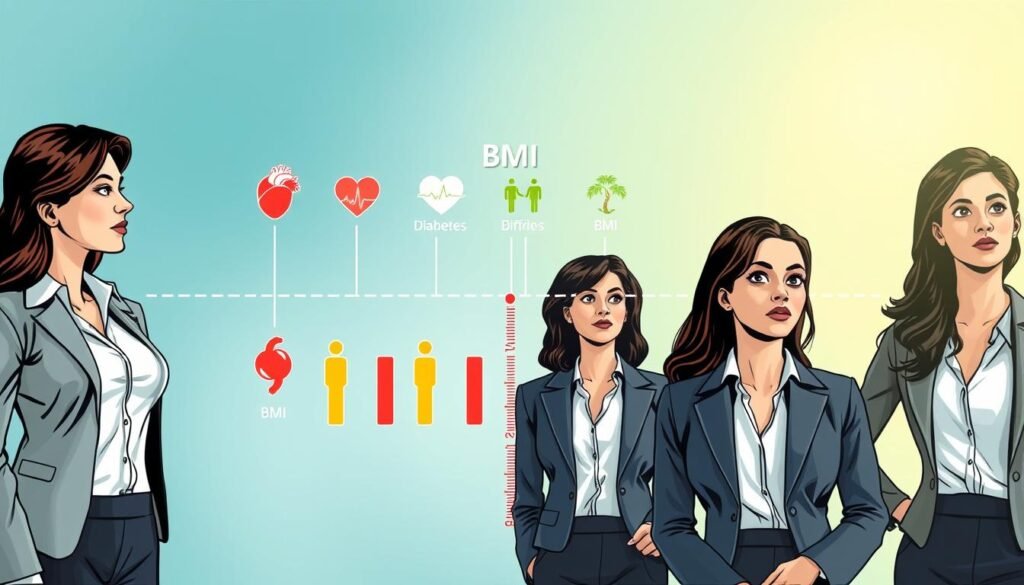
Limitations of BMI: When It Might Not Tell the Full Story
While BMI can be a helpful tool, it’s essential to recognize its limitations. This measurement doesn’t always capture the complete picture of health. Factors like muscle mass, age, and ethnicity can significantly influence BMI results.
For instance, muscle weighs more than fat. A fit individual who lifts weights might have a higher BMI but be perfectly healthy. Take a female athlete or bodybuilder as an example. Her BMI may classify her as overweight, yet her body fat percentage could be quite low, indicating excellent health.
Differences in Muscle Mass and Body Fat
Muscle mass can skew BMI readings. Many people, especially athletes, have a higher muscle mass. This can lead to a misleading BMI that suggests they are overweight or obese when they are not. For most individuals, BMI provides a reasonable estimate of body fat. However, those with higher muscle mass may not fit neatly into the standard categories.
Age, Lifestyle, and Ethnicity Factors
Age also plays a crucial role. Older adults often have more body fat than younger adults, even with the same BMI. This is due to natural muscle loss and changes in bone density. Women in their 60s and beyond may show higher body fat percentages than younger women at the same BMI.
Ethnicity is another important factor. Research shows that BMI can overestimate health risks in some groups while underestimating them in others. For example, individuals of Asian descent may face health risks at lower BMI levels compared to other populations. Additionally, children and teenagers require different interpretations of BMI, as their bodies are still developing.
Why BMI Is Just One Tool in Your Health Toolbox
Despite its limitations, BMI still offers valuable information for about 90 to 95 percent of the population. It’s best to think of BMI as one piece of the puzzle. Alongside waist measurements, blood work, and personal feelings about health, it can provide a more comprehensive view.
Check your BMI with our calculator 👉
Remember, no single number can define your health. Doctors often look at the whole picture to assess an individual’s well-being. For a more complete assessment, consider combining BMI with other body composition techniques to better estimate body fat percentage and distribution. For more insights on this topic, check out this article.
| Category | BMI Range | Body Fat Percentage |
|---|---|---|
| Underweight | Below 18.5 | Less than 18% |
| Normal Weight | 18.5 – 24.9 | 18% – 25% |
| Overweight | 25 – 29.9 | 25% – 30% |
| Obesity | 30 and above | 30% and above |
How to Calculate BMI Manually: A Simple Guide
Calculating your body mass index can be simpler than you think. This section will guide you through the process of determining your BMI using both the US customary and metric systems. Let’s dive in!
BMI Calculation Using the US System
To calculate BMI using the US system, you can follow this formula:
BMI = 703 × weight (lbs) / height² (in)
Let’s look at an example. Imagine a woman who is 5’4″ tall and weighs 140 pounds. First, convert her height into inches:
5 feet = 60 inches + 4 inches = 64 inches.
Now, plug in the numbers:
BMI = 703 × 140 / 64²
Calculating that gives:
BMI = 703 × 140 / 4096 = 24.3
This means her BMI is 24.3, which falls into the normal weight category.
BMI Calculation Using Metric Units
If you prefer the metric system, the formula is even simpler:
BMI = weight (kg) / height² (m)
For example, let’s say someone weighs 68 kilograms and is 165 centimeters tall. First, convert the height to meters:
165 cm = 1.65 m.
Now, calculate:
BMI = 68 / (1.65)²
Calculating that gives:
BMI = 68 / 2.7225 = 24.98
This means their BMI is approximately 25, which is also considered normal weight.
Understanding BMI Prime and Ponderal Index
BMI Prime is another useful measure. It’s calculated by dividing your BMI by 25:
BMI Prime = BMI / 25
A BMI Prime less than 0.74 indicates underweight, while 0.74 to 1 is normal. If it’s greater than 1, you’re in the overweight category, and above 1.2 indicates obesity.
For instance, if your BMI is 24.3, your BMI Prime would be:
BMI Prime = 24.3 / 25 = 0.972
This shows you’re within the normal range.
Lastly, the Ponderal Index is another measurement that can be more reliable for very tall or short individuals. It’s calculated as:
Ponderal Index = weight (kg) / height³ (m)
Or using inches:
Ponderal Index = height (in) / ∛weight (lbs)
Don’t worry about doing these calculations yourself! The BMI calculator handles all of this for you automatically.
Understanding these formulas can help you appreciate what your BMI number means. But remember, the calculator exists to make life easier!
Interpreting Your Results: What Should You Do Next?
Check your BMI with our calculator 👉
Understanding your results is a vital step in managing your health journey. Whatever your BMI result is, remember that you’ve already taken a positive step by checking and being curious about your health.
If your BMI falls outside the normal range, the next smart step is to have a conversation with your doctor. They can evaluate your overall health by checking your blood pressure, running blood tests, and measuring your waist size. These assessments can provide a clearer picture of your health beyond just BMI.
Your family history is also important. Genetics can influence where you store fat and your overall health risks. Two people with the same BMI can have very different health profiles based on their diet, activity levels, and stress management.
Even small lifestyle changes can make a difference. For example, walking for just 20 minutes a day or swapping soda for water can help improve your BMI. It’s essential to think about how you feel day to day, as energy levels and mood matter just as much as any number.
Tracking your BMI every few months can help you see trends and catch changes before they become bigger issues. Remember that hormonal changes during perimenopause and menopause can significantly affect weight and body composition.
Ultimately, your BMI result is just information, not a judgment. You have the power to decide what to do with that information. Use it as a tool to guide your health journey.
| BMI Category | Recommended Actions | Considerations |
|---|---|---|
| Underweight | Consult a doctor for dietary advice. | Consider family history and nutrient intake. |
| Normal Weight | Maintain a balanced diet and regular exercise. | Monitor energy levels and mood. |
| Overweight | Discuss weight management strategies with a healthcare provider. | Evaluate lifestyle factors and stress levels. |
| Obese | Seek a comprehensive health evaluation. | Focus on long-term lifestyle changes. |
Tips for Maintaining a Healthy Weight and BMI
Maintaining a healthy weight is achievable with practical steps that fit into your daily life. Regular physical activity and a balanced diet play crucial roles in supporting a healthy BMI. The CDC recommends both aerobic activity and muscle-strengthening exercises for overall health.
Even modest weight loss of 5-10% of body weight can improve health markers like blood pressure and cholesterol. Here are some simple tips to help you stay on track:
How Activity Level Affects Your BMI
Adding more movement to your day doesn’t have to mean grueling gym sessions or running marathons. Here are some ways to incorporate activity into your life:
- Brisk walking for 30 minutes most days can help regulate body weight and improve your BMI over time.
- Building some muscle through strength training can actually help your metabolism work better, even when you’re resting.
- Find activities you enjoy, making it easier to stick with them long term.
Simple Diet Habits That Support a Healthy BMI
Diet plays a significant role in managing weight. Here are some easy swaps you can make:
- Eat more vegetables at dinner to boost nutrition without adding too many calories.
- Choose whole grains instead of refined ones for better health benefits.
- Drink enough water throughout the day; it can help with weight management more than most people realize.
Tracking Progress with the Women BMI Calculator
Tracking your BMI with the calculator every month or two gives you a clear picture of your progress. Celebrate non-scale victories, like having more energy or sleeping better at night. Remember, consistency beats perfection, and small daily choices add up to big changes over months and years.
The women BMI calculator is always here as a free tool to check in on your progress whenever you need it. Use it to stay informed and motivated on your health journey!
Take Control of Your Health with Our Women BMI Calculator Today
Check your BMI with our calculator 👉
Your health journey can begin with just one quick and easy step. Knowing your BMI is a powerful first move toward better health. This free tool takes less than a minute to use, so there’s really nothing to lose.
Taking control of your health doesn’t mean a complete life overhaul. It’s about starting somewhere. Many find it empowering to have a clear number and range to work with, rather than guessing.
You can bookmark the BMI calculator and return anytime to check your progress. Share this tool with friends or family who might also benefit from understanding their health.
Remember, BMI is just one piece of the health puzzle, but it’s a piece worth knowing. So, scroll up and use the calculator right now. Today is as good a day as any to start! Every woman deserves to feel informed about her body, and this tool is here to help.