

So, you’ve stepped on the scale and noticed a number that makes you think. What does it mean for your health? That’s where BMI Calculator Men comes into play. A BMI calculator is just a simple way to understand your weight in relation to your height. It’s not rocket science; it’s about getting a clearer picture of your health.
Check your BMI with our calculator 👉
Tracking your health doesn’t have to be complicated. Most guys want something straightforward, right? No confusing charts or medical jargon—just a quick glance at where you stand. This simple ratio can tell you a lot about your body and potential health risks.
Look, we’re all busy. You don’t have time for lengthy assessments. That’s why using a BMI calculator is a great starting point. You enter a couple of numbers, and just like that, you have a snapshot of your health.
Think of this as your friendly guide to understanding BMI. We’ll cover what it is, how to calculate it, and what those numbers really mean. Plus, we’ll discuss its limitations. After all, no tool is perfect, but knowing about it is definitely worth your time.
Key Takeaways
- Understanding your weight in relation to height is essential for health.
- A BMI calculator is a straightforward tool for tracking health.
- This measurement can indicate potential health risks.
- No special equipment is needed—just your height and weight.
- It’s a quick way to assess if you need to make changes.
What’s BMI Calculator Men and Why It Matters for Men
Check your BMI with our calculator 👉
Have you thought about how your weight relates to your overall health? Understanding body mass index (BMI) is a great place to start. At its core, BMI is a number derived from a simple formula that uses your height and weight. This number estimates how much body fat you have, which is crucial for your health.
But body mass isn’t just about fat. It includes your bones, muscles, organs, and even water. BMI helps cut through all that complexity to give you a rough idea of whether your weight is healthy for your height.
So, why should you care about your mass index? Research shows that carrying excess body fat can increase your risk for serious health issues. These include heart disease, type 2 diabetes, certain cancers, and sleep apnea. Knowing your BMI can give you a heads-up before problems escalate.
For most people, BMI is a reliable measure of body fat. According to the CDC, it’s accurate for about 90 to 95 percent of the population. While it isn’t perfect, it serves as a useful starting point for understanding your health.
Consider this: if you’re 5’10” and weigh 210 pounds, your body carries more mass than someone of the same height who weighs 160. Some of that weight might be muscle, but for many, a significant portion is likely fat. BMI helps clarify that distinction.
The link between your body and health is significant. A higher BMI often indicates a higher percentage of body fat. Extra fat, especially around your midsection, can lead to inflammation and other health issues. It’s not just about how you look; it’s about your well-being.
It’s essential to remember that BMI isn’t a diagnosis—it’s a screening tool. Think of it like the check engine light in your car. It signals that you should pay attention to your health. For men, keeping an eye on BMI is particularly important. We tend to store fat differently than women, often around our bellies, which poses greater health risks.

Understanding your body mass index is a key step in managing your health. It provides a quick way to assess whether you fall within a healthy weight range. As you continue to track your health, consider how BMI can guide your choices.
Check your BMI with our calculator 👉
For more information on how to calculate your BMI, check out this BMI calculator.
How to Calculate Your BMI the Easy Way
Ready to dive into the numbers that define your health? Calculating your body mass index can be a breeze, especially with the right tools at your fingertips. Let’s explore how to do it easily and effectively.
Using a BMI Calculator for Men
Let’s be real. The easiest way to calculate your health metrics these days is to use an online tool. You simply enter your height and weight, hit a button, and voilà! The number appears without any math required. Most BMI calculator tools even show you where you fall on the scale with a nice little color-coded chart.
Manual Calculation: A Quick Example
But hey, maybe you’re curious about how the math actually works. I get it. Some of us like to know what’s happening behind the scenes. The formula isn’t complicated at all. For US units, you take your weight in pounds, multiply by 703, and divide by your height in inches squared. That’s it!
Let me give you a real example so it clicks. Say you’re a guy who’s 5’10” tall and weighs 180 pounds. First, convert that height to inches. That’s 70 inches. Square it: 70 times 70 is 4,900. Now take your weight, 180, multiply by 703, which gives you 126,540. Divide that by 4,900, and you get about 25.8. That puts you just into the overweight category.
Metric and US Units: What You Need to Know
Check your BMI with our calculator 👉
If you’re using metric units, the formula is even cleaner. Just take your weight in kilograms and divide by your height in meters squared. So if you weigh 82 kg and stand 1.78 meters tall, you’d do 82 divided by 3.17, which is about 25.9. Same ballpark, way less multiplication.
Here’s something most people don’t know about. There’s also something called BMI Prime. It’s just your BMI divided by 25, which is the upper limit of the normal range. If your BMI Prime is under 1, you’re in the normal zone. Over 1 means you’re above it. Simple as that.
The Ponderal Index is another related measurement that uses height cubed instead of squared. It’s supposedly more accurate for very tall or very short people. But honestly, for most guys, the standard calculation works just fine.
When you’re using a BMI calculator, make sure you’re putting in accurate numbers. Don’t fudge your height by an inch or round your weight down by five pounds. The more honest you are, the more useful the result will be. Your health is worth being real about.
One last thing about the calculations: whether you use pounds and inches or kilograms and meters, the result should be the same. The formulas are designed to give you a consistent number no matter which system you prefer. So pick whichever feels more natural and go with it.

Breaking Down BMI Categories and What They Mean
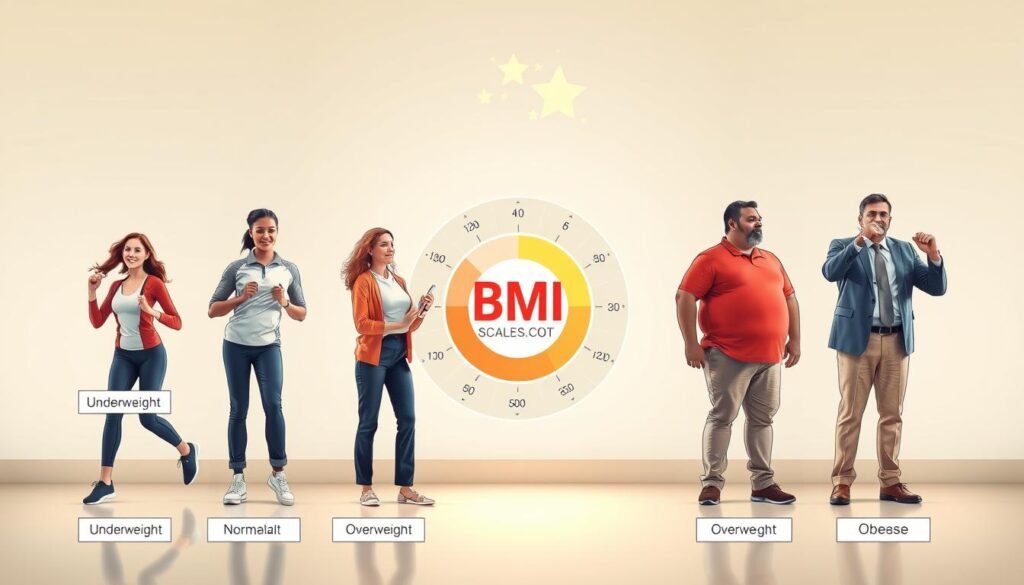
Now that you have your BMI number, it’s time to explore what it really means for your health. The World Health Organization categorizes body mass index into four main groups. Understanding these categories can help you make informed decisions about your health.
Underweight, Normal, Overweight, and Obese
Here’s a quick breakdown of the categories:
- Underweight: A BMI below 18.5 indicates that a person may not be getting enough nutrients.
- Normal weight: This range, from 18.5 to 24.9, is where most people should aim to be for optimal health.
- Overweight: A BMI between 25 and 29.9 suggests that you might be carrying more weight than is ideal.
- Obesity: A BMI of 30 or higher indicates serious health risks.
For most guys, the sweet spot is that 18.5 to 24.9 range. If you fall into this category, give yourself some credit. You’re doing something right!
Health Risks You Should Know
Check your BMI with our calculator 👉
It’s important to recognize the health risks associated with different BMI categories:
- Being overweight can lead to high blood pressure, type 2 diabetes, and heart disease.
- Obesity increases the risk of sleep apnea, certain cancers, and joint problems.
- On the other hand, being underweight can result in malnutrition and a weakened immune system.
These risks aren’t just numbers; they can impact your quality of life. For example, carrying excess body fat, especially around your midsection, can lead to inflammation and other serious health issues.
Remember, your BMI category gives you a glimpse into your future health. It’s not just about the number on the scale; it’s about how that number relates to your overall well-being.
Understanding the Limits of BMI for Men
It’s important to recognize that BMI isn’t a one-size-fits-all solution. While it serves as a useful tool for many, there are significant limitations that can skew the results. Let’s break down how muscle mass and age can affect your BMI readings.
How Muscle Mass Can Skew Your Numbers
OK, time for some real talk. BMI has its limitations, and if you’ve spent any time in the gym, you’ve probably already figured this out. Muscle weighs more than fat by volume. So if you’re a guy who lifts heavy and carries a lot of muscle mass, your BMI might put you in the overweight or even obese category even though you’re in great shape.
Think about professional athletes for a second. An NFL running back who’s 5’11” and 220 pounds of solid muscle would have a BMI over 30. That’s technically obese according to the chart. But anyone with eyes can see that guy is not carrying excess body fat. His body mass is just distributed differently than the average person.
This is the biggest complaint about body mass index. It can’t tell the difference between muscle and fat. It just sees total weight. So for bodybuilders, powerlifters, and guys with a naturally muscular build, the number on the BMI scale might be misleading. You need to look at other measures too, like waist circumference or body fat percentage.
Age, Body Type, and Other Factors
Age is another factor that throws things off. As you get older, you naturally lose muscle mass and gain fat, even if your weight stays the same. So a 60-year-old guy with a BMI of 24 might actually have more body fat than a 30-year-old with the same BMI. The number looks fine, but the body composition tells a different story.
The Centers for Disease Control and Prevention acknowledges all of this. They’re clear that BMI is just a screening tool, not a diagnostic one. It’s meant to flag potential issues so you can dig deeper, not to give you a final verdict on your health. Disease control and prevention efforts use BMI because it’s cheap and easy, not because it’s perfect.
Your ethnicity matters too. Research shows that the standard BMI cutoffs don’t work the same for everyone. People of Asian descent, for example, tend to have more body fat at a lower BMI than white populations. So their risk for diabetes and heart disease might kick in at a BMI of 23 instead of 25.
For women, the limitations are similar but with a twist. Women naturally carry more body fat than men at the same BMI. It’s just biology. So a woman with a BMI of 22 might have a higher body fat percentage than a man with the same number. The scale doesn’t account for that.
Children and teens have their own set of charts entirely. The CDC uses age- and sex-specific growth charts for kids because their bodies are still developing. A BMI that’s normal for a 15-year-old boy might be completely different from what’s normal for a 10-year-old. It’s a whole different ballgame.
So what’s the takeaway? Use BMI as a starting point, not the final word. If your number seems off, especially if you’re muscular or older, talk to your doctor about other ways to measure your health. Waist size, blood work, and how you actually feel day to day matter just as much.
Using a BMI Calculator Men Trust to Track Their Health
Tracking your health is easier than ever, thanks to various tools available online. A reliable BMI calculator can help you monitor your body weight and understand your health better. But how do you find the right one? Let’s break it down.
Finding the Right Tool for You
Finding a good BMI calculator isn’t exactly hard. There are tons of them online. However, you want one that’s reliable and easy to use. Look for calculators from trusted sources like the CDC, the American Cancer Society, or major health organizations. They’re free, they’re accurate, and they don’t try to sell you anything.
A solid BMI calculator should do more than just spit out a number. The best ones show you where you fall on the scale with a visual chart. They also tell you what your healthy weight range is for your height and provide context about what your result means. That extra information makes a big difference.
When you’re picking a tool, ensure it lets you switch between US and metric units. Most do, but it’s worth checking. You don’t want to be stuck converting kilograms to pounds in your head just to use the thing. A good calculator handles that for you.
Tracking Your Progress Over Time
Check your BMI with our calculator 👉
Here’s something a lot of guys overlook: your body weight fluctuates day to day. Water retention, what you ate last night, and even how much sleep you got can shift the scale by a few pounds. So, don’t obsess over a single BMI reading. The real value comes from tracking your body mass index over time and watching the trend.
Think about tracking your BMI like tracking your finances. One snapshot doesn’t tell you much, but six months of data shows you where you’re headed. If your BMI is creeping up year after year, that’s a sign you might need to make some changes before it becomes a bigger problem.
Some BMI calculator tools let you save your results or even create an account to track changes. That can be handy if you’re working toward a specific goal, like dropping from the overweight range into the normal range. Seeing that progress in black and white is pretty satisfying.
Don’t forget that your age matters when interpreting your results. A BMI that was fine in your 20s might not be ideal in your 50s. As your body changes, your target range might shift a little. Some calculators factor in age, which gives you a more personalized picture.
At the end of the day, the best tool is the one you’ll actually use. If you hate complicated apps, just bookmark a simple web-based calculator on your phone. Check it once a month or so. Keep it simple. The goal isn’t to become obsessed with numbers; it’s to stay aware and catch any red flags early.

Tips for Staying Healthy Beyond the Numbers
Your health journey goes beyond just a number on a scale. What truly matters is how you live each day. Your eating habits, activity levels, and stress management play significant roles in your overall well-being.
Let’s talk about diet for a second. You don’t need to go on some extreme weight loss plan that has you eating nothing but kale and sadness. Small changes add up. For instance, swapping soda for water or adding a vegetable to your dinner can make a big difference over time. Eating a little less processed food also helps bring your body weight into a healthier range.
Physical activity is the other half of the equation. And no, you don’t need to run marathons. The CDC recommends about 150 minutes of moderate activity a week. That’s like 30 minutes, five days a week. A brisk walk counts. Mowing the lawn counts. Just get your heart pumping a little more than usual.
Here’s what’s cool about regular physical activity. It strengthens your heart, lowers your risk for diabetes, improves your mood, and helps you sleep better. It’s basically the closest thing to a magic pill we’ve got. And it works for people of all ages.
If you’re carrying extra body fat, especially around your middle, losing even a small amount of weight can make a real difference. Dropping just 5 to 10 percent of your body weight can lower blood pressure, improve cholesterol, and reduce your risk for heart disease. You don’t need to get all the way to your ideal weight to see benefits.
Now, when should you actually talk to a doctor? If your BMI is in the obese range, definitely have that conversation. If you’ve got a family history of heart disease or diabetes, bring it up. If you’re losing weight without trying, that’s worth checking out too. Your doctor can look at the full picture, not just one number.
For older adults, the rules are a little different. Some research suggests that people over 65 might actually be better off with a BMI between 25 and 27 rather than below 25. A little extra weight can provide a cushion against illness and help maintain bone density. Talk to your doctor about what’s right for your age and situation.
Ultimately, disease control and prevention isn’t just about watching numbers on a screen. It’s about building a lifestyle that supports your health over the long haul. Get your checkups, know your numbers, but don’t let them run your life. You’re more than your weight or any single measurement.
Staying Ahead: Keep an Eye on Your Health with BMI Tracking
Check your BMI with our calculator 👉
Your journey to better health is not just about numbers; it’s about understanding your body. A BMI calculator is a helpful tool for keeping tabs on your health. Think of it like checking the oil in your car; you don’t do it every day, but regular checks can prevent bigger issues.
Tracking your body mass index once or twice a year helps you see trends. Is your weight creeping up? Did a new workout routine make a difference? This information can guide your lifestyle choices.
Remember, muscle mass and age can affect your readings. Use BMI alongside other measures like waist size and energy levels. For women and children, the approach is similar; stay aware and don’t panic over one number.
If your BMI falls outside the normal range, consider it a prompt to evaluate your diet and activity levels. Disease control and prevention starts with awareness. So check your BMI, stay informed, and use what you learn to lead a healthier life.