

Hey there! Let’s chat about something that often gets pushed aside—our health. Many guys tend to avoid those checkups, but guess what? This Male BMI Calculator is a super simple, no-pressure way to start. It gives you a quick snapshot of where you stand based on your height and weight.
Check your BMI with our calculator 👉
All you need to do is plug in a couple of numbers, and the tool does the math for you. No complicated formulas to memorize! Remember, this isn’t about judgment or some unrealistic body standard; it’s just information to help you out.
BMI has been around for a while and is still a go-to tool for doctors when discussing weight. Plus, if you’re curious, the calculator can also give you insights like BMI Prime and Ponderal Index for a deeper look.
As we dive into this article, we’ll explore what those numbers mean, what affects them, and how to use the results. Knowing your number is the first step toward any changes you might want to make!
Key Takeaways
- This calculator is a friendly first step for health awareness.
- It provides a quick overview based on height and weight.
- No need to stress over complex math—just enter your numbers!
- It’s all about gathering information, not judging your body.
- Doctors still use BMI as a starting point for discussions.
- Additional metrics like BMI Prime can offer more insights.
- Understanding your number can guide your health journey.
Understanding Male BMI Calculator and Why It Matters
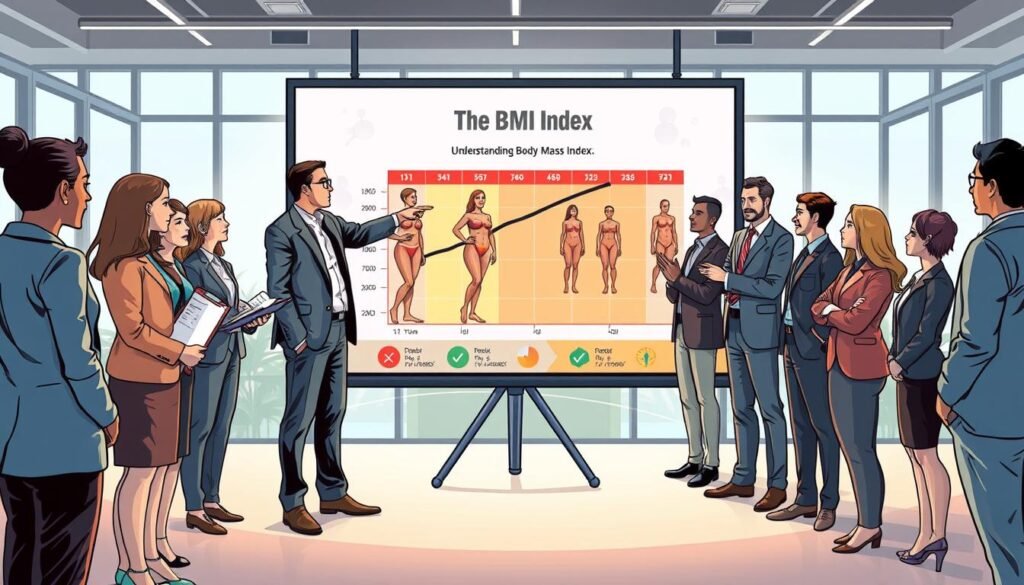
Body Mass Index, or BMI, is a simple ratio that compares your weight to your height. It helps give a rough idea of how much body fat a person carries. While it’s not a perfect measure, it serves as a quick tool to assess whether a person has a healthy body weight for their height.
Doctors and health organizations continue to use BMI because it’s quick, free, and provides a decent starting point for discussions about health. This index is especially useful as it can indicate potential health risks related to body weight.
What is Body Mass Index?
BMI is calculated by taking a person’s weight in kilograms and dividing it by their height in meters squared. This straightforward calculation gives a number that falls into specific categories. These categories help to understand whether a person is underweight, at a healthy weight, overweight, or obese.
Why BMI is Used as a Health Indicator
The World Health Organization (WHO) and the Centers for Disease Control and Prevention (CDC) recommend BMI as a health indicator. It’s a widely accepted measure because it’s based on large population studies. While it doesn’t account for muscle mass versus fat, it provides a general overview of body health.
For most guys, falling within the healthy weight range (18.5 to 24.9) means a lower chance of developing weight-related health problems down the road. Understanding where you fall in these categories can help you and your doctor make informed decisions about your health.
BMI Ranges and What They Suggest About Your Weight
The standard adult BMI ranges are as follows:
- Under 18.5: Underweight
- 18.5 to 24.9: Healthy weight
- 25 to 29.9: Overweight
- 30 and above: Obesity
These ranges are consistent for both men and women. However, BMI interpretation for children and teens differs, as their bodies are still growing. Knowing your BMI category helps you understand potential health risks and whether lifestyle changes might be necessary.
In summary, while BMI is not the only measure of health, it is a valuable tool that can guide you toward a healthier lifestyle. For more detailed information about BMI and its implications, check out the CDC’s resources on BMI.
How to Use the Male BMI Calculator for Accurate Results
Check your BMI with our calculator 👉
Using this tool can be straightforward if you know the right steps. Let’s walk through how to get the most accurate results from the calculator.
Entering Your Height and Weight Correctly
First, you’ll need to input your height and weight. Make sure to use your current weight, not what you weighed last month or what you hope to weigh. Accuracy matters!
For the best results, step on the scale first thing in the morning. This gives you the most consistent reading. When measuring your height, stand against a wall without shoes for the most accurate measurement.
Choosing the Right Units: Pounds and Inches or Metric
The calculator allows you to choose between US units (pounds and inches) or metric units (kilograms and centimeters). Pick whichever you’re more comfortable with. This choice can make the process easier and more intuitive for you.
Understanding Your Calculator’s Output
After entering your height and weight, hit the calculate button. The calculator will show your BMI number and the category you fall into. It will also provide a healthy weight range for your height.
In addition to BMI, you’ll see extra numbers like BMI Prime and Ponderal Index if you want to dig deeper into your results. Remember, the healthy weight range is based on the standard BMI window of 18.5 to 24.9, giving you a target zone to aim for.
Don’t forget to jot down your number or take a screenshot! Tracking changes over time can be really helpful in your health journey.

Breaking Down Your BMI Number: What the Categories Mean
Check your BMI with our calculator 👉
Understanding your BMI number is essential for making informed health decisions. Each category provides insights into your body weight and potential health risks. Let’s break down what these categories mean and how they can guide you.
Underweight: When to Be Concerned
A BMI below 18.5 indicates that a person may be underweight. This can signal a lack of proper nutrition or possibly an underlying health issue. If you find yourself in this category, it’s worth considering a check-up with a healthcare provider to explore your nutritional intake and overall health.
Healthy Weight: Staying in the Ideal Range
The healthy weight range falls between 18.5 and 24.9. This is often considered the sweet spot, where most individuals experience the lowest risk of weight-related health problems. For example, if you are 5’10”, your healthy weight window is approximately 129 to 174 pounds. This wide range allows for individual differences while still promoting overall health.
Overweight and Obesity: What the Numbers Mean for You
When your BMI is between 25 and 29.9, it indicates that you are overweight. This category serves as a gentle nudge to pay more attention to your diet and physical activity. It’s not a crisis but a reminder to focus on your health.
On the other hand, a BMI of 30 or more falls into the obesity category. This is where the risk of conditions like type 2 diabetes and heart disease starts to increase significantly. If you find yourself in this range, it’s important to view this information as a call to action rather than a label. Consider speaking with a healthcare professional to discuss potential lifestyle changes.
Remember, these categories are based on population data and do not account for individual differences like muscle mass or frame size. If you’re concerned about your BMI category, think of it as a tool for information rather than a definition of who you are. The goal is to feel good and maintain your health.
| BMI Category | BMI Range | Health Implications |
|---|---|---|
| Underweight | Less than 18.5 | Possible nutritional deficiencies or health issues |
| Healthy Weight | 18.5 – 24.9 | Lowest risk of weight-related health problems |
| Overweight | 25 – 29.9 | Increased risk; time to focus on health |
| Obesity | 30 or more | Higher risk of serious health conditions |
For more insights on maintaining a healthy weight, check out this BMI calculator for women.

Health Risks Linked to High and Low BMI
Discussing health risks can be uncomfortable, but understanding them is crucial for staying on track. Whether you’re above or below the healthy weight range, there are important health implications to consider. Let’s break down the risks associated with both high and low BMI.
Risks Related to Being Overweight
Carrying extra weight can lead to a range of health risks. According to the Centers for Disease Control and Prevention (CDC), individuals who are overweight are at an increased risk for several serious conditions, including:
- High blood pressure
- High cholesterol levels
- Type 2 diabetes
- Coronary heart disease
- Stroke
- Certain types of cancer (endometrial, breast, colon, kidney, gallbladder, liver)
Everyday life can also be affected. For instance, joint pain from osteoarthritis can hinder mobility, while sleep apnea can disrupt rest. Moreover, chronic conditions can take a toll on mental health, leading to issues like depression and anxiety.
Risks Related to Being Underweight
On the flip side, being underweight carries its own set of health risks. Individuals in this category may face:
- Malnutrition and vitamin deficiencies
- Anemia
- Osteoporosis
- Decreased immune function
- Growth and development issues in children and teens
- Reproductive issues for women
- Potential surgical complications
Underweight individuals might experience low energy levels, muscle loss, and hormonal imbalances that can affect overall well-being.
Check your BMI with our calculator 👉
How BMI Connects to Heart Disease, Diabetes, and More
There’s a clear connection between BMI and serious health conditions. Extra weight forces the heart to work harder, which can lead to plaque buildup in arteries, increasing the risk of heart disease. Additionally, excess body fat can make cells less responsive to insulin over time, raising the risk of type 2 diabetes.
Finding a balance is key. The goal is to maintain a weight where your body functions optimally. BMI is a helpful tool to gauge whether you’re in that zone.
| BMI Category | Associated Health Risks |
|---|---|
| Overweight | High blood pressure, type 2 diabetes, heart disease, certain cancers |
| Underweight | Malnutrition, osteoporosis, decreased immune function, reproductive issues |
“Understanding your weight and its implications can empower you to make healthier choices.”
Factors That Can Affect Your BMI Reading
Your BMI number doesn’t tell the whole story; let’s explore why. While BMI is a useful tool, several factors can influence its accuracy. Understanding these elements can help you interpret your results more effectively.
Muscle Mass vs. Fat: Why BMI Can Be Misleading
First off, it’s essential to know that muscle weighs more than fat by volume. A guy who hits the gym regularly might have a BMI that classifies him as overweight, even though he’s in great shape. For instance, consider a muscular 5’10” man weighing 200 pounds with low body fat. His BMI would suggest he’s overweight, despite being fit and healthy.
Age, Gender, and Ethnicity Considerations
Age plays a significant role in BMI readings. Older adults often have more body fat than younger adults, even if their weight remains the same. This means BMI might underestimate body fat in seniors. Additionally, women generally carry more body fat than men at the same BMI. This is an important consideration when comparing numbers with friends or partners.
Ethnicity can also impact BMI. For example, some populations, particularly those of Asian descent, may face higher health risks at lower BMI thresholds. Understanding these nuances can help provide a clearer picture of health.
Athletes and Bodybuilders: When BMI Isn’t the Full Picture
Athletes and bodybuilders often encounter misleading BMI results. The BMI formula doesn’t distinguish between muscle and fat. This means that someone with a lot of muscle mass might appear overweight according to BMI standards. If you know you have a lot of muscle, consider looking at other measures, like waist circumference or body fat percentage, for a more accurate assessment.
In summary, BMI is a starting point, not the final word. It can be a helpful tool for some people, but it’s essential to consider these factors for a more comprehensive understanding of your health.

“Understanding the factors that influence your BMI can empower you to make better health decisions.”
Limitations of BMI and Why It’s Not the Full Story
Let’s take a moment to discuss the limitations of BMI and why it shouldn’t be the only measure of your health. While this tool provides a quick estimate, it has its shortcomings. Many people have felt frustrated by their BMI numbers, and that’s completely normal.
BMI doesn’t account for where your fat is located. Belly fat, for instance, poses a greater risk to your health than fat stored under the skin on your hips or thighs. Two individuals with the same BMI can have very different body compositions. One might be lean and muscular, while the other carries more fat.
There are several alternative ways to assess body fat and overall health:
- Waist circumference measurements
- Skinfold calipers
- DEXA scans
- Bioelectrical impedance scales
For about 90 to 95 percent of the population, BMI does a decent job of estimating body fat levels. However, if your BMI falls outside the normal range, or if you’re confused by your results, it’s wise to talk to your doctor. A healthcare professional can look at the bigger picture, including blood pressure, cholesterol levels, and family history, to give a more complete health assessment.
Remember, BMI is just one tool in your health toolbox, not the entire workshop. It works best when combined with other measures to provide a clearer understanding of your health.
| Measurement Method | Description |
|---|---|
| BMI | Quick estimate based on height and weight |
| Waist Circumference | Measures abdominal fat and health risk |
| Skinfold Calipers | Measures body fat percentage using skinfold thickness |
| DEXA Scans | Provides detailed body composition analysis |
| Bioelectrical Impedance | Estimates body fat using electrical currents |
Calculating BMI Manually: The Simple Formula Explained
Calculating your body mass index manually can be a fun way to understand your health better. While many people rely on an online calculator, knowing the formula helps you grasp what that number truly represents.
BMI Formula Using Pounds and Inches
To calculate BMI using pounds and inches, follow this simple formula:
BMI = 703 × weight (lbs) / height² (in)
Start by taking your weight in pounds. Then, multiply that number by 703. Next, divide the result by your height in inches squared. It sounds complicated, but let’s break it down with an example.
BMI Formula Using Kilograms and Meters
If you prefer using the metric system, the formula is even simpler:
BMI = weight (kg) / height² (m)
No need for the conversion factor of 703! Just take your weight in kilograms and divide it by your height in meters squared.
Quick Example Calculation for a 5’10”, 160-Pound Man
Let’s say we have a person who is 5’10” tall and weighs 160 pounds. First, convert his height to inches. Since 5 feet equals 60 inches, we add 10 inches for a total of 70 inches.
Now, let’s do the math:
- 703 × 160 = 112,480
- 70² = 4,900
- BMI = 112,480 / 4,900 = 23.0
This means our example guy has a BMI of 23.0, which falls comfortably within the healthy weight range.
Now, let’s look at the metric calculation for the same person. His weight in kilograms is approximately 72.57 kg. Using the metric formula:
- BMI = 72.57 / (1.778)² = 72.57 / 3.16 = 23.0
Again, we see that a BMI of 23 indicates he’s in a healthy range.
For those curious about the Ponderal Index, the formula is:
PI = height (in) / ∛weight (lbs)
Using our example:
- PI = 70 / ∛160 = 12.9
Feel free to try the math yourself! But remember, the BMI calculator handles all of this automatically, making it easy to get your results without the hassle.
Tips for Maintaining a Healthy BMI Through Lifestyle Changes
Check your BMI with our calculator 👉
Maintaining a healthy body weight doesn’t have to be overwhelming; small, steady changes can lead to lasting results. You can achieve your goals without feeling pressured to make drastic changes. Here are some practical tips to help you along the way.
Balanced Diet and Portion Control
Start by focusing on your diet. You don’t need to follow strict diets; instead, aim to add more vegetables and lean proteins to your meals. Watching portion sizes can help you manage your intake without obsessing over every calorie. Cutting back on sugary drinks is another simple step that can significantly impact your overall health.
Regular Physical Activity That Fits Your Lifestyle
Finding physical activities that you enjoy is key. You don’t have to force yourself through workouts you dislike. Whether it’s walking, swimming, cycling, or playing pickup basketball with friends, choose activities that feel good. Aim for at least 30 minutes of moderate activity most days of the week. This can make a real difference in both weight and overall health.
Monitoring Your Progress and Adjusting Goals
Track your progress with the BMI calculator every few weeks or months, rather than daily. Remember, weight naturally fluctuates, and daily check-ins can lead to frustration. It’s important to understand that weight loss isn’t linear; plateaus are normal. The key is to stick with your healthy habits, even when the scale isn’t moving.
For older individuals, a slightly higher BMI between 25 and 27 may actually be protective. So, keep in mind that your goals may shift as you age. Ultimately, the best plan is the one you can stick with. Starting small and building from there is perfectly okay.
“Small consistent changes add up way more than crash diets or extreme workout plans.”
Taking Charge of Your Health with the Male BMI Calculator
It’s time to take control of your health journey with a helpful tool. The BMI calculator is a simple, free resource that gives you a starting point for understanding your weight and health. Knowing your number is just the first step; what you do with that information is what truly matters.
If your results raise any concerns, consider making an appointment with a healthcare provider. They can offer personalized advice that no online tool can match. Remember, while BMI works well for most people, it’s essential to combine it with how you feel and how your clothes fit.
Bookmark the calculator and check in every few months to track trends over time. Taking charge of your health doesn’t have to be overwhelming. It starts with small steps, like running your numbers and paying attention. You’ve got this!
Check your BMI with our calculator 👉