
Thinking about a BMI calculator for bariatric surgery and weight loss options can feel a bit overwhelming, right? You’re not alone in this journey. Many people start here, looking to make sense of their health and body. Getting clear on your numbers is the first step toward understanding what might work for you.
Check your BMI with our calculator 👉
This page is designed to help you find your body mass index without any confusing medical jargon. The tool is simple, yet the number it provides can open doors to various weight loss options.
By the end of your visit here, you’ll know your BMI and what it means for your eligibility regarding weight loss options. Remember, while BMI isn’t the whole story, it’s a crucial starting point that many doctors and insurance companies consider.
We’re here to provide practical help without any pressure or judgment. Let’s take this journey together, one step at a time!
Key Takeaways
- Understanding your numbers is the first step in exploring weight loss options.
- This tool simplifies the process of finding your body mass index.
- Your BMI can help determine your eligibility for various health options.
- You’re not alone; many are on this journey of understanding their health.
- While BMI is important, it’s just one part of the overall picture.
What is BMI and Why It Matters for Bariatric Surgery
Understanding your weight relative to your height can feel like solving a puzzle. At its core, the body mass index (BMI) is a simple calculation. It gives you a number that helps gauge where you stand in weight categories.
While BMI isn’t perfect, it serves as a standard tool that doctors and insurance companies often rely on. It doesn’t account for muscle mass or different body types, but it provides a useful starting point for discussions about health.
Check your BMI with our calculator 👉
Understanding Body Mass Index
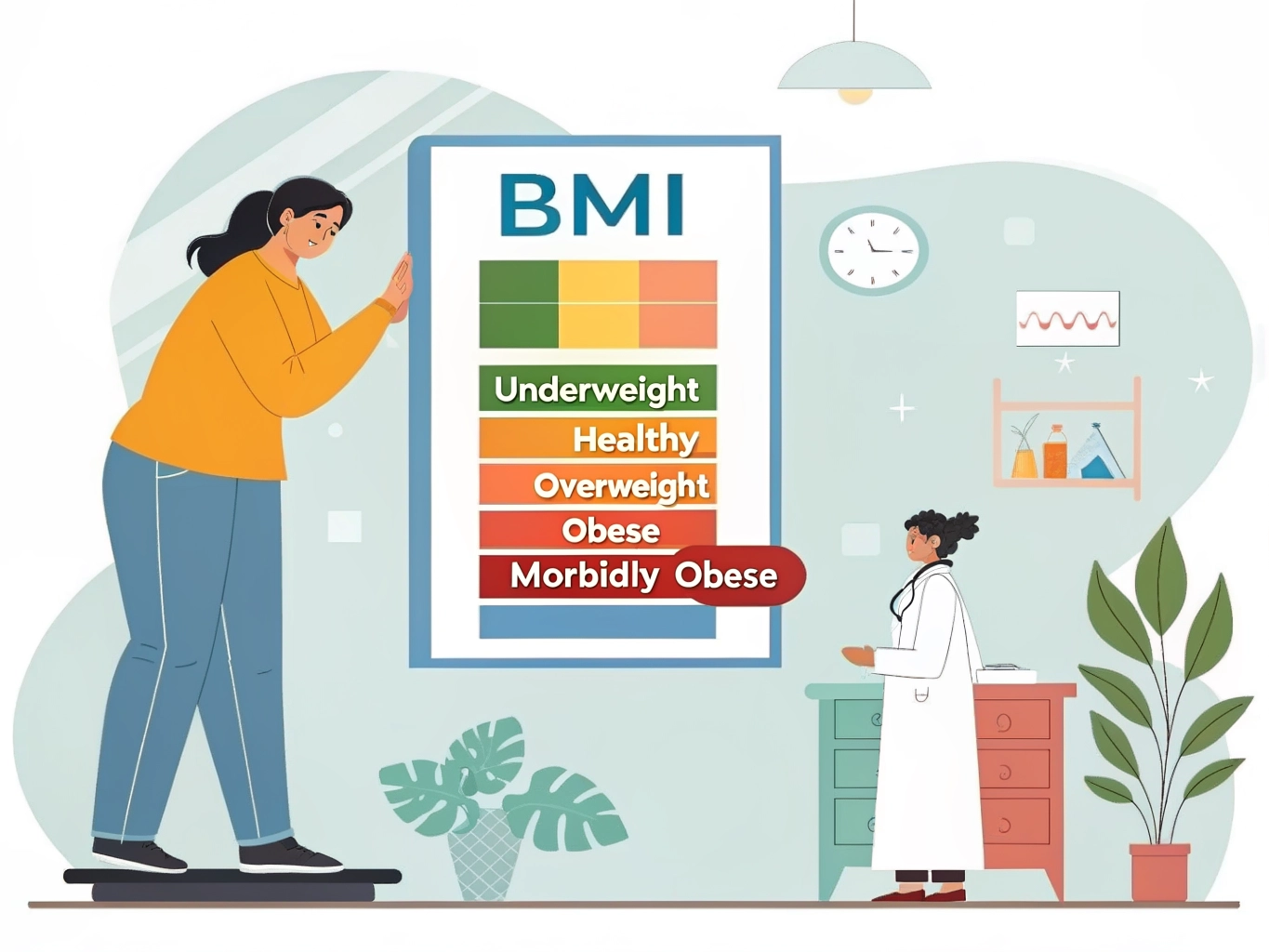
The formula for calculating BMI is straightforward: divide your weight in kilograms by your height in meters squared. This results in a number that places you into a category. Here’s a quick breakdown:
| BMI Category | BMI Range |
|---|---|
| Underweight | Below 18.5 |
| Healthy | 18.5 – 24.9 |
| Overweight | 25.0 – 29.9 |
| Obese | 30.0 – 39.9 |
| Morbidly Obese | 40 and above |
BMI Categories and Their Meaning
Now, let’s walk through the categories:
- Underweight: A BMI below 18.5 suggests you may need to gain weight for better health.
- Healthy: A BMI between 18.5 and 24.9 indicates a healthy weight range.
- Overweight: If your BMI is between 25.0 and 29.9, you may want to consider lifestyle changes.
- Obese: A BMI of 30 or more is where conversations about weight loss options often begin.
- Morbidly Obese: A BMI of 40 or above usually qualifies for more serious interventions.
It’s important to remember that these categories are not labels but rather a shared language with your healthcare team. This helps everyone stay on the same page about your health journey.
Finally, while this tool is designed for adults, it may not be accurate for every body type. It’s a starting point, not a final verdict.
“The first step toward change is awareness. The second step is acceptance.”
How to Use the BMI Calculator for Bariatric Surgery
Calculating your body mass index can be a straightforward process. To get started, you’ll need just two essential pieces of information: your current weight in pounds and your height, which can be measured in feet and inches or just inches. This simplicity makes it easy for anyone to take that first step.
The bmi calculator does all the heavy lifting for you. Once you input your weight and height, it quickly computes your numerical result. There’s no need to struggle with complicated formulas or charts. It’s all done in a split second!
Once you have your BMI number, it’s important to understand what it signifies. This number places you into a category that reflects your health status. Here’s a quick overview of what those categories can mean for you:
| BMI Category | BMI Range |
|---|---|
| Underweight | Below 18.5 |
| Healthy | 18.5 – 24.9 |
| Overweight | 25.0 – 29.9 |
| Obese | 30.0 – 39.9 |
| Morbidly Obese | 40 and above |
Understanding these categories is crucial, especially when it comes to insurance eligibility for weight loss options. Generally, insurance companies consider coverage if your BMI is:
- 40 or higher: This usually qualifies you for weight loss surgery.
- 35 to 39.9: You may qualify if you have a major health complication, such as:
- Diabetes
- Cardiovascular disease
- High blood pressure
- High cholesterol
- Debilitating joint pain
- Sleep apnea
- Uncontrolled GERD or acid reflux
- Pulmonary hypertension
- Metabolic Dysfunction Associated Steatotic Liver Disease
If your BMI is below 35, insurance may not cover surgery. However, this doesn’t mean there aren’t other paths available for weight management. It’s important to keep in mind that your BMI is just one piece of the puzzle. It helps inform your next steps but doesn’t define you.
Finally, remember that weight can fluctuate over time. Your BMI may change as you continue your health journey. It’s essential to view this number as a tool for understanding your health rather than a judgment.
“Awareness is the first step toward change. The second step is acceptance.”
Utilizing our BMI calculator for bariatric surgery provides a clear understanding of your health status and potential insurance coverage. A BMI of 35 or higher typically qualifies for surgical options, while a lower BMI may limit insurance coverage. However, various weight management strategies exist regardless of your BMI category. Ultimately, this measurement serves as a valuable tool in your health journey, reflecting changes over time rather than defining your overall well-being. Check your BMI with our calculator 👉
Weight Loss Surgery Options Based on Your BMI
When it comes to weight loss, knowing your options can empower your journey. Your BMI number can evoke a range of emotions, but it also opens the door to various possibilities tailored to your needs.
For individuals with a BMI over 35, several surgical options can be considered. These include:
- Gastric Sleeve: This procedure reduces the size of the stomach, helping you feel full sooner.
- Roux-en-Y Gastric Bypass: A popular choice that alters the digestive system to promote significant weight loss.
- SADI Surgery: A newer method that combines features of gastric sleeve and bypass.
- Duodenal Switch: This complex surgery not only reduces stomach size but also alters how your body absorbs nutrients.
- Mini Gastric Bypass: A simpler alternative that can still lead to effective weight loss.
It’s essential to note that surgeons will evaluate more than just your BMI when recommending a procedure. They will consider your health history, any previous surgeries, and what is best for your body.
For those in the 30 to 34.9 BMI range, there are effective non-surgical options available. Endoscopic Sleeve Gastroplasty (ESG) is less invasive and can lead to significant results. Additionally, medical weight loss programs that incorporate medication and support can be beneficial.
If your BMI falls between 25.0 and 29.9, lifestyle changes can make a meaningful impact. Working with dietitians and implementing healthier habits can lead to substantial weight loss without the need for procedures.
For individuals who have previously undergone surgery and didn’t achieve the desired results, revision surgery is an option. This can help address complications or stalled weight loss.
Remember, this is a menu of possibilities rather than a rigid flowchart. Every person’s situation is unique and deserves a tailored approach. Not qualifying for surgery isn’t a dead end; there are many solid alternatives that have helped countless individuals reach their weight loss goals.
“The journey of a thousand miles begins with one step.”
Taking the Next Step Toward Better Health
Embarking on a journey toward improved health can be both exciting and daunting. Remember, your BMI is just one piece of a much bigger puzzle. It doesn’t define your worth or your future health.
Take the number you received and bring it to a conversation with a medical team. They can help you look at the full picture, including your history and goals.
Check your BMI with our calculator 👉
Consider attending a seminar or information session offered by many accredited programs. These are low-pressure ways to learn more before making any commitments.
Reaching out for help doesn’t mean you’re signing up for surgery tomorrow. It’s about gathering information and taking control of your health journey.
Weight loss is a process with ups and downs. Having a solid team in your corner makes all the difference. You’ve already taken the hard step by seeking information. Now, focus on taking one small next step that feels right for you.