

Have you ever found yourself stuck in a decision-making loop? We all hit those moments where a choice feels heavier than it should. That’s when a pendulum yes or no generator can step in to offer a little clarity. This tool isn’t about predicting the future; it’s more like having a conversation with your own intuition.
The idea is simple: you ask a question, the pendulum swings, and you get an answer that helps you move forward. Many people use this method for quick guidance on everything from what to eat for dinner to bigger life choices. The best part? You don’t need any special training or fancy equipment to start—just an open mind and a willingness to give it a try.
With online versions available, you can get a reading right now without leaving your couch. Think of it as a way to break out of overthinking loops and finally make a decision you’ve been putting off. Whether you’re curious about divination or just need a practical decision-making tool, this guide will walk you through everything step by step.
Key Takeaways
- This tool offers clarity during tough decision moments.
- It’s a conversation with your intuition, not a mystical prediction.
- Quick guidance can help with everyday choices.
- No special training is needed to use it.
- Online versions make it accessible anytime.
- It helps break overthinking patterns.
Understanding the Pendulum Yes or No Generator and What It Does
Have you ever wished for a simple way to find clarity in your choices? A pendulum yes or no generator is an excellent tool for getting straightforward answers to your questions. It cuts through the confusion and helps you make decisions without overthinking.
At its core, this method involves a weighted object, typically a crystal or a simple weight, hanging from a string or chain. When you hold it steady, the pendulum responds to tiny muscle movements that reflect your subconscious energy. This subtle movement can reveal insights that your conscious mind may not be aware of yet.

Some people prefer using a crystal pendulum, believing that different stones carry unique energies. However, you can easily use a ring tied to a piece of thread, and it will work just as effectively. The beauty of this practice lies in its simplicity and accessibility.
The essence of pendulum divination is that it connects you with your intuition. When you ask a question, the swinging motion of the pendulum can bring hidden thoughts to the surface. You’re not summoning spirits or anything mystical; you’re simply tuning into your own inner wisdom.
Online pendulum tools aim to replicate this experience digitally. They often use algorithms or random generation to mimic the sense of receiving an answer from beyond your overthinking mind. This allows you to access guidance anytime, anywhere.
People have been using pendulums for divination for centuries. Its lasting popularity stems from its straightforward nature and the fact that it doesn’t require any special skills. To get the most out of this tool, approach it with a calm mind and a specific question. This clarity will help you trust the answers you receive.
Understanding how the pendulum yes or no generator works enhances your confidence in its responses. Incorporating it into your decision-making routine can be a powerful way to navigate life’s many choices.
What You Should Know Before Using a Pendulum Yes or No Generator
Do you often find yourself unsure about the choices you face? Before you dive into the world of using a pendulum for guidance, there are a few things worth knowing. These insights will help you get the best experience possible.
First off, this tool is designed for yes or no questions only. So, don’t expect it to lay out a detailed life plan or provide career advice in paragraph form. Keep your questions simple and straightforward.
Your state of mind matters a lot when you’re using a pendulum. If you’re feeling scattered or super emotional, the answers might not feel as clear or reliable. It’s essential to take a deep breath and center yourself before you ask a question. This way, your energy is calm and focused on what you truly want to know.
The pendulum picks up on your intuition. If you’re asking about a situation where you already have a strong bias, the reading might just reflect what you want to hear rather than what you need to hear. Trust your instincts as you engage with this tool.
Practice makes a difference here. The more you use the pendulum, the better you’ll get at phrasing your questions and trusting the answers that come through. Some people find that their pendulum gives more accurate readings when they treat it like a little ritual rather than a party trick.
Also, don’t ask the same question over and over, hoping for a different answer. That’s just your mind trying to override your intuition, and it usually leads to more confusion. Remember, the pendulum yes or no generator is a guidance tool, not a replacement for your own judgment. Use it to supplement your decision-making, not to make every choice for you.

How to Use a Physical Pendulum for Yes or No Answers
Do you want to learn how to harness the power of a physical pendulum for clear answers? Using a pendulum for guidance is simpler than it appears. Once you get the hang of it, you’ll wonder why you didn’t try it sooner.
The first thing you need is a pendulum. This can be a crystal on a chain, a necklace with a pendant, or even a paperclip tied to a string if you’re in a pinch. The choice is yours!
Programming Your Pendulum
Programming your pendulum is just a fancy way of saying you need to establish what each movement means. This ensures you’re not guessing when it starts to swing.
To program it, hold the pendulum steady and ask it to show you what a yes looks like. Watch the direction it moves, whether it’s back and forth, side to side, or in a circle. Then, ask it to show you a no and notice how the motion changes. You can also do the same for “maybe” or “unsure” if you want that option too.
Making and Using a Pendulum Chart
Some people like to use a pendulum chart. This is a printed sheet with yes, no, and sometimes other answers written in different spots. It allows the pendulum to point directly to the response.
Making a pendulum chart is easy! You can draw a circle on paper, divide it into sections, and label them with the answers you want. Alternatively, you can download a printable one online.
When you ask a question, hold the pendulum over the center of the chart. Let it swing toward the answer, which takes a lot of the guesswork out of reading the movements.
The key to getting clear answers is to keep your hand as still as possible. Let the pendulum do its thing without forcing it in any direction. With a little practice, you’ll start to trust the pendulum swing and feel more confident in the answers you’re getting, whether you’re using a chart or just watching the motion.
| Action | Description |
|---|---|
| Choose a Pendulum | Select a pendulum that resonates with you, like a crystal or a simple weight. |
| Program Your Pendulum | Establish what each direction means for yes, no, and maybe. |
| Create a Chart | Draw or download a chart to help visualize the answers. |
| Ask Questions | Hold the pendulum steady and ask clear yes or no questions. |
| Observe the Motion | Let the pendulum swing naturally to reveal the answer. |

Trying Out an Online Pendulum Yes or No Generator
Ever thought about how easy it could be to find answers online? If you don’t have a physical tool handy, an online pendulum yes or no generator is a fantastic alternative that gives you answers in seconds. It’s all about convenience and clarity!
The process is dead simple: just visit the website, type your question into the box, and hit the button to get your reading. There’s no setup or cleanup required, making it super user-friendly.
Before you click, take a moment to really focus on your question. The clearer you are in your head, the more meaningful the answer will feel. This little pause can make a big difference!
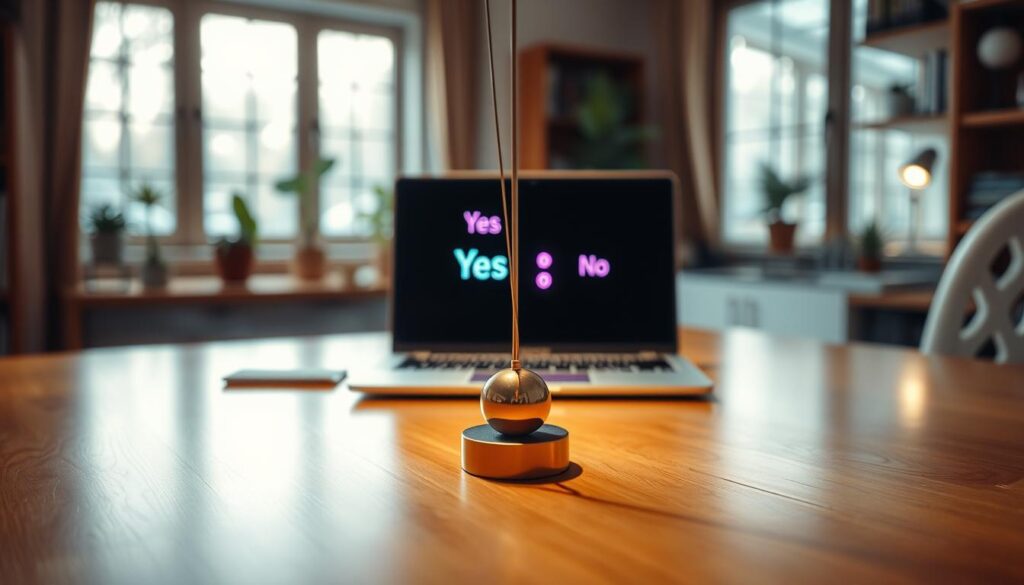
Some online pendulums even show a visual of a swinging tool on the screen, which adds a nice touch and makes the experience feel more authentic. Watching the pendulum swing can enhance your connection to the reading.
Step-by-Step Guide to Getting Your Answer Online
- Go to an online pendulum website, like Spells8.
- Type your yes or no question into the provided box.
- Click “Ask your Question” to receive your answer.
- Repeat as needed for additional questions!
Features That Make Online Pendulums Easy to Use
- You can ask as many questions as you want in a row, perfect for tackling multiple decisions.
- Many online tools offer customizable backgrounds, sound effects, and the option to share your results with friends.
- The Yes No Picker Wheel adds a fun, game-like element to decision-making, spinning to land on yes or no.
- These tools often save your previous answers, allowing you to track patterns over time.
- Best of all, online pendulums are always available, whether you’re on your phone during a lunch break or at your computer late at night.
While it might not feel exactly like holding a physical tool, the online version still provides that moment of clarity when the answer pops up on the screen. Embrace the ease and accessibility of online tools to enhance your decision-making process!
How to Read and Interpret Pendulum Movements for Clear Answers
Interpreting the swing of your pendulum can feel overwhelming at first. However, once you grasp the basics, it becomes second nature. The way your pendulum moves holds the key to understanding its answers.
The most common swing patterns include:
- Back and forth: This motion typically indicates a straightforward answer, often meaning “yes.”
- Side to side: This usually represents “no,” providing a clear response to your question.
- Clockwise circles: This motion often suggests positive energy or affirmation.
- Counterclockwise circles: This may indicate blocked energy or a negative response.
If you program your pendulum so that a vertical swing means “yes” and a horizontal swing means “no,” any diagonal movement could signify that the answer isn’t clear-cut. It’s essential to be aware of these nuances as you read the motion.
The speed of the swing is also significant. A fast, strong motion usually conveys a confident answer, while a slow, weak swing might suggest uncertainty. This can be a signal to rephrase your question for clarity.
Your personal interpretation plays a crucial role in this process. The pendulum amplifies what your intuition already knows. Pay attention to how you feel when observing the movement. Keeping a journal of your readings can help you track which answers turned out to be accurate, refining your understanding over time.
Don’t stress about getting the interpretation perfect every time. The meaning of the swing can shift based on your energy and the context of your question. If the pendulum isn’t moving much, it might mean you’re not ready for the answer or that your question needs simplification.
The beauty of this practice lies in its personal nature. The more you work with it, the more you’ll develop your unique understanding of what each motion means for you.
| Motion Type | Possible Meaning |
|---|---|
| Back and Forth | Yes |
| Side to Side | No |
| Clockwise Circles | Positive Energy |
| Counterclockwise Circles | Negative Energy |
| Diagonal Movement | Unclear Answer |
| Slow Swing | Uncertainty |
| Fast Swing | Confident Answer |
When to Turn to the Pendulum Yes or No Generator for Decision Making
Have you ever faced a moment where making a choice felt impossible? Life is full of decisions, and sometimes it can be hard to find the right path. A pendulum can offer clarity during these tricky times, helping you move forward with confidence.
There are specific moments when this tool can genuinely assist you. Knowing when to use it makes all the difference:
- Everyday Decisions: Simple choices like what to eat for dinner or whether to buy that shirt you’ve been eyeing are perfect for a quick check. These low-stakes situations just need a little nudge.
- Relationship Questions: Many people turn to the pendulum when wondering if they should text someone back or if a certain person is worth their time. It can help clarify your feelings.
- Work-Related Decisions: When you’re stuck between two options and can’t seem to decide, a pendulum reading can provide guidance. It’s a great way to break through indecision.
- Overthinking Moments: If you find yourself overanalyzing a situation, the pendulum can serve as an external nudge to help you move forward.
- Morning Routine: Some individuals incorporate it into their morning rituals, asking quick questions to set the tone for the day and gauge the energy they might encounter.
- Reconnecting with Intuition: If you feel disconnected from your gut feelings, this tool can help you tune back in and trust your instincts.
- Big Life Decisions: While you shouldn’t rely solely on a pendulum for major choices, it can offer helpful guidance when combined with your logic and trusted advice.
The key is to use the pendulum when you genuinely feel stuck. It’s not a way to avoid taking responsibility for your choices. Over time, you’ll learn which questions are best suited for this tool and which require deeper reflection or discussion with others.
For those quick moments of indecision, the Yes No Picker Wheel is an excellent resource. It’s designed to help you make decisions without needing input from others, making it a handy tool for when you’re unsure.
Other Simple Tools to Help with Yes or No Decisions
When it comes to making quick decisions, you have options beyond the pendulum. Mixing things up can keep your decision-making process feeling fresh and engaging. Let’s explore some alternatives that might resonate with you.
Tarot cards are a popular choice. While often used for deeper readings, you can pull a single card for a simple yes or no answer. This method adds a layer of symbolism and intuition to your decision-making.
Oracle cards function similarly to tarot but tend to be more freeform. Many people find them easier to interpret for quick guidance. Their flexibility allows for a broader range of questions, making them a fun option.
A classic coin flip has been helping people decide for ages. There’s something satisfying about the finality of heads or tails when you’re truly stuck. It’s a straightforward way to cut through indecision.
The Yes No Picker Wheel is another exciting tool. This online decision wheel spins like a game and lands on your answer. You can customize the spin speed, duration, sounds, and colors, making it a playful addition to your decision-making toolkit.
Some folks prefer the wheel system because it feels more random and less influenced by their own energy. This can be reassuring if you’re worried about bias affecting your results.
Many online tools, like the picker wheel, allow you to share results with others. This feature is great for group decisions, making it easier to collaborate with friends or family.
Ultimately, pendulums, tarot, oracle cards, and spinner tools all have their own vibe. The best one for you is whichever feels right in the moment. Having a few different decision-making tools means you’ll always have a way to get unstuck, no matter the situation.
| Tool | Description |
|---|---|
| Tarot Cards | Pull a single card for a quick yes or no answer. |
| Oracle Cards | More freeform and easier to interpret for quick guidance. |
| Coin Flip | A classic method providing a straightforward heads or tails decision. |
| Yes No Picker Wheel | An online tool that spins to give you a random answer. |
| Spinner Tools | Feel more random and less influenced by personal energy. |
Making the Pendulum Yes or No Generator Part of Your Decision Routine
Could integrating a decision-making tool into your routine bring you more clarity? Once you feel comfortable with the yes or no tool, try weaving it into your daily or weekly life. This will help it become a natural part of how you navigate choices.
Many find that using the tool at the same time each day, like after waking or before bed, builds a consistent practice. You don’t need to make a big production out of it; just a quiet moment with your physical tool or your favorite online option is enough.
Keeping a simple journal of your questions and answers can deepen your relationship with the practice. Over time, you’ll notice patterns in the guidance you receive, enhancing your intuition.
Some people even combine this practice with tarot or oracle cards, using the tool for quick yes questions while exploring deeper insights with cards. The more you use it, the more you’ll trust the swing and the answers that come through.
Don’t hesitate to experiment with different tools to find what resonates best. Sharing your practice with friends can also be fun, allowing you to bond over a shared interest in divination. Ultimately, this tool is here to help you make decisions with confidence and ease.