
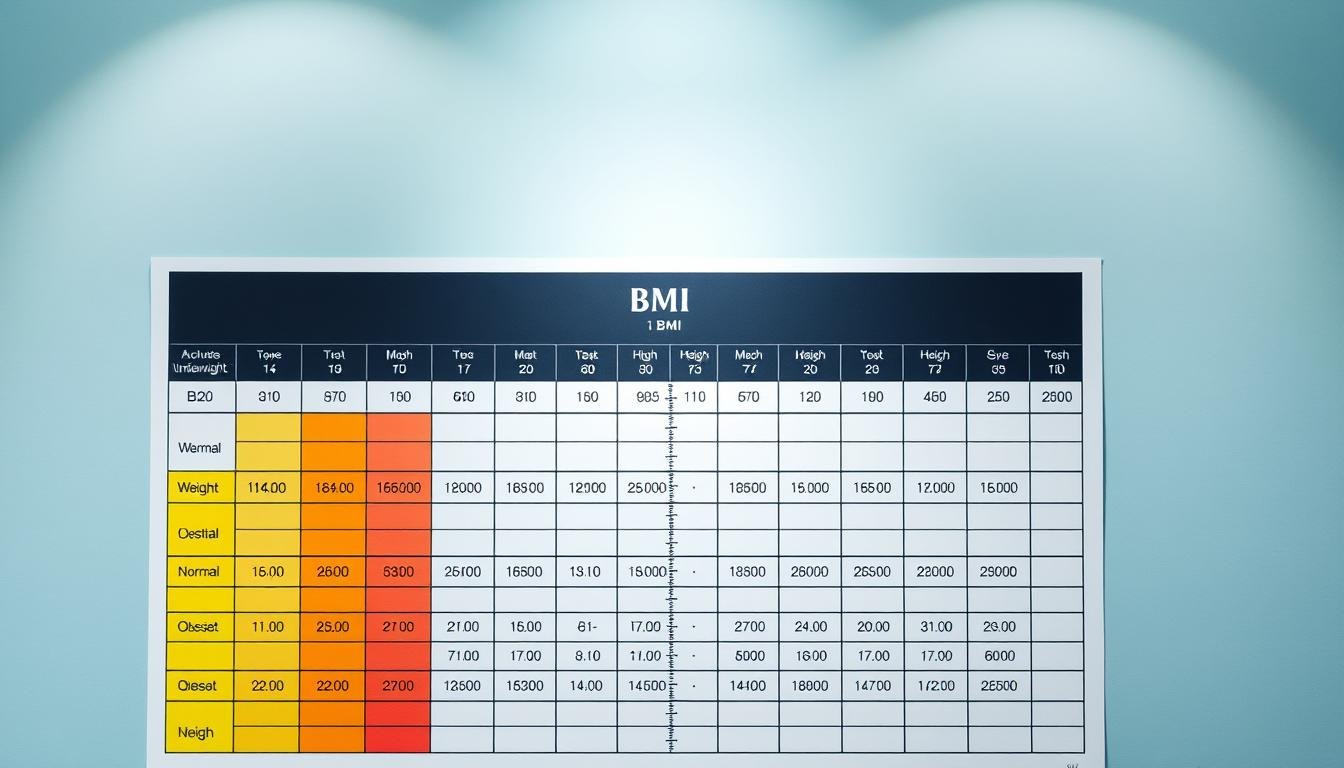
You’ve probably heard the term BMI thrown around at doctor’s visits, or maybe you’ve stumbled across it while trying to figure out if your weight’s in a good place. A BMI printable chart is honestly one of the simplest tools you can keep around the house to get a quick read on where you stand.
Check your BMI with our calculator 👉
This guide is going to walk you through everything from what BMI actually measures to how you can grab a chart, print it out, and start using it today. We’ll keep things straightforward and skip the medical jargon that makes your eyes glaze over.
Think of this as your no-stress starting point for understanding your weight and health a little better. By the time you’re done reading, you’ll know exactly how to find your numbers on a chart and what those numbers might mean for you.
The best part is you don’t need any fancy equipment or a gym membership to get started with a printable chart. So grab a cup of coffee, get comfortable, and let’s dig into the world of BMI together.
Key Takeaways
- Understanding BMI helps assess your weight in relation to your height.
- A printable chart can simplify tracking your BMI.
- This guide provides easy steps to use a BMI chart effectively.
- No medical background is needed to grasp your health metrics.
- Learn how to interpret your BMI numbers for better health insights.
Getting to Know BMI Printable Chart: What It Is and Why It Matters
Check your BMI with our calculator 👉
Body mass index is more than just a number; it’s a useful tool for assessing your health. This measure compares your weight to your height, giving you a quick snapshot of where you stand. Understanding this number can help you make informed decisions about your health.
What Body Mass Index Measures
At its core, body mass index is a calculation of your weight in kilograms divided by the square of your height in meters. This formula helps provide a reliable indicator of body fatness for most people. While it’s not perfect, it serves as a good starting point for assessing your body mass.
Why BMI Is a Helpful Health Snapshot
Think of your BMI as a quick health snapshot, not a full documentary about your body. This handy little indicator can nudge you to ask better questions about your overall health. For many, this number does a decent job of flagging potential weight-related issues before they become bigger problems.
Who Should Keep an Eye on Their BMI
Pretty much any adult can benefit from knowing their body mass index. It’s especially useful if you’ve noticed your weight creeping up or down over the years. Even if you feel fine, keeping an eye on this measure can help you catch shifts in your body before they turn into something worth worrying about.
The information you get from a simple BMI check is easy to understand and doesn’t take more than a couple of minutes to figure out. You don’t need to be a fitness buff or have any special training to wrap your head around what your index number means.

How to Use a BMI Printable Chart to Track Your Health
Check your BMI with our calculator 👉
Tracking your health with a BMI chart is easier than you might think. You don’t need to be a math genius to figure it out. Let’s break it down step by step.
Finding Your Weight and Height on the Chart
First, you’ll want to weigh yourself on a reliable scale. Make sure to jot down that number in either pounds or kilograms. Next, measure your height against a wall. Remember to stand up straight and take off your shoes, as slouching can throw off your measurement.
Now, grab your BMI chart. You’ll find your weight listed across the top and your height down the left side. All you need to do is slide your finger across from your height and down from your weight until they meet in the middle. This point will give you your BMI category.
Reading the BMI Categories on the Chart
When you find that meeting point, you’ll notice it lands in a colored section. This tells you which category you fall into as an adult. The chart uses simple color coding: green for healthy, yellow for overweight, and red for obesity. This way, you can see your status at a glance.
Where to Download and Print Reliable BMI Charts
There are plenty of reliable places where you can download free versions of a BMI chart. The CDC website is a great resource, along with other trusted health organizations. You can print one out and stick it on your fridge or keep a copy in your bathroom for quick reference whenever you need it.
Taking care of your health doesn’t have to be complicated. Having a physical chart right in front of you makes tracking feel more real than staring at a screen. So, why not give it a try?
Calculating Your BMI: A Simple Step-by-Step Guide
Calculating your body mass index can seem tricky, but it’s really quite straightforward. With just a few steps, you can find out where you stand in terms of weight and height. Let’s dive into how to do it accurately.
Measuring Your Weight and Height Accurately
First things first, you need an accurate weight and height measurement. Even small errors can shift your number significantly. Here’s how to get it right:
- Weigh yourself first thing in the morning after using the bathroom and before eating or drinking anything for the most consistent results.
- For height, stand flat-footed against a wall with your heels touching it. Have someone mark the top of your head for an accurate measurement.
The Quick Formula Explained Without the Science Jargon
The basic mass index formula is simple. It takes your weight in kilograms and divides it by your height in meters squared. If you’re working with pounds and inches, the formula changes slightly:
- Multiply your weight by 703.
- Then divide that number by your height in inches squared.
That final number is your body mass index, and it’s the same index used by doctors and health professionals everywhere.
Check your BMI with our calculator 👉
Tools You Can Use to Make Calculation Easy
You don’t have to memorize any of this because there are plenty of free online calculators that do the math for you. The CDC has a BMI calculator. For the average person who just wants a quick answer, these tools make the whole body mass calculation process painless.
Breaking Down BMI Categories for Adults in the U.S.
Understanding where you fit in the BMI categories can provide valuable insights into your health. For adults aged 20 and older, there are four main categories:
What Counts as Underweight, Healthy, Overweight, and Obese
Once you’ve got your number, the next step is figuring out which of the standard categories you fall into:
- A BMI under 18.5 puts you in the underweight range, which comes with its own set of health concerns.
- The sweet spot most people aim for is a healthy weight between 18.5 and 24.9, where your risk for weight-related problems tends to be lowest.
- When your adult BMI lands between 25 and 29.9, you’re in the overweight category, and it might be time to pay a little more attention.
- A BMI of 30 or higher falls into the obesity range, which is further split into three classes depending on how high the number goes.
How BMI Categories Link to Health Risks
These categories aren’t just random labels. Research shows your risk for heart disease and diabetes climbs as your BMI moves above that healthy weight 18.5 threshold. Carrying extra weight puts more strain on your body over time, which is why doctors keep such a close eye on these numbers.
Why Age, Sex, or Race Don’t Change Adult BMI Categories
One thing that surprises a lot of people is that adult BMI categories don’t change based on how old you are or whether you’re male or female. The same weight 18.5 to 24.9 range applies to all adults 20 and older, which keeps things simple when you’re using a chart.
Health problems linked to obesity are serious, but the good news is that even small drops in your BMI can make a real difference for your overall health.
When BMI Doesn’t Tell the Whole Story
While BMI can provide useful insights, it doesn’t tell the whole story about your health. It’s essential to recognize its limitations and understand how various factors can affect its accuracy.
Limitations of BMI—Muscle, Pregnancy, and More
Here’s the thing about BMI that doesn’t get talked about enough: it’s not perfect and it was never meant to be. For people who hit the gym hard and carry a lot of muscle, their body weight might push them into an overweight category even though their body fat is low.
Pregnant folks should absolutely skip the BMI chart because it’s not designed to account for the natural weight changes that come with growing a tiny human. Also, people with certain conditions that affect height may find their BMI results misleading.
How Ethnic Background Can Affect Interpretation
Your ethnic background can also change how we should interpret that number. People from Asian, Black African, or Middle Eastern backgrounds often face higher health risks at a lower BMI. For those groups, a healthy range might actually top out around 22.9 instead of 24.9, and obesity risks can start as low as 27.5.
Other Measurements to Consider Alongside BMI
BMI doesn’t work well for children and teens either because their bodies are still growing and changing so much from year to year. For children and teens, doctors use age and sex-specific growth charts instead of the standard adult categories.
The number also can’t tell you where your body stores fat, and belly fat in particular is linked to a higher risk of heart disease. That’s why a waist measurement or waist-to-height ratio can give you extra information that BMI alone misses.
Some medical conditions and medications can affect your height or weight too, so your individual situation always matters more than a single indicator. At the end of the day, BMI is a useful starting point for most adults, but it’s smart to look at the bigger picture of your overall health.
| Category | Healthy Weight Range | Overweight Range | Obesity Range |
|---|---|---|---|
| General Population | 18.5 – 24.9 | 25 – 29.9 | 30 and above |
| Asian, Black African, Middle Eastern | 18.5 – 22.9 | 23 – 27.4 | 27.5 and above |
Keep Track and Stay Healthy: Making the Most of Your BMI Chart
Check your BMI with our calculator 👉
Staying aware of your health can be easier than you think with the right tools. Once you’ve got your BMI chart printed and visible, the real work begins. Regular check-ins are key.
Tracking your weight every few months offers a clearer picture than stressing over daily changes. Aim to weigh yourself at the same time each day and under similar conditions for consistent results.
A BMI chart isn’t just a one-time tool. Your body changes over the years, and keeping tabs helps you spot trends early. Pairing your chart with regular physical activity is one of the best things you can do for long-term health.
Even light activities, like walking, can make a difference. If your adult BMI falls outside the healthy weight range, remember it’s just information to work with, not a judgment.
Your health care provider can help interpret your number and suggest any necessary changes. The goal isn’t perfection but finding a balance that lowers your risk for obesity-related diseases over time.
Taking care of yourself is a long game, and having a simple chart to reference makes the whole process feel more manageable. For more detailed information, check out the BMI table.