
Have you ever paused when seeing 13 pop up in your life? Maybe on an elevator button or a calendar date? This little digit carries a hefty reputation, dividing opinions worldwide. Some folks view it as a beacon of good fortune, while others run in the opposite direction.
Take Taylor Swift, for example. She’s a big fan of 13, often writing it on her hand before shows. This personal belief shows how deeply intertwined our feelings about numbers can be. In Italy, 13 is celebrated, linked to prosperity and winning big, rather than doom and gloom.
Even Colgate University embraces this number, founded by 13 men with 13 dollars and 13 prayers. For them, it symbolizes good fortune. This guide will explore the rich history, superstitions, and cultural beliefs surrounding this intriguing digit. So, let’s dig in and uncover the stories behind 13!
Key Takeaways
- Many people hesitate when encountering 13 in daily life.
- This number divides opinions, seen as both lucky and unlucky.
- Taylor Swift considers 13 her lucky charm.
- In Italy, 13 is associated with prosperity.
- Colgate University has a unique connection to this number.
- This guide will explore various beliefs about 13.
Chip Away at the Mystery: What’s Up With the Number 13?
Before we get into the myths and superstitions, let’s explore the facts about 13. Mathematically, this digit is quite impressive. It’s a prime number, a Fibonacci number, and even a happy number. Yes, that’s a real thing!
What’s more, 13 pairs up nicely with 11 as a twin prime and shares a cousin connection with 17. It’s also one of only three known Wilson primes, alongside 5 and 563. This makes it a rare gem in the math world.
In terms of shapes, a 13-sided regular polygon is called a tridecagon. That’s a fun fact to throw into a conversation! In Germanic languages, 13 stands out as the first compound number. While 11 and 12 have their own unique names, 13 breaks the pattern linguistically.
In Germany, there’s a tradition where numbers 0 through 12 are spelled out, but 13 is the first to be written in digits. It’s like this number is too grown-up for words!
Now, let’s connect this to the lunar calendar theory. A solar year has about 12.41 moon cycles, leading to the idea of a significant thirteenth month. This oddity shows up in various traditions, such as the Twelve Days of Christmas, where 13 lurks just beyond the perfect dozen.
Across cultures, counting systems and meanings for numbers vary wildly. So, the reputation of 13 isn’t universal; it’s learned. Understanding its mathematical and historical context gives us a solid foundation. But the real juice lies in how people feel about this number, which we’ll explore next.
Why Do So Many People Think 13 Is Bad Luck?
Many people in the U.S. and other Western cultures genuinely feel uneasy about 13. This number carries a heavy weight of old stories and superstitions. Let’s explore some of the reasons behind this belief.
The Last Supper and Judas
One of the most famous tales involves the Last Supper. There were 13 people at the table: Jesus and his 12 apostles. The twist? Judas Iscariot, the betrayer, was the 13th to sit down. This biblical story has stuck in minds for centuries, becoming a major reason why many consider 13 an omen of misfortune.
Friday the 13th and Triskaidekaphobia
Another dark chapter comes from history. On Friday, October 13, 1307, King Philip IV of France ordered the arrest of the Knights Templar. Many were tortured and killed, adding another layer of dread to this date. This led to the term triskaidekaphobia, which is the fear of 13, first recorded in 1911. Some folks even rearrange their lives to avoid this number!
Skipping the 13th Floor and Other Avoidances
Ever noticed how some buildings skip the 13th floor? Elevators often jump from 12 to 14, and some hotels don’t even have a room 13. This avoidance highlights how deeply rooted these superstitions are. It’s not just about a number; it’s about a feeling of unease.
Additionally, there’s a fascinating theory regarding full moons. A year with 13 full moons instead of 12 caused chaos for monks managing church calendars. This disruption turned 13 into a nuisance and, ultimately, a bad omen.
In ancient cultures, 13 represented femininity and lunar cycles. However, as solar calendars gained popularity, this number became something to fear. Lastly, let’s quickly debunk a myth: the idea that the Code of Hammurabi had a missing 13th law is just a story. The original code had no such numeration.
These stories and superstitions have built up over time, creating a cultural snowball effect. This has made 13 the poster child for bad luck in many places.
So, Is the Number 13 Lucky? A Look at Different Cultures
Across the globe, opinions about 13 vary widely, with some cultures embracing it wholeheartedly. In Italy, for example, this digit shines as a symbol of good fortune, abundance, and success. The Italian phrase “fare tredici” translates to “make thirteen,” meaning to hit the jackpot. This expression comes from the Totocalcio football pools, where scoring 13 points can change lives.
Italian cinema has celebrated this lucky charm. Movies like “Al bar dello sport” (1983) and “Eccezzziunale… veramente” (1982) feature characters obsessed with winning the coveted 13 ticket. Even earlier, a comedy titled “Ha fatto 13!” humorously played on misunderstandings surrounding this winning number.
In Neapolitan tradition, 13 holds a special place. It’s viewed as a symbol of great good fortune, protection, and new paths. Saint Anthony of Padua’s feast day on June 13 connects faith with fortune. Devotions include the Thirteen Tuesdays of St. Anthony and a chaplet with 13 decades of beads.
Looking beyond Italy, other cultures also view 13 positively. In France, before World War I, it was a lucky number used on postcards and good luck charms. In Sikhism, Guru Nanak Dev Ji reached the number 13 while distributing goods, entering a divine trance and repeating “terah”, meaning “yours.” This moment became spiritually significant.
In Wicca, a coven ideally consists of 13 members, highlighting community and power rather than fear. Ancient connections to lunar cycles also tie 13 to the Great Goddess, fertility, and renewal. This perspective paints a much older and more positive picture of 13.
So, whether it’s soccer winnings, saintly blessings, or ancient goddess energy, 13 has a whole other identity as a bearer of good fortune and prosperity.
| Culture | View on 13 | Example |
|---|---|---|
| Italy | Good fortune and abundance | Fare tredici (hit the jackpot) |
| France | Traditionally lucky | Used on postcards and charms |
| Sikhism | Spiritual significance | Guru Nanak’s trance |
| Wicca | Community and power | Coven of 13 members |
13’s Role in Life, Traditions, and American Culture
In many ways, 13 plays a significant role in our daily lives and traditions. This number appears in various cultural contexts, from religious milestones to national symbols. Let’s dive into how it shapes our experiences.
The Bar Mitzvah and Coming of Age
In Judaism, turning 13 marks a huge milestone. Boys celebrate their Bar Mitzvah, becoming full members of their faith. This event is a joyous occasion, filled with family and friends. It symbolizes responsibility and a deeper connection to cultural beliefs.
13 in American Symbols and History
In the United States, 13 pops up in significant symbols. The Great Seal features:
- 13 stars in the glory
- 13 stripes on the shield
- 13 olives and leaves on the olive branch
- 13 arrows
- 13 levels on the pyramid
These elements celebrate the original Thirteen Colonies. Even the first American flag had 13 stripes and stars, showing how this number is woven into the nation’s identity.
Sports, Social Media Age Limits, and Daily Life
Interestingly, some sports avoid using 13. For instance, the Indianapolis 500 skipped it from 1915 to 2002, and Formula One followed suit from 1977 to 2013. Yet, in rugby league, jersey 13 is a position of honor for the starting loose forward.
On social media, 13 marks a coming-of-age moment. Many platforms set this age as the minimum for creating accounts, aligning with COPPA regulations. Additionally, the ESRB rates T-games for ages 13 and up, while the MPA recommends PG-13 movies, marking a transition into more mature content.
Even in triathlon, the number 13 is skipped in the numbering system, jumping from 12 to 14. This reflects how deeply rooted superstitions can influence everyday choices.
Overall, 13 is interwoven into American life in ways that often go unnoticed. From the dollar bill in your wallet to the movie rating on your screen, this number carries a rich tapestry of meaning.
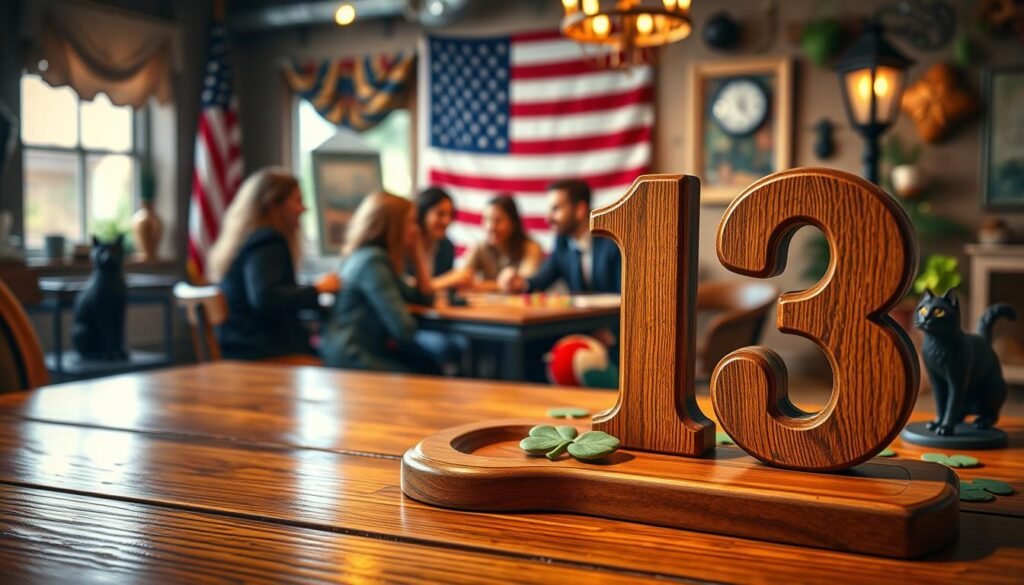
How People Carry 13 Around: Jewelry, Luck, and Tales
Ever wondered how people carry their beliefs about 13 into their daily lives? This number often shows up in jewelry, stories, and superstitions that connect individuals to their cultural roots.
The Italian Lucky 13 Charm and More
Take a charming story from Eredi Jovon in Venice. A woman requested 13 coral beads for a job interview. As the shopkeeper strung them, the thread broke. With a smile, he restrung 13 new beads, saying, “Let’s start again.” A week later, she got the job! This little tale highlights how 13 can bring good fortune.
In Italy, people don’t just think of 13 as a symbol of luck; they wear it! Many adorn themselves with 18K gold charms shaped like the number 13 on necklaces or bracelets. These charms are seen as protective talismans, inviting good fortune and warding off bad energy.
Interestingly, the Italian cornicello, or gold horn, shares a similar protective symbolism with the number 13. Both are believed to bring good luck and prosperity.
Stories and Superstitions You Might’ve Heard
This fascination with 13 isn’t limited to Italy. In France, before World War I, people used 13 on postcards and charms as symbols of good luck. Wearable 13 has a rich history across cultures.
Modern examples abound, too. Taylor Swift, for instance, draws 13 on her hand before performances, a ritual that her fans have embraced as a sign of good vibes.
And let’s not forget the baker’s dozen! That extra loaf, called the vantage loaf, symbolizes getting more than expected—13 items for the price of 12.
At Colgate University, there’s even a male a cappella group called the Colgate 13. The campus community treats this number like a good omen, further embedding it into their culture.
People often share stories about finding 13 cents on the ground or spotting 13 on a license plate. Some see these moments as signs, while others might shrug them off. Superstitions surrounding 13, whether positive or negative, often get passed down through families. Jewelry becomes a way to carry those beliefs with you.
So, whether it’s a gold charm, a pre-event ritual, or a cherished story, 13 has a way of sticking with people in personal and meaningful ways.
Numbers and Their Stories: Why 13 Means More Than You Think
A simple digit can hold profound meanings, shaping beliefs and experiences across cultures. What we’ve explored goes beyond math or superstition; it’s about the stories we tell ourselves about numbers and their significance.
Whether you see 13 as a symbol of fortune or misfortune often reflects your upbringing and cultural context. In some places, it represents prosperity and hitting the jackpot, while in others, it leads to skipping a floor in a building. Both realities coexist, highlighting how diverse our perceptions can be.
As Grandma Carmela from Eredi Jovon wisely said, “To those who fear Friday the 17th, respond with thirteen smiles.” This captures the spirit of how we choose to relate to numbers. They don’t hold power on their own; we give them meaning through our beliefs and traditions.
So, think about your own relationship with 13. Has it ever made you pause or brought a thrill when it appeared? Perhaps the real luck lies not in the number itself but in the connections we create around it. Next time 13 pops up, whether on a clock, a jersey, or a charm, consider what story you want it to tell.