
It’s pretty wild how a simple digit like 13 can stir up such strong feelings across the globe. Some folks might knock on wood when they see it, while others, like Taylor Swift, embrace it as their personal charm. You’ve probably noticed hotels skipping the 13th floor or felt a little uneasy when Friday the 13th rolls around. Trust me, you’re not alone in that.
Different cultures have wildly varying views on this number. In some places, it’s seen as a sign of good fortune, while in others, it’s avoided like the plague. This fascinating contrast adds layers to its meaning. Did you know that the fear of this digit even has a scientific name? It’s called triskaidekaphobia, recognized since 1911, so it’s not just an internet trend.
In this article, we’ll explore the roots of this superstition, what math and culture say about it, and whether science backs up any of the bad luck claims. By the end, you might just find yourself rethinking how you feel when this number pops up in your life.
What’s the Story with 13? Origins of the Superstition
Ever wonder why the number 13 carries such a heavy weight in our culture? The backstory is pretty surprising and not as ancient as most folks assume. Many believe that its reputation stems from various cultural beliefs and historical events.
Early Superstitions and Cultural Roots
One theory points to lunar-solar calendars, which have about 12.41 lunations per solar year. This left a pesky 13th month that felt ominous to those managing church festivals. Monks were not too happy about this disruption in their calendar keeping.
Another well-known tale comes from the Last Supper. With 13 guests at the table, Judas Iscariot was the 13th to sit down. His betrayal of Jesus, linked to the day of crucifixion, cemented the number’s bad reputation.
In Norse mythology, Loki crashed a dinner party of 12 gods as the 13th guest, causing chaos. This story has gained attention lately, especially with its portrayal in popular culture.
Common Beliefs: Dinner Guests, Buildings, and Friday the 13th
On Friday, October 13, 1307, King Philip IV of France ordered the arrest of the Knights Templar. Most were tortured and killed, marking that day as a potential origin for the superstition. However, historians debate how much this event truly influenced the number’s reputation.
Interestingly, Dr. Juliette Wood suggests that the fear surrounding 13 might be a modern creation. She argues that this superstition gained traction around the early 20th century, largely due to media and horror films like Friday the 13th.
People began searching for historical stories to fit this myth, connecting it to the Last Supper and other tales that seemed to align perfectly. The fear of having 13 guests at a dinner party became so widespread that some still feel anxious about it today.
These beliefs have seeped into everyday life, with many buildings skipping the 13th floor altogether. Some hotels even jump straight from 12 to 14 without a second thought!
| Event | Date | Significance |
|---|---|---|
| Lunar Calendar Theory | Yearly | 13th month seen as ominous |
| Last Supper | Circa 30 AD | Judas as the 13th guest |
| Loki’s Dinner Party | Mythological | Chaos caused by the 13th guest |
| Knights Templar Arrest | October 13, 1307 | Marked as a day of bad luck |
The Mathematical and Cultural Meaning Behind Number 13
Before diving into the spooky stories, let’s take a moment to appreciate the mathematical charm of 13. This digit isn’t just a source of superstition; it’s also quite fascinating in the realm of mathematics.
Number 13’s Unique Mathematical Traits
First off, 13 is a prime number, which already makes it special. It’s also a Fibonacci number, a happy number, and even classified as a lucky number mathematically. Ironic, right?
It gets even cooler! This number pairs up as a twin prime with 11 and a cousin prime with 17. Plus, it’s one of only three known Wilson primes, alongside 5 and 563. That’s some impressive math trivia that might just change how you view 13!
Religious and Cultural Highlights Around the World
Now, let’s shift gears to the cultural side. In various faiths, 13 pops up not as something to fear but as a symbol of significance. For instance, in Judaism, 13 marks the age when a boy becomes a Bar Mitzvah, officially joining the community.
In Shia Islam, the 13th day of Rajab celebrates the birth of Imam Ali, making it a joyous occasion rather than one of dread. There’s also a touching story in Sikhism about Guru Nanak Dev Ji. While distributing groceries, he reached the 13th person and began repeating “terah,” meaning “yours,” entering a divine trance and giving everything away. This connection to devotion is beautiful!
In Catholicism, Saint Anthony of Padua’s feast day falls on June 13, and there’s a devotion called the Thirteen Tuesdays. This shows that 13 holds a sacred side in Christian tradition too.
Wicca also embraces 13, as a coven ideally consists of 13 members. Moreover, ancient cultures viewed 13 as representing femininity, linked to the 13 lunar cycles in a year. Some historians believe this is why patriarchal solar calendars labeled it as unlucky.
So, depending on where and when you look, 13 has been considered lucky, sacred, and mathematically elegant. This perspective makes the whole bad luck narrative seem a lot less one-sided!
Is 13 a Lucky or Unlucky Number? What Science and Statistics Say
Okay, we’ve heard the stories and the myths, but what happens when researchers actually try to measure whether this digit brings bad luck? The answer is honestly pretty funny.
Take, for instance, a 1993 study published in the British Medical Journal. It found a 52 percent higher risk of hospital admission from car accidents on Friday the 13th on London’s M25 motorway. Sounds terrifying, right? Well, here’s the kicker: the author, Robert Luben, admitted it was written tongue-in-cheek for the Christmas edition and wasn’t meant to be taken seriously. Can you believe that?
Some folks clearly didn’t read the actual paper and just ran with the headline. This says a lot about how superstition makes people look for proof that fits what they already believe. Igor Radun from the University of Helsinki flat out states that no data exists to confirm any number as lucky or unlucky. His own study in 2004 found zero difference in road accidents on Friday the 13th for either men or women.
On the flip side, there are interesting findings too. A 2005 analysis of the UK National Lottery revealed that the number 13 was the unluckiest ball, drawn only 120 times compared to 182 for number 38. However, the article itself cautioned that there’s no way to predict future luck with lottery numbers.
Now, let’s pivot to the lucky side of things. In France before World War I, 13 was actually considered a lucky number, often used on good luck charms and postcards. That flips the whole narrative on its head!
In Italy, the expression fare tredici literally means to hit the jackpot in football pools. So, in this context, 13 is a symbol of good fortune.
Then there’s Colgate University, founded by 13 men with 13 dollars, 13 prayers, and 13 articles. Their campus address? 13 Oak Drive. They still treat this digit as a good omen.
And let’s not forget Taylor Swift, who’s maybe the most famous modern example of someone embracing this digit as her lucky charm. She often writes it on her hand and references it throughout her work.
So, science basically shrugs at the whole thing, while real-world examples show this digit functioning as both lucky and unlucky. It all depends on what people choose to believe!
Why People Still Care About 13 Today
Even in our modern world, the number 13 continues to spark curiosity and caution among many. It’s pretty wild how a simple digit can still hold such power over people’s minds.
A survey in Britain revealed that 14 percent of people genuinely believe this number is unlucky, while another 9 percent are unsure. That’s nearly a quarter of folks who still side-eye this number!
The Power of Media and Folklore
Media plays a big role in keeping the superstition alive. Horror movies, especially those featuring Friday the 13th, keep the fear fresh in people’s minds. These stories create a feedback loop that reinforces beliefs across generations.
Even those who claim they’re not superstitious might hesitate for a moment when faced with the 13th floor or a wedding date on Friday the 13th. The cultural conditioning runs deep!
How 13 Influences Everyday Decisions
Some famous buildings continue this tradition. For instance, London’s One Canada Square at Canary Wharf opened in 1990 without a 13th floor and hasn’t changed since. The London Eye has 32 pods but allows you to book pod number 33 because they quietly skip 13.
In Cardiff, a construction site for the Central Quay development has numbers on every floor except the 13th. Some councils have even banned new housing developments from using this number, showing how deeply rooted the superstition runs.
Katie Griffin from Propertymark notes that developers often skip right from 12 to 14. Houses numbered 13 usually sell for less, adding a financial angle to the superstition.
Dr. Juliette Wood suggests we love superstitions because they offer comfort in an uncertain world. Ascribing bad luck to an outside force helps us feel more secure.
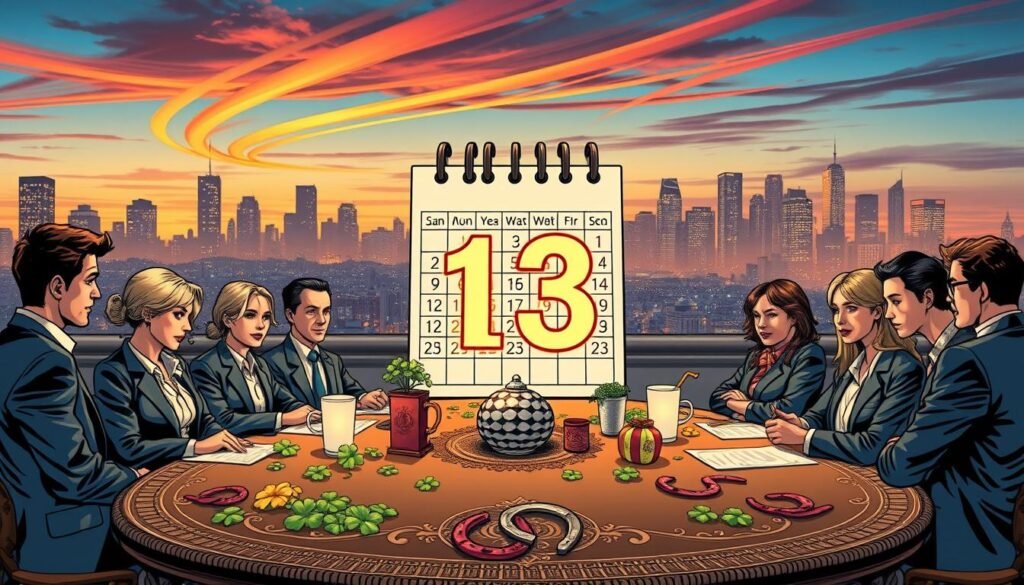
Taking a Fresh Look at 13: More Than Just a Number
After exploring the history, math, and culture surrounding this digit, it seems the real answer to its significance lies in our own beliefs. Igor Radun points out that there are no lucky or unlucky numbers; they exist only in our heads. They become what we make them.
Ironically, even those who reject the superstition still let it influence their choices. Whether it’s picking this digit to prove a point or avoiding it just in case, the stigma remains.
Interestingly, the Cardiff tower will have a labeled 13th floor with real apartments. Maybe this shift signals a change in how we view this digit.
Think about your own relationship with it. Have you ever changed your behavior because of it without realizing? If you’re house hunting, choosing this digit might even save you some money since properties numbered 13 tend to be cheaper.
Remember, Taylor Swift, Colgate University, and countries like Italy and France have embraced this digit as a symbol of good fortune. You’d be in good company if you decided to flip the script!
At the end of the day, numbers are just numbers until we give them meaning. This digit has had quite the journey in the meaning department, but ultimately, it’s just the number that comes after 12 and before 14.