

You’ve probably heard the term BMI tossed around at doctor’s visits or seen it on health websites. But what does it really mean for you? Think of the weight calculator as a simple starting point. It takes your height and weight and gives you a number that shows where you stand.
Check your BMI with our calculator 👉
This isn’t some fancy medical test that requires a lab coat. It’s just a straightforward tool you can use right now to get a snapshot of your body mass index. Many folks check in on their health using this number, as it’s linked to risks for conditions like heart disease and diabetes.
The idea behind body mass is to help you understand if your weight is in a healthy range for your height. While this number doesn’t define your health completely, it can be a helpful nudge to start paying attention to how you’re feeling and what your body needs.
When you use our weight calculator, you’re taking a small but meaningful step toward understanding your body better. We’ll guide you through how it works, what the results mean, and where the tool might fall short, so you can use it wisely.
Key Takeaways
- BMI is a quick way to assess your body mass based on height and weight.
- It’s not a definitive health measure but a useful starting point.
- Understanding your BMI can help you identify potential health risks.
- This tool can motivate you to pay more attention to your overall health.
- We’ll explain how to interpret your results and their limitations.
How to Use the Weight Calculator BMI to Check Your Ideal Weight
Ready to dive into understanding your body better? Let’s explore how to use the BMI tool effectively. This handy calculator helps you assess where you stand in terms of body mass. Knowing how to calculate your BMI can be a game-changer for your health journey.
So, what exactly is the BMI tool, and why does it matter? The bmi calculator is a straightforward method to estimate your body mass index. This number can help you understand if your body mass is in a healthy range for your height. It’s not just a number; it’s a starting point for conversations about your health.
What Is the Weight Calculator BMI and Why It Matters
The weight calculator is designed to give you insights into your body composition. It works by taking your height and weight to provide a BMI score. This score can help you identify potential health risks linked to being underweight, normal weight, overweight, or obese.
Step-by-Step Guide to Entering Your Height and Weight
Check your BMI with our calculator 👉
Using the tool is simple. You just need to know your current height and weight. Here’s how to do it:
- First, enter your height in either inches or meters.
- Next, input your weight in pounds or kilograms.
- Hit the calculate button, and voilà! Your BMI score appears instantly.
For example, if you’re 5’4″ and weigh around 150 pounds, the calculator will give you a BMI score that falls somewhere on the scale. The formula used is your weight in pounds multiplied by 703, divided by your height in inches squared.
Understanding the Results: BMI Numbers and Weight Categories
Once you have your score, it’s time to see where you land on the BMI scale. Here’s a quick breakdown of the categories:
| BMI Range | Category | Health Implications |
|---|---|---|
| Under 18.5 | Underweight | Increased risk of health issues |
| 18.5 – 24.9 | Normal weight | Generally healthy |
| 25 – 29.9 | Overweight | Higher risk of chronic diseases |
| 30 and above | Obesity | Significant health risks |
Understanding your results is crucial. Remember, this tool is just one piece of the puzzle. It’s meant to start a conversation about your health, not to define it completely.

Getting to Know BMI Categories and What They Mean for You
Check your BMI with our calculator 👉
Understanding where you fit within the BMI categories can be a key part of your health journey. Once you’ve got your number from the weight calculator, the next step is figuring out which category you fall into. There are four main categories that health organizations commonly use.
Underweight, Normal, Overweight, and Obese: Breaking Down the Ranges
If your BMI lands below 18.5, you’re in the underweight range. This might sound harmless, but it can lead to health concerns like malnutrition and weaker bones. On the other hand, the sweet spot most people aim for is the normal weight category, which sits between 18.5 and 24.9. This range is linked to the lowest risk for chronic conditions like heart disease and type 2 diabetes.
When your number creeps up to between 25 and 29.9, you’re looking at the overweight category. While it’s not a crisis, it signals that your body fat might be higher than what’s ideal for your height. A BMI of 30 or above puts you in the obesity range, where health risks really start to climb, including high blood pressure and sleep apnea.
How Age, Gender, and Muscle Mass Can Affect Your BMI
Now here’s where it gets a little tricky: your age, gender, and muscle mass can all influence how accurate that number really is for you. Older adults tend to have more body fat than younger folks at the same BMI. Additionally, women generally carry more fat than men, even when their numbers match up.
If you’re someone who hits the gym hard and has built up a good amount of muscle, you might see a higher BMI that puts you in the overweight category, even though your body fat is low. This is why it’s essential to consider these factors when interpreting your results.
Examples of What BMI Looks Like in Real Life
To put it in real-life terms, consider a 5’4″ woman who weighs 150 pounds. She lands in the overweight range. Meanwhile, a 5’10” man at 200 pounds is also considered overweight, but their actual body compositions could be wildly different.
For children and teens, the whole system shifts. Doctors use percentile charts based on age and sex instead of the fixed adult ranges. For example, a child in the 85th percentile is considered overweight, while those in the 95th percentile are classified as obese.
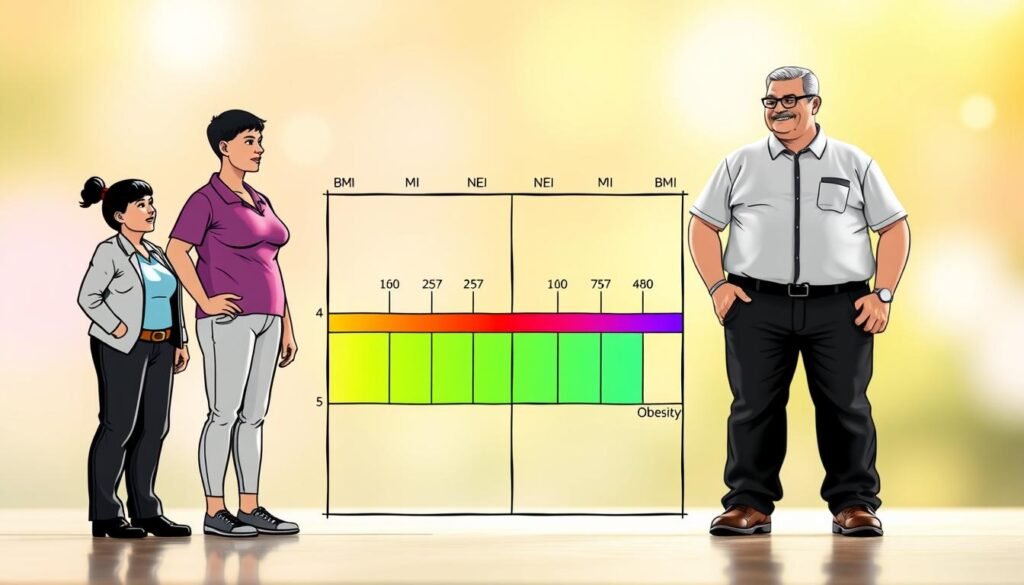
What the Weight Calculator BMI Doesn’t Tell You: Its Limitations
Understanding the boundaries of the body mass index can help you make informed health decisions. While this tool provides a quick snapshot of your body mass, it doesn’t tell the whole story. Let’s dive into some of the key limitations of the body mass index.
Why BMI Doesn’t Show the Full Picture of Body Composition
The most significant limitation of the body mass index is that it cannot differentiate between fat and muscle. This means it makes assumptions about your body composition based solely on your height and weight.
For example, consider a bodybuilder who is 5’9″ and weighs 210 pounds. Their BMI might classify them as obese, even though they have low body fat and high muscle mass. This glaring flaw shows that BMI isn’t always an accurate reflection of a person’s health.
When Muscle or Age Skew Your BMI Results
Age plays a crucial role in how BMI reflects body composition. As people age, they often lose muscle mass and gain body fat. This shift can lead to a normal BMI while actually carrying excess body fat.
Additionally, women typically have a higher percentage of body fat than men at the same BMI. This means that BMI can misrepresent health for many individuals.
Other Health Measurements to Consider Alongside BMI
Because of these limitations, it’s wise to consider other health metrics in addition to your BMI. Here are some alternatives:
- Waist circumference: A larger waist can indicate higher health risks.
- Body fat percentage: This gives a clearer picture of your body composition.
- How your clothes fit: Changes in fit can signal shifts in body composition.
- Energy levels: Feeling energetic can be a sign of good health.
- Lab work: Regular check-ups can provide insights into your overall health.
In summary, while the body mass index can be a useful tool, it shouldn’t be the only measure you rely on. The key takeaway is that health is multi-faceted, and it’s essential to consider the broader context of your body and lifestyle.

Taking Control: Using Your BMI Results to Guide Your Health Journey
Check your BMI with our calculator 👉
Now that you have your body mass index, it’s time to explore how this information can empower your health journey. If your results indicate you’re carrying extra weight, remember, this is not a reflection of your worth. It’s a signal that your body might need some extra care.
Being in the overweight or obesity range can increase the risk of conditions like type 2 diabetes and heart disease. However, these risks don’t develop overnight, and you have time to make positive changes.
If you find yourself in the underweight category, focus on building strength and ensuring you’re getting the nutrients necessary for good health. The best step you can take is to discuss your results with a health care provider. They can help you look at your overall health picture, including family history and daily habits.
For parents, tracking your children’s growth patterns using the CDC’s percentile charts is more beneficial than applying adult standards. Remember, small, consistent changes often lead to lasting results. Aim to feel good in your body and enjoy the activities you love.
Think of your BMI result as a friendly reminder to check in with yourself and consider what comes next.
For more guidance, visit our BMI calculator for further insights.