
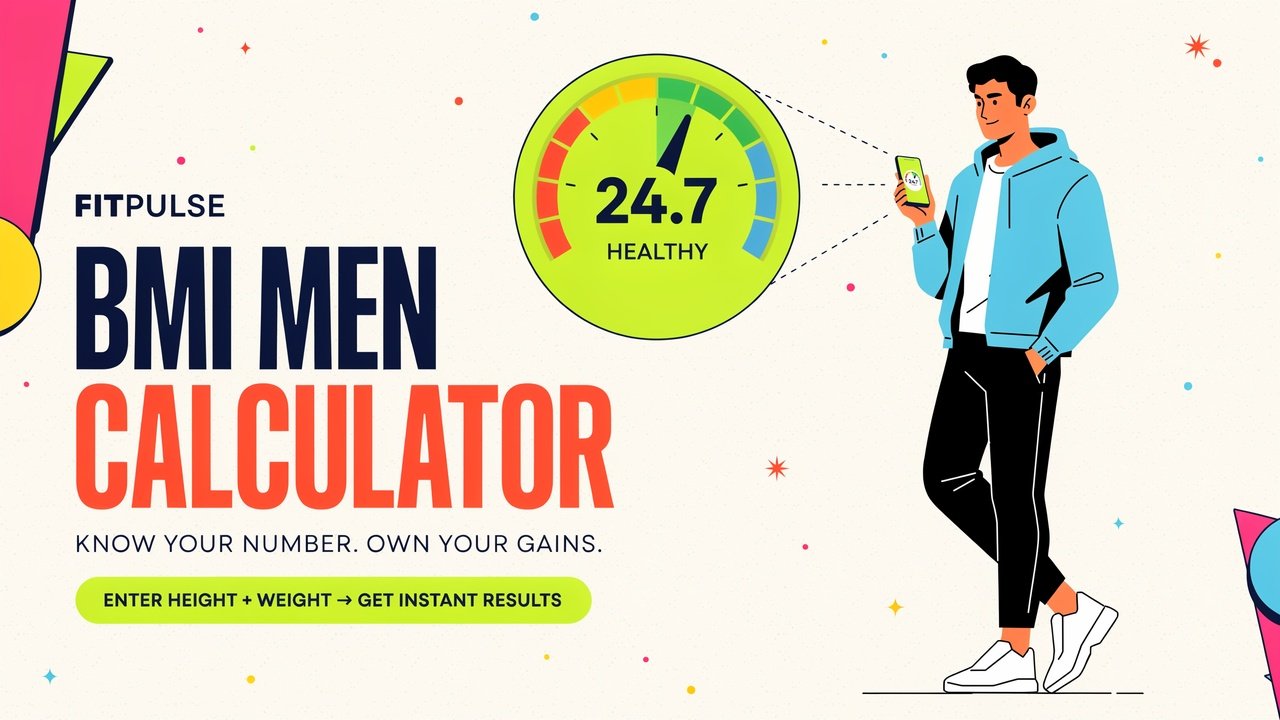
You’ve probably heard the term body mass index tossed around at doctor’s visits or from that one health-obsessed friend who can’t stop talking about his fitness tracker. A BMI men calculator is simply a tool that takes your height and weight to give you a number that indicates your health status.
Check your BMI with our calculator 👉
It’s not some complicated medical procedure—just a quick math formula that’s been around for ages. Think of your body mass index as a starting point, a snapshot that helps you see if you’re carrying too much or too little weight for your frame.
Many people use a calculator like this to get a baseline before starting a new workout plan or adjusting their diet. The whole idea is to give you a general sense of your body composition without needing fancy equipment.
Your health matters, and knowing your numbers is a small step that can lead to bigger changes down the road. This isn’t about chasing an unrealistic ideal; it’s about understanding where you are today to make smarter choices tomorrow.
A good BMI men calculator does all the heavy lifting for you—no math degree required. Stick around, and we’ll walk through everything you need to know about what that number means and what to do with it.
Key Takeaways
- Body mass index is a quick way to assess your weight relative to your height.
- A BMI men calculator provides a simple number that helps gauge your health.
- It’s an easy tool to use before starting any fitness journey.
- Understanding your body mass can guide better lifestyle choices.
- This isn’t about perfection; it’s about awareness and improvement.
What is BMI and Why Should Men Care?
Body mass index, or BMI, is a simple way to understand your body weight in relation to your height. It’s a number you get by plugging your height and weight into a formula. This number helps determine whether you’re underweight, at a normal weight, overweight, or even obese.
Understanding your body mass index is important because it serves as a quick screening tool for potential health issues. If your BMI indicates that you’re carrying excess weight, it might put you at risk for health problems like heart disease, diabetes, and even some cancers.
Check your BMI with our calculator 👉
Here’s why it matters:
- For most guys, tracking body mass is easier than calculating body fat percentage with calipers or fancy scales.
- Your body changes as you age, and BMI can help identify when your weight might be shifting in the wrong direction.
- A BMI calculator is a solid first step, even if it doesn’t measure your health directly.
- When we talk about mass index, we’re really looking at how much tissue you have relative to your height.
- Many people ignore these numbers until a problem arises, but knowing them early gives you a chance to make changes.
Whether you fall into a healthy weight range or not, the BMI scale offers a common language for discussing weight and health. While it’s not perfect, it’s a reliable measure for most guys who aren’t professional bodybuilders. Think of your body mass index as an early warning system for your health. It takes just a couple of minutes to check, but it can reveal a lot about your current status.

| BMI Category | BMI Range (kg/m²) |
|---|---|
| Underweight | Less than 18.5 |
| Normal weight | 18.5 – 24.9 |
| Overweight | 25 – 29.9 |
| Obese | 30 or greater |
Using this information can help you take control of your health. For more details on how to calculate your BMI, check out this BMI calculator.
Check your BMI with our calculator 👉
Using the BMI Men Calculator: How It Works
Understanding your body weight is now just a matter of entering two simple numbers. That’s right! With a body mass index tool, you can quickly get a sense of where you stand. Let’s dive into how this works.
Entering Your Height and Weight
Using a BMI calculator couldn’t be simpler. You just need two numbers: your height and your weight. Most online calculators let you switch between metric and US units. This means you can enter your height in feet and inches or centimeters—whatever feels natural to you.
Once you input your height and weight, the calculator works its magic. It takes just seconds to give you that BMI number!
The Math Behind BMI: A Quick Look
If you’re using pounds and inches, the formula is straightforward. It multiplies your weight by 703 and then divides by your height in inches squared. For example, let’s say a guy is 5’10” and weighs 160 pounds. His calculation would look like this:
BMI = 703 × 160 / 70² = 23.0
For those using metric units, it’s even simpler. Just take your weight in kilograms and divide it by your height in meters squared.
When you enter your weight and height data, the tool instantly compares your numbers against standard ranges established by the World Health Organization. A good bmi calculator will also show you where you fall on a visual scale. This helps you see at a glance if you’re underweight, normal, overweight, or obese.
The whole process takes maybe 30 seconds, and you’ll walk away with a much clearer picture of your body composition than you had before.

| Measurement Type | US Units | Metric Units |
|---|---|---|
| Weight | Pounds (lbs) | Kilograms (kg) |
| Height | Feet and Inches (ft/in) | Centimeters (cm) |
| BMI Formula | BMI = 703 × mass (lbs) / height² (in) | BMI = mass (kg) / height² (m) |
Healthy BMI Ranges and What They Mean for Men
When it comes to your health, knowing your weight range can be a game changer. Once you’ve got your number, the next question is always, “So what does that actually mean for me?”
The sweet spot for most guys is a BMI between 18.5 and 24.9. This is what experts call the normal or healthy weight range. If your number falls in that window, you’re in pretty good shape statistically when it comes to weight-related health risks.
Landing below 18.5 puts you in the underweight category, which comes with its own set of concerns. A BMI from 25 to 29.9 means you’re carrying some extra weight, and your health risks start to tick upward. Anything 30 or above falls into the obesity range, and that’s when doctors typically start having more serious conversations about weight management.
Your age plays a bigger role than most guys realize. Older men naturally carry more body fat, even at the same BMI as younger guys. Height matters too because the range of what’s considered normal shifts slightly depending on how tall you are.
A quick look at a BMI chart shows that a 5’4″ guy and a 6’2″ guy can both be at a healthy weight, but their actual pound ranges look totally different. These ranges aren’t random; they’re based on decades of research linking BMI numbers to actual health outcomes in large populations.

Health Risks Linked to Having a High BMI
Check your BMI with our calculator 👉
Carrying extra weight can have serious implications for your health. Many people may not realize that a high BMI is linked to various health risks that can develop over time. It’s important to stay informed about these risks so you can take proactive steps to maintain your well-being.
The Centers for Disease Control and Prevention highlights several conditions associated with being overweight. These include:
- High blood pressure, which can strain your heart and lead to cardiovascular issues.
- Increased levels of LDL cholesterol and decreased levels of HDL cholesterol, affecting overall heart health.
- Type II diabetes, a common condition that can arise from excess body fat.
- Coronary heart disease and stroke, both of which are more prevalent in those with elevated BMI numbers.
- Gallbladder disease and osteoarthritis, which can affect mobility and quality of life.
- Sleep apnea and breathing problems, impacting sleep quality and overall health.
- Higher risk of certain cancers, including endometrial, breast, and colon cancers.
- Mental health issues, such as clinical depression and anxiety, which can be more common among those struggling with weight.
It’s not just about physical health; your mental well-being can also be affected. Every extra pound can put more strain on your heart, making it work harder than it should. The good news is that even small drops in body weight can help reverse some of these health risks fairly quickly.
Staying aware of these risks can empower you to make healthier choices. Keeping your BMI in check is a vital part of maintaining your heart health. Here’s a quick summary of the health risks associated with a high BMI:
| Health Risk | Description |
|---|---|
| High Blood Pressure | Strain on the heart, increasing the risk of cardiovascular diseases. |
| Type II Diabetes | Impaired insulin handling due to excess body fat. |
| Heart Disease | Increased risk of coronary heart disease and stroke. |
| Sleep Apnea | Breathing issues during sleep affecting overall health. |
| Cancers | Higher risk of certain types of cancer related to obesity. |
Understanding these health risks can motivate you to prioritize your health. It’s all about making informed choices and taking steps toward a healthier lifestyle.
The Other Side: Dangers of Being Underweight
While the conversation around weight often centers on obesity, the risks of being underweight deserve attention too. Many people don’t realize that being underweight can lead to serious health problems. When your body mass index drops below 18.5, it can start missing out on essential nutrients.
Malnutrition and vitamin deficiencies are real risks here. Your immune system takes a hit, making you more susceptible to every cold that goes around the office. Anemia is another common issue for those who are underweight. It means your blood can’t carry oxygen effectively, leaving you feeling tired and drained.
Your bones also suffer. Osteoporosis becomes a bigger risk because your skeleton isn’t getting the support it needs from adequate body mass. This can lead to fractures and long-term complications.
If you’ve lost weight without trying or struggle to maintain your weight, it might be time to talk to your doctor. Sometimes being underweight points to an underlying condition that needs attention, not just a fast metabolism.
Whether a person is dealing with stress, digestive issues, or something more serious, unexplained weight loss should never be ignored. The mortality risk for underweight individuals is actually higher than for those in the normal range, so this isn’t something to brush off.
Your doctor can help determine if your low body weight is a concern and develop a plan to get you back on track. Remember, taking care of your body is essential, no matter which side of the weight spectrum you find yourself on.
What BMI Doesn’t Tell You: Its Limitations
While BMI can be a useful tool, it’s important to know its limitations. This measurement primarily reflects excess body weight rather than excess body fat. As a result, it doesn’t always provide a complete picture of your health.
One major limitation is that BMI can’t differentiate between muscle and fat. This distinction is crucial because muscle weighs more than fat. If you’re a guy who works out regularly and has a lot of muscle mass, your BMI might classify you as overweight, even if your body fat is low.
For instance, athletes and bodybuilders often face this issue. A football player with 12% body fat can have the same BMI as a sedentary person with 30% body fat. This discrepancy shows how misleading BMI can be for those who are fit and muscular.
On the other hand, an older person who has lost muscle mass might show a normal BMI but still carry too much body fat for their frame. Age, ethnicity, and sex also play significant roles in how accurately BMI reflects health. Women, for example, typically have more body fat than men at the same BMI.
Different bodies really do tell different stories. That’s why doctors often consider BMI alongside other measurements like waist size and blood work. For about 90 to 95 percent of the population, BMI is a decent starting point. However, if you fall into that other 5 to 10 percent, it’s worth digging a little deeper.
The key takeaway? Don’t treat your BMI as the final word on your health. It’s just one piece of a much bigger puzzle.
| Factor | Impact on BMI |
|---|---|
| Muscle Mass | Higher weight, can lead to misclassification as overweight |
| Age | Older individuals may have normal BMI but higher body fat |
| Sex | Women typically have more body fat than men at the same BMI |
| Ethnicity | Different body compositions can affect BMI accuracy |
“BMI isn’t the complete picture when it comes to your health.”
Beyond BMI: Other Tools and Indexes You Should Know
While BMI is a great starting point, other indexes can provide additional insights. Once you’ve got a handle on your body mass index, it’s worth checking out a couple of other numbers that can help you understand your health even better.
BMI Prime: A Quick Ratio to Understand Your BMI Better
BMI Prime is a super simple ratio that tells you how close you are to the upper limit of the normal weight range. The formula is straightforward: BMI Prime = BMI / 25. Here’s what it means:
- If your BMI Prime is exactly 1.0, you’re right at that 25 mark.
- Anything below 0.74 means you’re underweight.
- Above 1.2 puts you in obese territory.
This handy tool gives you a quick sense of how much wiggle room you’ve got before crossing into the next weight category.
The Ponderal Index: Why Height Cubed Matters
The Ponderal Index (PI) is another take on the whole mass index concept. It uses your height cubed instead of squared. The formula is PI = mass (kg) / height³ (m). Why does height cubed matter? Because it provides a more accurate measure for very tall or short individuals.
For example, a guy who’s 5’10” and weighs 160 pounds has a Ponderal Index of 12.9, which falls right in line with what you’d expect for a healthy body.
Neither of these replaces a good BMI calculator, but they’re nice to have in your back pocket when you want to dig a little deeper. You can find online tools that calculate all three numbers at once, so you don’t have to do any of the math yourself.
Having multiple indexes to look at gives you a more complete picture of your body composition than any single number ever could.
Practical Tips for Managing Your Body Mass Index
Taking charge of your body mass index is about making real, manageable changes. It’s not just about knowing your number; it’s about what you do next. Here are some practical steps that can help you maintain a healthy weight and improve your overall health.
Simple Lifestyle Changes That Make a Difference
Making small adjustments to your daily routine can lead to significant improvements over time. Here are some tips that many people have found helpful:
- Swap sugary drinks for water: This simple change can reduce your calorie intake and keep you hydrated.
- Take the stairs: Whenever possible, opt for stairs instead of elevators to get your heart rate up.
- Go for a walk after dinner: A post-meal stroll can aid digestion and help manage your weight.
- Increase your activity levels: Aim for at least 30 minutes of moderate exercise most days. It doesn’t have to be intense—just get moving!
- Prioritize sleep: Good sleep helps regulate hormones that control hunger and weight.
- Manage stress: High stress can lead to weight gain, so find healthy ways to cope.
Remember, weight loss doesn’t have to involve extreme diets or hours at the gym. These small lifestyle shifts can add up and make a real difference.
When to Get Professional Help
If you’ve tried these basics and your weight still won’t budge, it might be time to consult a professional. A doctor or registered dietitian can help you look at the bigger picture. They can check for underlying factors, such as:
- Thyroid issues that may affect your metabolism.
- Medication side effects that could be contributing to weight gain.
- Family history and other health risks that may impact your weight management.
For older adults, the conversation about weight can shift. Some studies suggest that a BMI between 25 and 27 might actually be healthier for those over 65. Your goal should be about feeling good and having energy, not just hitting a number on a chart.
Your body mass index is just a starting point. The real work happens in the daily choices you make and the habits you build over time. If you want to dive deeper into understanding your BMI and its implications, check out this BMI calculator for more insights.
| Tip | Benefit |
|---|---|
| Swap sugary drinks for water | Reduces calorie intake |
| Take the stairs | Increases physical activity |
| Go for a walk after dinner | Aids digestion |
| Increase activity levels | Improves heart health |
| Prioritize sleep | Regulates hunger hormones |
| Manage stress | Prevents weight gain |
Ready to Check Your BMI? Get Started Today
Check your BMI with our calculator 👉
Now that you have all the information, it’s time to take action and check your number. A BMI calculator takes less than a minute and gives you a solid starting point for understanding your body and your health.
There’s no judgment here. Whatever number pops up is just information, and information is power when it comes to making good decisions. If your result lands in the healthy weight range, that’s great! Keep doing what you’re doing and check in every now and then.
If the number is higher or lower than you’d like, don’t stress. You’ve already taken the hardest step by paying attention. Use the tool to calculate BMI today, and maybe bookmark it to come back in a few months to see how things have changed.
Your body mass index isn’t your destiny; it’s just a snapshot of where you are right now. The mass index number you get today could look totally different six months from now with some small consistent changes. So go ahead, punch in your height and weight, and take that first small step toward knowing your body a little better than you did yesterday.