

Welcome! Figuring out your healthy weight doesn’t have to be complicated or stressful when calculating your BMI Calculator Women Age. This guide is here to help you understand how your body changes over time and what that means for your health.
Check your BMI with our calculator 👉
We’ll explore how the BMI shifts with age and what that signifies for your overall wellness. Think of this as a friendly chat over coffee, where we break down the basics. The BMI tool is a simple starting point, not a final judgment on your body.
Every woman’s body is unique, and it’s all about finding a range that supports your energy and lifestyle. Throughout this article, we’ll cover everything from the basic formula to the limitations of BMI, ensuring you feel informed, not overwhelmed.
We promise practical tips, real examples, and honest discussions about what BMI can and can’t tell you about your health. Remember, it’s not about chasing a perfect number but about understanding your body better at every stage of life.
Key Takeaways
- Understanding your healthy weight can be simple and stress-free.
- This guide focuses on how body weight changes with time.
- The BMI tool offers a starting point for assessing health.
- Each woman’s body is different, emphasizing personal wellness.
- We’ll discuss the basics and limitations of BMI.
- Practical tips and real examples will be provided throughout.
Understanding BMI Calculator Women Age and Why It Matters for Women
Check your BMI with our calculator 👉
Let’s dive into the world of Body Mass Index and discover why it matters. This measurement is a straightforward way to assess your body weight in relation to your height. It’s been used for decades as a quick screening tool by doctors and health organizations.
What Is BMI and How It Works
Simply put, BMI stands for Body Mass Index. It’s a ratio that helps determine if you are underweight, normal weight, overweight, or obese. Here’s a quick breakdown of the categories:
- Underweight: Less than 18.5
- Normal weight: 18.5 to 24.9
- Overweight: 25 to 29.9
- Obesity: 30 or more
Why BMI Is Different for Women
For women, these categories are particularly important. Hormones and reproductive needs mean that women naturally carry more body fat than men at the same BMI. The World Health Organization uses the same ranges for both sexes, but the distribution of fat varies. This difference is crucial to understanding your health.
BMI Categories Explained
Knowing your BMI category can serve as a helpful wake-up call or a reassuring sign. It’s just one piece of your health picture. For about 90 to 95 percent of the population, BMI is a decent indicator of body fat levels. Think of it like a quick snapshot, not a full photo album of your health.

How Age Affects BMI and Healthy Weight
Check your BMI with our calculator 👉
As we journey through life, our bodies naturally evolve, impacting how we perceive our health. This evolution can affect our body composition and how we interpret measurements like BMI. Understanding these changes is crucial for maintaining a healthy weight.
Changes in Body Composition Over Time
As women get older, their bodies undergo changes that often have little to do with diet or exercise. It’s just biology doing its thing. After your 30s, muscle mass naturally begins to decline, while body fat tends to increase. This shift can affect your BMI, even if your weight remains the same.
During menopause, hormonal changes can also alter where your body stores fat. Many women notice a shift, with more fat accumulating around the midsection. This is a common experience and a natural part of aging.
That’s why using a BMI calculator that considers these factors can provide a more realistic picture of your health. It’s not a one-size-fits-all approach; instead, it accounts for the unique changes women experience over time.
Why Age Matters When You Check Your BMI
The CDC uses different BMI charts for children and teens because their bodies are still growing. For adult women, age plays a significant role in how we interpret these numbers. An older woman with a “normal” BMI might have a higher body fat percentage than a younger woman with the same BMI. This highlights the importance of considering additional measurements beyond just BMI.
It’s essential to remember that weight gain with age isn’t a personal failure. It’s a normal shift in body composition that you can manage once you understand it. Think of your BMI as a moving target, evolving through different life stages—from young adulthood to post-menopause.
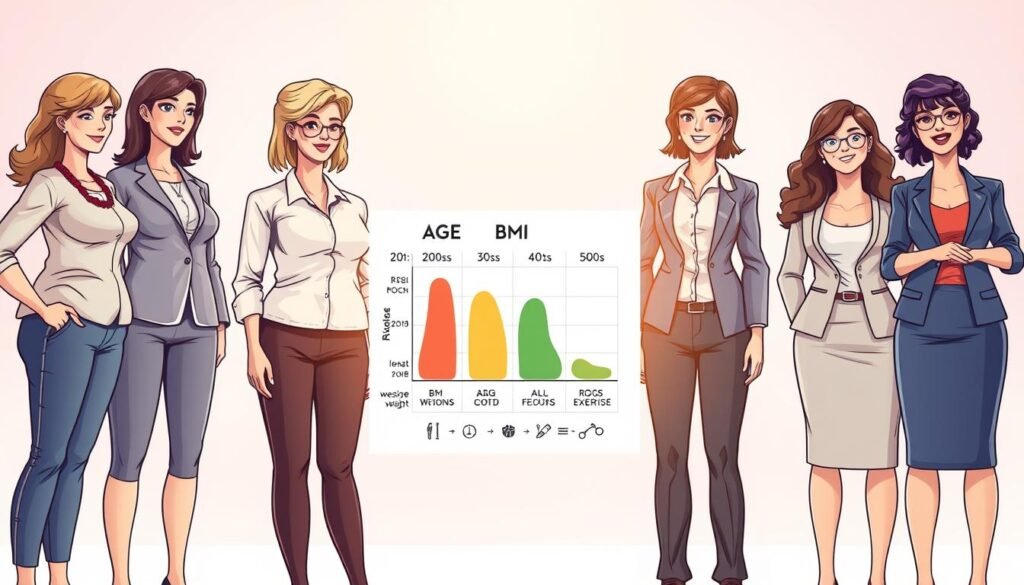
Using a BMI Calculator for Women by Age
Check your BMI with our calculator 👉
Navigating the world of health metrics can feel overwhelming, but understanding your BMI can empower you. This section will guide you through using a BMI calculator effectively, making it as simple as possible.
First, let’s talk about how to use the tool correctly. You’ll need a few key pieces of information:
- Your current weight in pounds
- Your height in feet and inches
- Your age, to ensure the results are relevant
Once you have that information, you can easily input it into an online bmi calculator. Here’s a simple formula to remember:
BMI = (weight in pounds × 703) ÷ (height in inches × height in inches)
Examples of BMI Calculations for Different Ages
Let’s look at a couple of examples to illustrate how this works:
Imagine a 45-year-old woman who is 5 feet 4 inches tall and weighs 150 pounds. Plugging those numbers into the formula gives her a BMI of about 25.7, which falls into the overweight category.
Now, consider a 60-year-old woman who is 5 feet 6 inches tall and weighs 140 pounds. Her BMI comes out to around 22.6, placing her in the normal range. These examples show how height and weight interact differently as we age.
What the Results Mean for You
The healthy BMI range for adult women is between 18.5 and 24.9. Your goal is to land somewhere in that zone if possible. Some calculators also provide additional metrics like BMI Prime or Ponderal Index, but don’t stress about those extra numbers.
Once you get your result, remember not to panic if it’s higher than expected. Use it as a starting point for a conversation with your doctor. The calculator is a tool, not a verdict. The number on the screen doesn’t define your worth or your health journey.

Health Risks Linked to High and Low BMI in Women
Discussing health risks isn’t meant to frighten you; it’s about empowering you with knowledge. Understanding the potential consequences of being above or below a healthy weight can help you make informed choices for your body.
Risks of Being Overweight or Obese
Carrying extra weight can lead to various health challenges. Some common risks include:
- High blood pressure
- Type 2 diabetes
- Heart disease
- Certain cancers, including breast and endometrial cancer
Additionally, joint pain, sleep apnea, and gallbladder issues often arise when BMI remains in the overweight or obese range over time. These conditions can affect your quality of life and overall well-being.
Risks of Being Underweight
On the flip side, being underweight comes with its own set of concerns. Risks include:
- Malnutrition
- Vitamin deficiencies
- Anemia
- Osteoporosis
- Decreased immune function
For women, being underweight can disrupt the menstrual cycle and even affect fertility, increasing the risk of miscarriage in early pregnancy. It’s crucial to maintain a balanced approach to health.
Why It’s Worth Paying Attention to Your BMI
Check your BMI with our calculator 👉
The sweet spot is finding a BMI that keeps your body functioning well. This means having enough energy for daily life while lowering the chance of chronic disease. Mental health is equally important, as both high and low BMI can be linked to feelings of depression and anxiety.
Remember, your BMI is a signal, not a sentence. Use it as motivation to check in with your doctor about your overall health picture. Taking charge of your health can lead to positive changes that feel good for your body.

How to Calculate Your BMI: Step-by-Step Guide
Calculating your body mass index can be easier than you think. This guide will walk you through the steps, ensuring you feel confident in measuring your health. You don’t need to be a math whiz; most people simply use an online tool for this.
The Simple Formula for BMI
To calculate your BMI, you can use a straightforward formula. If you’re using pounds and inches, the formula is:
BMI = 703 × (mass in lbs) / (height in inches)²
For example, a person who is 5 feet 10 inches tall and weighs 160 pounds would calculate their BMI like this:
BMI = 703 × 160 / (70)² = 23.0
Using Pounds and Inches vs. Metric Units
If you prefer using metric units, the formula is even simpler:
BMI = mass (kg) / height (m)²
For instance, if a person weighs 72.57 kg and is 1.778 m tall, their calculation would be:
BMI = 72.57 / (1.778)² = 23.0
Tips for Accurate Measurement
To get the most accurate reading, follow these practical tips:
- Weigh yourself first thing in the morning after using the bathroom.
- Measure your height against a wall without shoes for accuracy.
- Consistency is key; avoid heavy clothing or measuring after meals.
Consider writing down your measurements and checking them every few months. Remember, healthy weight changes happen slowly, so there’s no need to obsess over daily fluctuations.
Once you understand the formula, you’ll see how straightforward it is. If math isn’t your strong suit, you can always double-check with a digital tool!
| Height (inches) | Weight (pounds) | BMI |
|---|---|---|
| 65 | 145 | 24.1 |
| 70 | 160 | 23.0 |
| 66 | 150 | 24.2 |
What BMI Doesn’t Tell You: Limitations and Other Measures
While BMI is a useful starting point, it has significant limitations. This measurement doesn’t differentiate between a pound of muscle and a pound of fat, which is a major blind spot. For example, if you’re a woman who lifts weights regularly, your BMI might categorize you as overweight, even if your body fat is low and your health is excellent.
Additionally, as women age, they often lose muscle mass. This means that their BMI might look normal, but their body fat percentage could be higher than what is considered healthy. This discrepancy highlights the need for more comprehensive tools to assess health.
Differences in Muscle Mass and Body Fat
Muscle mass and body fat distribution vary significantly among individuals. BMI does not account for these differences. Muscular individuals often have higher BMIs due to their muscle mass, which can misclassify them as overweight. Conversely, older adults might have a normal BMI while carrying excess body fat, which can lead to health risks.
Alternatives Like Waist-to-Hip Ratio and Body Fat Percentage
To get a clearer picture of your health, consider using alternatives like the waist-to-hip ratio (WHR). For women, a WHR over 0.85 indicates a higher risk of abdominal obesity. You can calculate this by measuring your waist at its narrowest point and your hips at their widest, then dividing the waist measurement by the hip measurement.
Another valuable measure is body fat percentage. This can be assessed using various methods, including skinfold calipers, hydrostatic weighing, or advanced techniques like DEXA scans. Each of these methods provides insight into your body composition beyond what BMI can show.
Why BMI Is Just One Piece of the Puzzle
It’s essential to remember that no single tool can provide a complete picture of your health. The waist-to-height ratio is another quick check: your waist should be less than half your height for a healthy balance. Combining these measurements can paint a much clearer picture than BMI alone.
Ultimately, while BMI is a helpful tool, it should be used as a starting point. Layering on other measurements and paying attention to how you feel, your energy levels, and overall fitness is crucial. Health outcomes are influenced by more than just weight or BMI, including exercise, diet, and general well-being.
Taking Charge of Your Health Beyond BMI
Check your BMI with our calculator 👉
Taking control of your health is about more than just one number. It’s a journey that encompasses your lifestyle, activity, and how you feel day-to-day. Remember, BMI is just a starting point in understanding your body.
Engage in activities you enjoy, whether it’s walking, dancing, or hitting the gym with friends. Eating well doesn’t mean strict diets; it’s about finding balance. Fuel your body with nutritious foods that make you feel good.
Don’t forget to schedule regular checkups with your doctor. Monitoring your health, including blood pressure and cholesterol, is vital. Sleep, hydration, and stress management also play crucial roles in your overall well-being.
Small, consistent changes can lead to lasting results. Start with one thing this week, and build from there. Your body has carried you through life’s ups and downs, so treat it with the respect it deserves.
Your healthy weight is where you feel strong and comfortable in your skin. That’s what truly matters, and it’s worth working toward at any stage of life.