
Wondering if your child is at a healthy weight? You’re not alone! Many parents share the same concern. Our BMI calculator for kids makes it easy to check without any complicated math. Just enter a few details about your child, and the calculator does the rest.
Check your BMI with our calculator 👉
This tool gives you a clear picture of where your child stands compared to others their age and sex. Body mass index is a simple way to see if their weight is in a good range for their height. Doctors often use this measure during routine checkups starting at age two.
It’s important to remember that this isn’t about judging anyone. It’s just a tool to help monitor growth over time. The calculator uses reliable data, like CDC growth charts, to provide trustworthy information without needing an appointment.
Whether your child is a toddler or a teenager, this tool works for ages 2 to 19. Think of it as a quick check-in, not a final word on health. It’s one piece of the puzzle that can help spark conversations about wellness.
Key Takeaways
- Our tool simplifies checking your child’s healthy weight.
- Just enter details, and the calculator does the math.
- Body mass index helps assess weight in relation to height.
- This tool is not meant to judge but to monitor growth.
- It uses reliable CDC data for trustworthy results.
- Suitable for children aged 2 to 19 years.
- Think of it as a starting point for health discussions.
What Is BMI and Why It Matters for Kids
Curious about how weight relates to height for your child? Understanding body mass index is a great starting point. This measure helps us see how a child’s weight stacks up against their height, giving insight into their overall health.
Body mass index, or BMI, is calculated using a formula that considers both height and weight. For children and teens, this number isn’t just a standalone figure. It’s compared to other kids of the same age and sex. Why? Because children are constantly growing and changing.
When you get your child’s BMI, it’s shown as a percentile. This percentile indicates how your child’s BMI compares to others in the same age group. For example, if your child is in the 75th percentile, they weigh more than 75% of kids their age. This is where growth charts come into play.
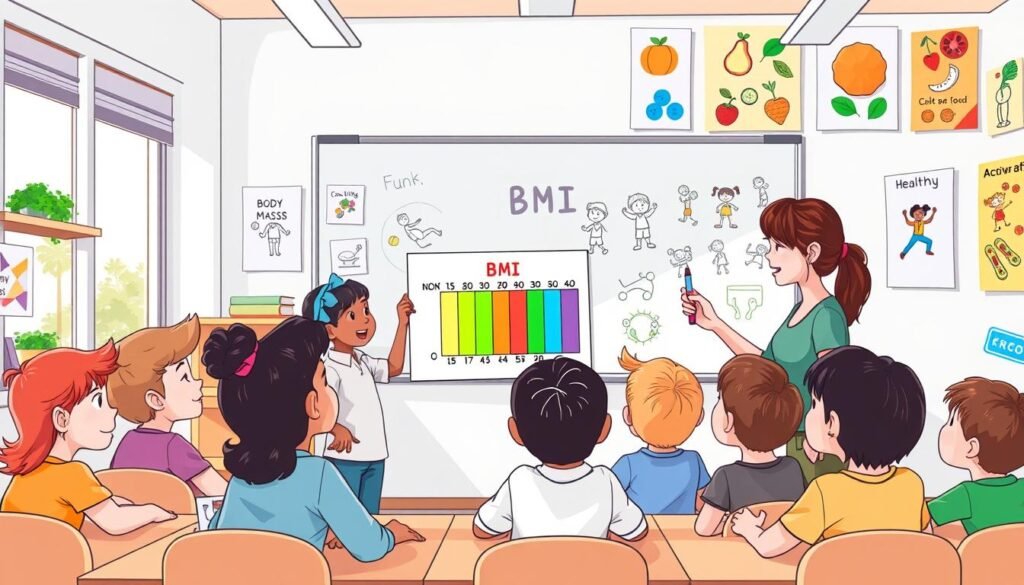
How BMI Measures Weight Compared to Height
Check your BMI with our calculator 👉
At its simplest, BMI is a number that gives a ballpark idea of body fat based on height and weight. For adults, this measure is pretty straightforward. But for children, it’s a bit more complex due to their growth patterns.
The clever part? Instead of just giving you a number, the calculator places your child on a growth chart. This chart tracks how kids typically grow over the years, allowing you to see where your child stands among their peers.
BMI Percentiles and What They Tell You About Your Child’s Growth
Those growth charts are based on a large reference population. When you receive a percentile, it shows how your child compares nationally. This can be eye-opening for many parents.
Here’s something to keep in mind: BMI doesn’t directly measure body fat. A child who is very muscular might have a high BMI but be perfectly healthy. On the flip side, a less active child could have a normal BMI but still carry extra fat.
Common BMI Categories: Underweight, Healthy, Overweight, and Obese
The categories are pretty straightforward:
- Underweight: Below the 5th percentile
- Healthy weight: 5th to less than 85th percentile
- Overweight: 85th to less than 95th percentile
- Obesity: 95th percentile or greater
- Severe obesity: 120% of the 95th percentile or a BMI of 35 or greater
Doctors have been using these categories for years to identify trends. If a child’s BMI percentile rises consistently, it tells a story that one single measurement can’t. Think of BMI as a screening tool, a way to flag potential issues. This allows you and your doctor to explore deeper into factors like family history, eating habits, and activity levels.
In short, while BMI is a helpful starting point, it’s just one piece of the puzzle when it comes to understanding your child’s health. If you want to learn more about how to check your child’s healthy weight, check out our BMI calculator.
How to Use the BMI Calculator for Kids
Ready to find out how your child’s weight measures up? Using the BMI calculator is simple and straightforward. You just need a few key pieces of information to get started.
What Information You’ll Need
First, gather these details:
- Age: You can enter it in years and months or use their date of birth.
- Sex at birth: This helps in comparing your child’s measurements with others.
- Height: Measure in either feet and inches or centimeters.
- Weight: Record this in pounds or kilograms.
Entering Measurements: Tips for Getting It Right
When you enter height and weight, accuracy is key. Here are some tips:
- Use a flat surface and a reliable scale.
- Height can be measured to the nearest 1/8th inch, while weight should be accurate to the nearest 1/4th pound.
- Try measuring your child in the morning for the best results.
- Have them wear light clothing and no shoes when weighing.
What the Calculator Shows
Check your BMI with our calculator 👉
Once you input the information, hit calculate. The tool will provide:
- BMI Value: This is the actual number calculated based on the measurements.
- Percentile: This shows how your child’s BMI compares to others in the same age group.
- Category: The result will indicate if your child is in a healthy weight range, underweight, overweight, or obese.
The calculator also plots the BMI percentile on a growth chart, similar to what your pediatrician uses. Keep in mind that slight variations in results can occur due to rounding differences.

Understanding Your Child’s BMI Results
Check your BMI with our calculator 👉
So, you’ve just received your child’s BMI results. Now what? The percentile is the big number to focus on. It tells you how your child compares to a national sample of kids the same age and sex. For instance, if your child lands in the 60th percentile, that means 60% of kids their age and sex have a lower BMI. It’s not a test score where higher is better; it’s just a comparison point.
Interpreting Percentile Ranges and What They Mean
A result in the healthy weight range, between the 5th and 85th percentile, is what most parents hope to see. But even if your child falls outside that range, it’s not a reason to panic. Here’s the thing about BMI that many people miss: it doesn’t differentiate between fat and muscle. A stocky, athletic kid might show up as overweight on the chart when they’re actually in great shape.
On the flip side, a child with a small bone structure could have a perfectly normal BMI but still carry more body fat than is ideal. The number doesn’t always match what you see in the mirror. Puberty makes everything trickier. Growth spurts and hormonal changes can cause weight to fluctuate, so BMI readings during those years need to be taken with a grain of salt.
Why BMI Isn’t the Whole Story: Other Factors to Keep in Mind
This is why doctors look at trends over time instead of obsessing over one measurement. If your child’s percentile has been steady for years and suddenly spikes, that’s worth investigating. A single high reading? Maybe not. Other factors matter just as much as BMI. Consider what your child eats in a typical day. How much physical activity do they get? Do they have any health conditions that affect weight? What’s the family history like?
When to Reach Out to Your Healthcare Provider
You should reach out to your healthcare provider if you notice a big shift in your child’s BMI percentile, if they’re consistently in the underweight or severe obesity categories, or if you have any gut feeling that something’s off. Severe obesity, in particular, is linked to higher risks for conditions like type 2 diabetes, high cholesterol, and even mental health struggles like anxiety and depression. It’s worth taking seriously and getting professional guidance on.
| Category | BMI Percentile Range |
|---|---|
| Underweight | Less than 5th percentile |
| Healthy Weight | 5th to less than 85th percentile |
| Overweight | 85th to less than 95th percentile |
| Obesity | 95th percentile or greater |
| Severe Obesity | 120% of the 95th percentile or a BMI of 35 or greater |
Remember, BMI is a screening measure, not a diagnosis or a substitute for professional medical advice. If needed, providers may refer families to a Family Healthy Weight Program for comprehensive, family-based lifestyle changes.

Taking Steps for Your Child’s Healthy Growth
Check your BMI with our calculator 👉
Have you ever thought about how your child’s growth can be supported? After checking their weight and understanding the results, it’s time to take action. Small, consistent changes can lead to big improvements over time.
Focus on building healthy habits as a family. This isn’t about dieting; it’s about making choices everyone can stick with. Start with food swaps, like choosing water over sugary drinks or adding veggies to meals.
Physical activity is key. Kids don’t need to run marathons; just playing outside or going for family walks counts. Aim for something active each day.
Sleep is also vital. Kids who sleep well are more likely to maintain a healthy weight. Establish regular bedtimes and limit screen time in bedrooms.
Your child’s doctor can help track growth and suggest tailored plans. If severe obesity is a concern, remember that there are treatment options available. The goal is to raise a happy, healthy child who enjoys life.
Use the calculator as a tool for check-ins, not an obsession. Focus on your child’s overall health direction, not just one measurement.