
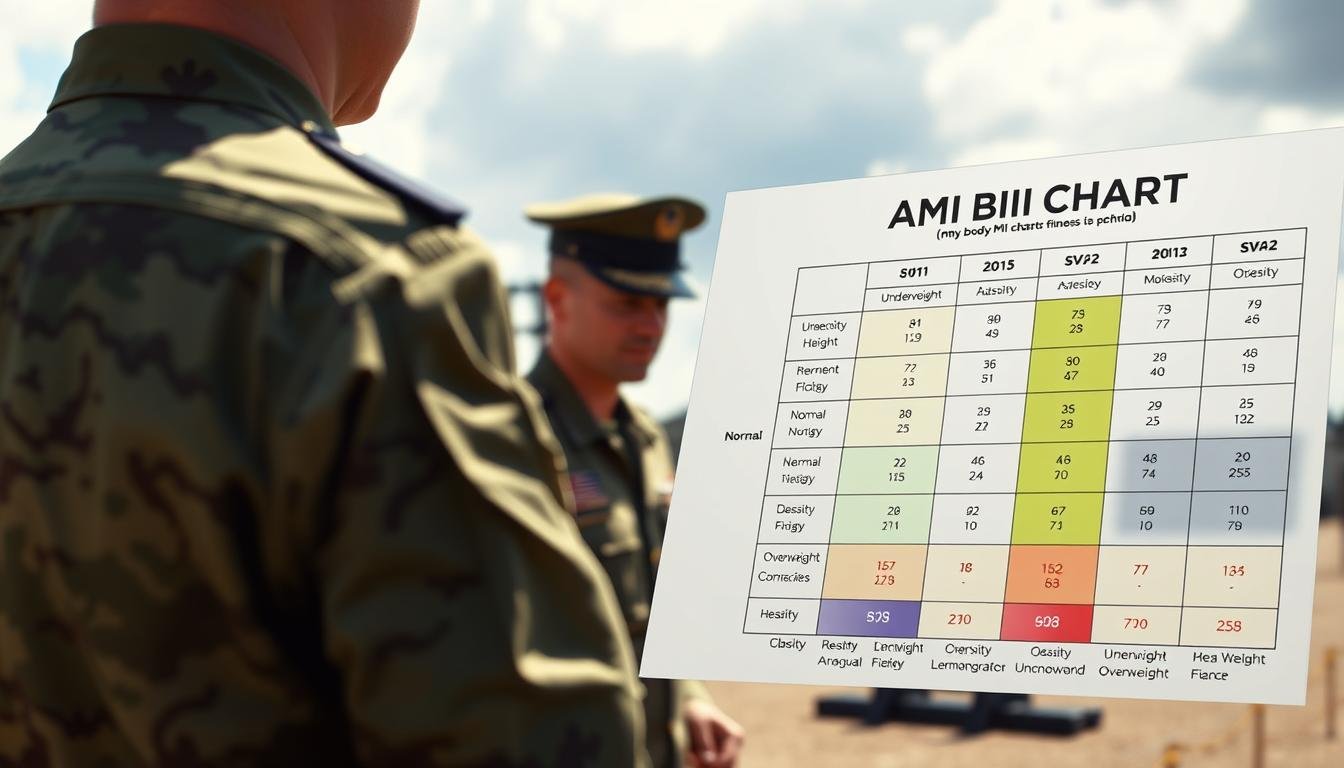
Hey there! You might think the Army BMI chart is just another military thing that doesn’t apply to you. But hold on! It’s actually a solid framework for thinking about your own fitness and body composition goals.
Check your BMI with our calculator 👉
This chart isn’t like the BMI your doctor uses at checkups. Instead, it’s a height and weight screening tool that helps determine if you need further body fat testing. Many people get nervous about military weight standards, but the system has built-in flexibility. It accounts for muscle mass and individual differences.
With the updates coming in 2026, the Army is starting to recognize that high-performing athletes shouldn’t be penalized just because they weigh more than the chart suggests. So, if you’re using this chart to guide your fitness journey, think of it as a reality check. It helps you balance weight management with actual physical performance.
Understanding how this system works can help you set smarter goals for yourself, whether you’re preparing for basic training or just want to get in better shape. The ultimate aim is readiness—making sure everyone can handle their physical demands without breaking down.
Key Takeaways
- The army BMI chart provides a useful framework for personal fitness goals.
- It serves as a height and weight screening tool rather than a strict measure of health.
- The system allows for flexibility, considering muscle mass and individual differences.
- Upcoming updates will better accommodate high-performing athletes.
- Using this chart can help you balance weight management with physical performance.
- Understanding these standards can lead to smarter personal fitness goals.
Understanding the Army BMI Chart: What It Is and Why It Matters
Let’s dive into the fascinating background of the height and weight standards used by the military. These standards didn’t just appear overnight; they’ve been evolving for nearly 150 years. The journey began during the Civil War when Colonel Jedediah H. Baxter started collecting measurements from draft recruits. This initiative aimed to determine who was fit to fight.
Initially, the primary concern was identifying candidates who were too skinny. It made sense, considering the demanding physical labor and marching soldiers had to endure. However, as time progressed, the focus shifted. Today, the military is more concerned about soldiers carrying excess body fat, as it can significantly impact performance and increase injury risks.
The Army Body Composition Program, which we recognize today, officially launched in 2002 under regulation AR 600-9. This program has undergone several updates to adapt to new research and evolving standards. Many people might not realize that the military’s height and weight guidelines are not traditional BMI charts. Instead, they serve as screening tools to identify individuals who may need a more detailed evaluation of their body composition.
The relationship between BMI and actual body fat is complex. A muscular soldier might weigh more than average for their height but have very little excess fat. This is precisely why the military does not rely solely on weight measurements. These standards are crucial for operational readiness, ensuring that soldiers are physically capable of handling the demands of combat situations.
Over the decades, the average soldier has become taller and heavier. This change is largely due to improvements in nutrition and advancements in training methods. Consequently, the standards have evolved to reflect these shifts. Understanding the history behind these guidelines helps clarify that they are based on actual data about what constitutes an effective warfighter.
| Year | Significant Change |
|---|---|
| 1875 | First collection of measurements by Colonel Baxter |
| 2002 | Establishment of the Army Body Composition Program |
| 2026 | Upcoming updates to better accommodate high-performing soldiers |
The Role of Body Composition in Soldier Readiness and Performance
Check your BMI with our calculator 👉
The relationship between body composition and military readiness is more significant than many realize. While stepping on a scale provides a single number, it fails to reveal whether that weight is derived from muscle, bone, or body fat. This distinction is crucial when discussing physical performance.
A soldier weighing 200 pounds with 15 percent body fat will perform quite differently than another soldier at the same weight with 25 percent body fat. This variance is significant, especially in military contexts where performance is critical.
Why Body Fat Percentage Counts More Than Just Weight
Research conducted at Fort Jackson in 1992 highlighted the impact of body fat on fitness and injury rates. Men with higher body fat percentages experienced slower run times and fewer push-ups and sit-ups. Interestingly, for women, those who did not meet the body fat percentage standard often excelled in strength measures.
Injury rates for men correlated directly with body fat percentage, while leaner women faced higher injury rates in some studies. This indicates that body composition is not merely about aesthetics; it directly affects a soldier’s ability to handle the physical demands of their role.
Fitness, Fatness, and Injury Risks in the Military
The Army emphasizes body fat percentage as a more accurate predictor of job performance than weight alone. This is especially true in combat roles where endurance and strength are vital. The concept of VO2max, which measures aerobic fitness, is more meaningful when expressed relative to fat-free mass rather than total body weight.
The takeaway here is clear: focusing solely on lowering the number on the scale isn’t the goal. Instead, maintaining a healthy balance of muscle and a low enough body fat percentage is essential for optimal movement and injury prevention.
- Soldiers with good body composition tend to have better endurance.
- They recover faster from intense training sessions.
- They are less likely to suffer from stress fractures and joint problems.
Understanding these aspects of body composition can help soldiers improve their performance and readiness. For more information on assessing your body composition, check out this BMI calculator.
Breaking Down the Army BMI Chart: How It Functions
Understanding how the height and weight screening tables function can be incredibly beneficial. These tables are a practical tool that helps individuals assess their fitness levels based on their height and weight. By following the guidelines, you can easily determine if you need further evaluations.
Height and Weight Screening Tables Explained
The screening tables are essentially a grid. On one side, you find your height, and across the top, you see your age bracket. The number where these two intersect indicates the maximum weight you can have before a closer examination is needed.
The Army divides ages into four groups: 17 to 20, 21 to 27, 28 to 39, and 40 plus. This division is important because it acknowledges that bodies change as we age. For instance, if you’re a 25-year-old man standing at 5 feet 9 inches, you would look at the 69-inch row and the 21-27 column. Your max screening weight would be 179 pounds.
For women, the numbers differ. A 25-year-old woman at the same height has a max screening weight of 171 pounds. This difference reflects how men and women naturally carry muscle and fat differently.
Age and Gender Differences on the Chart
Minimum weights are also included in the tables. If you fall below that number for your height, you will be referred for a medical evaluation. Being underweight can be just as concerning as being overweight.
Interestingly, for shorter heights like 58 and 59 inches, there are no maximum weights listed for men. This is because those heights are below the initial entry standard of 60 inches. The tables extend all the way to 80 inches, accommodating individuals up to 6 foot 8.
It’s also worth noting that commanders have the authority to order a body fat assessment even if you are under the screening weight. If they believe you do not present a soldierly appearance, they can request further evaluation. This helps maintain standards and prevents individuals from trying to game the system.
The screening table is designed for quick assessments. It typically takes about 30 seconds to check someone’s height and weight against the chart. This efficiency makes it an effective first filter before any more detailed evaluations.
The Army’s Body Composition Standards: What You Need to Know
Understanding the body composition standards is crucial for anyone aiming to serve effectively. These standards dictate the maximum allowable body fat percentages based on age and gender. Adhering to these guidelines is not just about numbers; it can significantly impact a soldier’s career.
Maximum Allowed Body Fat Percentage by Age and Gender
The body fat standards vary for men and women and are structured by age groups. Here’s a breakdown of the maximum allowable body fat percentages:
| Age Group | Men’s Maximum Body Fat Percentage | Women’s Maximum Body Fat Percentage |
|---|---|---|
| 17-20 | 20% | 30% |
| 21-27 | 22% | 32% |
| 28-39 | 24% | 34% |
| 40+ | 26% | 36% |
These standards are critical for retention in the military. If a soldier exceeds the limit for their age group, they face being flagged and enrolled in the Army Body Composition Program (ABCP). This can lead to serious career implications if they do not get back within the standards.
Why These Standards Matter for Your Military Career
Meeting these body fat standards is essential for several reasons:
- The standards are not merely suggestions; exceeding them can hinder promotions and reenlistment.
- Men have two sets of standards: one for joining and another for retention. The accession standards are slightly more lenient.
- Some soldiers mistakenly believe passing the screening table is sufficient. However, if their body fat percentage exceeds the limit, they are still out of compliance.
- The only official method for estimating body fat is the circumference tape method outlined in AR 600-9. Home scales or other assessments are not accepted.
- Research shows that soldiers within these body fat ranges perform better and sustain fewer injuries, ensuring they meet the professional military appearance expected.
In summary, understanding and adhering to these body fat standards is crucial for maintaining a successful military career. If you’re interested in learning more about assessing your body fat, check out this calculator 👉
Measuring Body Fat: The Circumference Tape Test Demystified
Understanding how body fat is measured can take away the fear and uncertainty surrounding the process. The tape test sounds way more intimidating than it actually is. It’s simply a matter of wrapping a measuring tape around specific spots on your body and plugging the numbers into a formula.
How the Tape Test Is Conducted
For men, the process is straightforward. A single measurement is taken around the abdomen at the belly button level. This measurement, along with your height and weight, is used to estimate your body fat percentage.
Women undergo a slightly more detailed assessment. Their measurements include the neck, waist, and hips. This is because the formula for estimating female body fat requires more data points to be accurate.
You only need to take the tape test if you exceed the screening table weight for your height and age. If you fall below that number, you just get weighed, and you’re done!
When the Tape Test is Required Versus Weight Screening
Commanders can also request a tape test if they believe a soldier does not present a soldierly appearance, regardless of their screening weight. This means that even if you are under the weight limit, you could still be assessed based on appearance.
The Army screens everyone at least twice a year, ensuring that you can’t just crash diet before one weigh-in and then forget about it for the rest of the year. Additionally, the scales used for weighing must be calibrated annually to ensure accuracy.
A lot of soldiers stress about the tape test due to stories of inconsistent measurements. However, the regulation specifies exactly how and where to measure to keep things fair. Understanding how the tape test works can ease some of that anxiety. It’s just math based on your body measurements, not a secret judgment call.
2026 Policy Changes Impacting the Army Body Composition Program
Exciting changes are on the horizon for the Army’s Body Composition Program in 2026! These updates promise to reshape how soldiers are evaluated regarding fitness and body standards. The new Army Fitness Test (AFT) is at the forefront of this transformation.
The AFT is now the official test of record. Starting January 1, 2026, combat scoring standards will apply to active duty soldiers in combat roles, while Reserve and Guard soldiers will follow suit on June 1, 2026. This means that soldiers can look forward to a more performance-based evaluation.
The New Army Fitness Test and Its Effect on BMI Standards
One of the most significant changes is the introduction of the High AFT Performance Exemption. If a soldier scores 465 or higher on the AFT, with at least 80 points in each event, they will be considered compliant with body fat standards. This is a game changer!
Previously, soldiers who struggled with the height and weight tables faced the tape test, which could be stressful. Now, those who demonstrate exceptional fitness through the AFT will be exempt from tape testing, even if their measurements fall outside the traditional height and weight screening parameters.
High AFT Performance Exemptions Explained
This exemption applies to all Military Occupational Specialties (MOS), not just combat arms. Whether you’re in infantry or logistics, if you achieve elite fitness scores, you won’t be flagged for the Army Body Composition Program (ABCP).
It’s important to note that while height and weight will still be recorded for data collection, these numbers will no longer determine your compliance status. This shift acknowledges that a soldier’s performance is a better indicator of readiness than just numbers on a scale.
Looking ahead, there are discussions about possibly adopting a waist-to-height ratio as a primary screening method later in 2026. This could further enhance how body composition is evaluated across services.
In summary, these policy changes are designed to encourage superior physical fitness. Soldiers who can perform at a high level are clearly meeting the readiness goals that the body composition program aims to support. For those who have always been muscular but struggled with traditional measurements, this exemption is a welcome relief!
Why Height and Weight Requirements Still Matter in 2026
Even with evolving policies, the fundamentals of height and weight standards are here to stay. These standards serve a crucial purpose in maintaining the readiness and overall health of soldiers. They provide a quick and easy first check that can catch potential problems early.
Readiness is the whole point of these standards. A soldier carrying extra weight may struggle with rucking long distances or moving quickly in combat. This can hinder their ability to handle the everyday physical demands of military life.
Maintaining Readiness and Injury Prevention
Injury prevention is another vital reason these standards remain relevant. Research consistently shows that soldiers within the proper weight range experience fewer stress fractures, joint problems, and back issues. This correlation highlights the importance of maintaining a healthy body composition.
Body composition is directly tied to endurance. When soldiers are in the field, they need to keep going hour after hour without their bodies breaking down. Meeting these standards helps ensure they can perform optimally.
Appearance and Professional Military Standards
The professional appearance aspect is significant as well. AR 670-1 outlines that soldiers need to present a fit and disciplined image. This image is essential not only to the public but also to the enemy. Soldiers who meet these standards contribute to a strong, professional military presence.
These standards create a baseline that every soldier must meet. This baseline builds unit cohesion, as everyone knows their peers are held to the same physical expectations. Commanders also use these requirements to monitor the overall health of their units. If too many soldiers fall outside the standards, it often signals bigger problems with training or nutrition.
The height and weight screening remains the first step in the process. For most soldiers, it’s a quick formality that takes just a couple of minutes twice a year. These standards have been around in some form for almost 150 years because they effectively assess whether someone is physically prepared for military service.
Army Height and Weight Standards by Age and Gender
Check your BMI with our calculator 👉
The specifics of height and weight requirements can greatly impact your military journey. Understanding these standards is vital for anyone aiming to meet the physical expectations set by the military. Both men and women have distinct criteria based on their height, age, and gender.
Men’s Standards: What to Expect
For men, the height and weight standards are straightforward. At 60 inches tall, the minimum weight is 97 pounds. The maximum weights vary by age:
- 132 pounds for ages 17-20
- 136 pounds for ages 21-27
- 139 pounds for ages 28-39
- 141 pounds for ages 40 and older
At 72 inches, the minimum weight increases to 140 pounds, with maximum weights of:
- 190 pounds for ages 17-20
- 195 pounds for ages 21-27
- 200 pounds for ages 28-39
- 203 pounds for ages 40 and older
For example, a 5-foot-10 man who is 25 years old can weigh up to 185 pounds before needing a tape test. This number increases to 189 at age 30. It’s essential to pay attention to minimum weights too. A 6-foot man weighing less than 140 pounds will require a medical check.
Women’s Standards: Important Differences
Women’s standards are set lower on the weight side due to biological differences in muscle mass and body composition. At 60 inches, the minimum weight is also 97 pounds, but the maximum weights are:
- 128 pounds for ages 17-20
- 129 pounds for ages 21-27
- 131 pounds for ages 28-39
- 133 pounds for ages 40 and older
At 72 inches, the minimum weight remains at 140 pounds, with maximum weights of:
- 184 pounds for ages 17-20
- 186 pounds for ages 21-27
- 188 pounds for ages 28-39
- 191 pounds for ages 40 and older
For instance, a 25-year-old woman at 5-foot-6 tops out at 156 pounds on the screening table. The age brackets make a real difference; a 19-year-old male at 6 feet can weigh up to 190, while a 45-year-old at the same height can go up to 203, providing older soldiers some breathing room.
The tables start at 58 inches for both men and women, but men cannot enlist below 60 inches unless for a special officer program. Interestingly, at the taller end of the spectrum, the differences between men’s and women’s maximum weights increase. A man at 6-foot-8 can weigh up to 250 pounds, while a woman tops out at 236 pounds.
These numbers are not random; they are based on decades of data about what weights correlate with acceptable body fat percentages across different heights and ages. If you’re checking your own stats against these tables, remember that exceeding the screening weight means you need a tape test, but it’s not an automatic failure.
Using the Army BMI Chart to Check Your Status Quickly
Finding out where you stand with your fitness goals is easier than you think. The free Army Height and Weight Calculator is a handy tool that simplifies this process. By entering your gender, height, weight, and age, you can quickly determine if you meet the screening standards.
How to Use the Free Army Height and Weight Calculator
Using the calculator is dead simple:
- Enter your gender, height, weight, and age.
- Click the button to see if you’re within the screening standards.
- Get instant feedback on whether you need a tape test or not.
This calculator pulls from the exact same data tables that the military uses. So, the results you get are the same ones a recruiter or commander would see.
Interpreting Your Results Without Stress
If the calculator indicates you are within standards, you can breathe easy. This means you would pass the initial screening without needing further body fat assessment. However, if you exceed the screening weight, don’t worry! It just means you’ll need to get taped, and many muscular individuals pass the tape test successfully.
The calculator also automatically accounts for all four age brackets. You won’t have to figure out which column applies to you; it does that work behind the scenes. If you fall below the minimum weight for your height, the calculator will flag that too. In the Army, this means you would receive a medical evaluation to ensure everything is okay.
The results screen provides specific numbers, such as how many pounds you are over or under. This makes it easy to set a target if you need to make adjustments. Remember, even if the calculator indicates you are over, the new AFT exemption policy means scoring 465 or higher on the fitness test, with at least 80 points per event, makes you automatically compliant.
Checking your status with the calculator takes about 30 seconds. This quick assessment gives you a clear picture of where you stand, which is much better than guessing and stressing about it.
Understanding the Consequences of Not Meeting Army BMI Standards
Check your BMI with our calculator 👉
Understanding the implications of not meeting body fat standards is essential for every soldier. When a soldier exceeds these standards, several consequences can arise that may affect their career trajectory.
First and foremost, soldiers identified as exceeding the body fat standard will be flagged in accordance with AR 600-8-2. This flagging means that favorable actions, such as promotions and awards, will be put on hold. Additionally, soldiers will be enrolled in the Army Body Composition Program (ABCP).
The ABCP is designed to help soldiers get back on track. Once enrolled, they must meet the body fat standard to be released from the program. Monthly monitoring is a key component of this process. Soldiers are expected to show satisfactory progress, defined as losing at least 1 percent body fat per month.
Enrollment in the Army Body Composition Program (ABCP)
Getting enrolled in the ABCP means you’re on the radar. You’ll be monitored closely to ensure you’re making progress toward meeting the standards. If a soldier fails to achieve the required 1 percent body fat loss for three nonconsecutive months, they are considered a program failure. This situation can lead to more serious administrative consequences.
Flags, Reenlistment Issues, and Career Impact
Being flagged affects your career in real ways. If you are flagged, you cannot get promoted, reenlist, or attend professional military schools that might be required for advancement. The flag remains on your record, and commanders review a monthly report showing all flagged soldiers, including those flagged within the past 36 months.
When soldiers transfer to a new unit, their ABCP file follows them. This means that a fresh start at a new duty station won’t erase the flag from their record. The consequences can escalate if a soldier cannot get back within standards. Ultimately, soldiers who repeatedly fail the program may face separation from the Army.
The good news is that the program is designed to help you succeed. Soldiers have access to nutrition counseling, fitness training, and medical evaluations to address any underlying issues. This support can be crucial for those looking to improve their body composition and meet the necessary standards.
| Consequence | Description |
|---|---|
| Flagging | Hold on promotions, awards, and training opportunities. |
| ABCP Enrollment | Monthly monitoring to ensure progress toward body fat standards. |
| Career Impact | Inability to promote, reenlist, or attend required schools. |
| Separation | Possible separation from the Army for repeated failures. |
Understanding these consequences is crucial for soldiers aiming to maintain their careers and meet the Army’s body composition standards.
Tips for Meeting and Maintaining Army Body Composition Standards
Achieving and maintaining body composition standards can be simplified with the right approach. Soldiers often juggle busy schedules, making it essential to adopt practical strategies that fit their lifestyle. Here are some effective tips to help you stay on track.
Nutrition Basics for Soldiers
Nutrition doesn’t have to be complicated. Start by cleaning up the basics, like cutting out sugary drinks and eating more vegetables. Focus on getting enough protein to support muscle maintenance while you’re losing fat.
The Army has registered dietitians available to help soldiers create an eating plan that works for them. If you’re enrolled in the ABCP, you can be referred for nutrition counseling, which can provide valuable insights.
One simple change is to pay attention to what’s on your plate at the dining facility. The Army publishes nutrition info for menu items, allowing you to make smarter choices without having to cook for yourself.
Smart Training and Fitness Habits
When it comes to training, consistency beats intensity every time. You’re better off doing moderate workouts five days a week than pushing yourself too hard with one or two brutal sessions, only to be too sore to move afterward.
Master fitness trainers at your unit can help you build a workout plan that fits your schedule and targets your weak spots. They understand the specific demands of military fitness tests and can guide you accordingly.
Don’t underestimate the importance of recovery. Getting enough sleep and managing stress can significantly impact how your body holds onto fat and builds muscle. If you’re trying to drop body fat, focus on preserving muscle mass by eating enough protein and incorporating resistance training. Losing muscle along with fat can tank your metabolism.
The dining facilities on post are improving by offering performance-focused options. Look for items labeled with nutrition info and choose higher protein, lower processed carb options. Small habits add up quickly. Simple changes, like walking more during the day, drinking water instead of energy drinks, and avoiding late-night snacks, can lead to noticeable differences in just a few weeks.
The Importance of Regular Screening and Self-Monitoring
Check your BMI with our calculator 👉
Regular screening plays a vital role in maintaining your fitness and health. For soldiers, this means undergoing evaluations at least every six months to ensure compliance with AR 600-9. Commanders are responsible for continuously assessing all soldiers under their command against the body fat standards.
Soldiers may find themselves screened several times a year during medical examinations, physical fitness tests, or training school evaluations. To maintain accuracy, weight scales must be calibrated annually. The screening process starts with the weight-for-height table, and body fat assessments are only conducted if a soldier exceeds the screening table weight.
How Often Are You Checked?
The Army requires screening at least every six months, but you might get checked more often depending on medical appointments, fitness tests, or school requirements. Knowing you’ve got a weigh-in coming up twice a year is actually helpful. It gives you a regular deadline to work toward, which keeps you from letting things slide too far.
Tools and Techniques for Tracking Progress
Between official screenings, you can track your own progress with a simple tape measure and scale at home. Checking once a month is plenty to catch trends before they become problems. The scale alone isn’t the best tool because it doesn’t tell you if you’re losing fat or muscle.
Pairing your weight with how your clothes fit and how you feel during workouts gives you a fuller picture. If you’re actively trying to lose weight, tracking your food for even just a week can be eye-opening. Most people underestimate how much they’re actually eating.
The Army’s screening schedule means you can’t just crash diet for a week before the test and then go back to old habits. You have to maintain your weight over time. Commanders are required to keep evaluating their soldiers continuously, not just at the semi-annual screening. If you’re visibly gaining weight, someone is going to notice.
Using a simple notebook or phone app to log your weight and measurements once a week takes about two minutes. This practice gives you a clear record of your progress over months. The key is to make self-monitoring a routine rather than an obsession. Check in regularly, note the trends, and adjust your habits before small gains turn into big problems.
Who Is Exempt and Special Cases in the Army Body Composition Program
Recognizing the exemptions within the Army Body Composition Program can significantly impact soldiers’ compliance. Not everyone has to meet the body fat standards in the same way. The regulation carves out specific exemptions for soldiers dealing with circumstances that make compliance temporarily or permanently unreasonable.
For instance, soldiers who have lost a major limb, defined as an amputation above the ankle or wrist, are exempt from the body fat requirements. However, they must still maintain a professional military appearance. This exemption acknowledges the unique challenges they face while serving.
Pregnant soldiers and those who have recently given birth are also exempt during their pregnancy and postpartum period. This makes sense, as their bodies are undergoing significant changes that have nothing to do with fitness or discipline.
If a soldier has been hospitalized for 30 continuous days or more, they are exempt from the standards while they recover. After all, no one expects them to maintain their weight while bedridden.
New recruits are given a 180-day grace period from the day they enter active service to meet the retention standards. This allows them time to get in shape during initial training.
Soldiers assigned to Warrior Transition Units must work toward meeting the body fat standard but can request a temporary exception if their medical situation makes compliance impossible. The Deputy Chief of Staff G-1 is the authority for approving these exceptions.
Temporary medical conditions that cause weight gain, such as certain medications or injuries that limit activity, do not automatically excuse a soldier from the standards. However, they can be considered in an exception request.
The key thing to understand is that exemptions are for specific circumstances that genuinely make compliance difficult, not for those who simply do not want to put in the work.
| Exemption Type | Description |
|---|---|
| Major Limb Loss | Exempt from body fat requirements but must maintain a soldierly appearance. |
| Pregnancy/Postpartum | Exempt during pregnancy and postpartum period. |
| Hospitalization | Exempt after 30 continuous days in the hospital. |
| New Recruits | 180-day grace period to meet retention standards. |
| Warrior Transition Units | Must meet standards but can request temporary exceptions. |
| Temporary Medical Conditions | Conditions may be considered for exemption requests. |
How Army Leadership Supports Body Composition Compliance
In the Army, compliance with body composition standards is not just about enforcement; it’s about support and guidance. Leadership plays a crucial role in helping soldiers meet these standards. Commanders are responsible for implementing the Army Body Composition Program (ABCP) within their units. This includes evaluating military appearance and measuring body fat.
Medical staff also play a significant role. They ensure that soldiers receive nutrition and weight reduction counseling from registered dietitians. These professionals can identify underlying medical conditions that may cause weight gain and refer soldiers to specialists for treatment.
Additionally, designated unit fitness training NCOs or master fitness trainers are available to prescribe proper exercise techniques according to FM 7-22. They assist commanders in developing tailored physical fitness programs that meet the needs of soldiers.
The U.S. Army Medical Command establishes and provides weight reduction and counseling programs at Army medical treatment facilities. These programs offer structured support for soldiers who need more than casual advice.
The Surgeon General sets the policies for medical examinations and counseling, ensuring consistency across different posts and units. Commanders can even request health care providers to conduct educational sessions on healthy eating for their units. This proactive approach helps soldiers stay informed and motivated.
The entire system is designed to support soldiers who may be struggling with weight issues. From first-line supervisors to medical professionals and fitness experts, there are multiple resources available to help. Soldiers who take advantage of these resources early tend to have better outcomes than those who wait until they are flagged and under pressure.
| Support Role | Description |
|---|---|
| Commanders | Run the program at the unit level, ensuring timely screenings and assistance for soldiers. |
| Medical Staff | Identify medical conditions causing weight gain and provide referrals for treatment. |
| Registered Dietitians | Help create personalized eating plans that fit soldiers’ schedules and preferences. |
| Fitness Trainers | Offer workout advice and develop fitness programs tailored to military tests and job demands. |
| Army Medical Command | Operates weight reduction and counseling programs in medical facilities. |
| Surgeon General | Establishes policies for medical evaluations and counseling consistency. |
Looking Beyond BMI: Other Fitness Measures That Matter
Check your BMI with our calculator 👉
To truly understand your fitness, it’s essential to consider more than just body composition. While weight and body fat percentage provide some insight, they don’t tell the whole story. Actual performance metrics like run times, strength, and endurance are better indicators of readiness.
The Department of Defense identifies four key components of fitness assessment: aerobic capacity, muscular strength, muscle endurance, and body composition. Among these, VO2max stands out as the definitive measure of cardiorespiratory fitness. It is more accurate to express VO2max in terms of fat-free mass rather than total body weight.
Research has shown that individuals who are overweight but fit tend to have lower mortality rates than those who are lean yet unfit. This surprising finding flips the usual narrative about weight and health. In military contexts, where performance is critical, this understanding becomes even more relevant.
Aerobic Capacity, Strength, and Endurance Tests
Aerobic capacity is a key predictor of overall health and military performance. It reflects how efficiently your body uses oxygen during exercise, often measured through run times. Additionally, the Army’s fitness test now includes various performance metrics, such as deadlift strength, throwing power, and sprint speed. These measures provide a more comprehensive picture of functional fitness.
Muscle endurance is crucial for soldiers who must carry heavy loads over long distances and maintain performance during extended missions. The new Army Fitness Test (AFT) exemption policy acknowledges this shift in focus. Scoring 465 or higher on the AFT exempts soldiers from body fat standards, emphasizing that demonstrated fitness is more important than mere numbers.
Why Fitness Trumps Just Numbers on a Chart
Body composition remains one of the four components of fitness tracked by the DOD, but it should be considered alongside the other three. When setting your fitness goals, focusing on performance metrics like improving your run time or increasing your deadlift can be more motivating than merely trying to hit a specific weight.
The science supports the idea that being fit is more important than being thin. The Army’s policies are gradually adapting to this reality, reflecting a broader understanding of health and performance. Emphasizing fitness over body fat percentages aligns with the ultimate goal: ensuring soldiers are ready for the physical demands of their roles.
| Fitness Component | Description |
|---|---|
| Aerobic Capacity | Measures how efficiently your body uses oxygen during exercise. |
| Muscular Strength | Assesses the maximum amount of force exerted by muscles. |
| Muscle Endurance | Evaluates how long muscles can perform a specific task. |
| Body Composition | Analyzes the ratio of fat to lean mass in the body. |
Keeping Your Fitness Goals Aligned with Army Standards
It’s important to keep your fitness journey aligned with established standards. At the end of the day, the height and weight standards are just tools. They work best when you understand their purpose and limits. If you’re a soldier or considering joining, these standards help you stay ready for your job, not complicate your life.
Setting fitness goals that align with these standards gives you a clear target. Even if you’re not in the military, they represent a solid benchmark for functional fitness. The responsibility for meeting these standards falls on each individual, but the Army provides the resources and support to help you succeed.
What’s exciting about the upcoming changes is that they reward actual performance. Focus on getting stronger and faster rather than just lighter. Remember, body composition is just one piece of the puzzle. The ultimate goal is optimal well-being and performance under all conditions.
Regular check-ins with yourself, whether through official screenings or just stepping on the scale at home, keep you honest. The habits that help you meet these standards—eating well, training consistently, and getting enough sleep—will also keep you healthy for life. Whatever your fitness goals are, having a clear standard to measure against takes the guesswork out of the process.
For more guidance on assessing your body composition, check out this BMI calculator.