
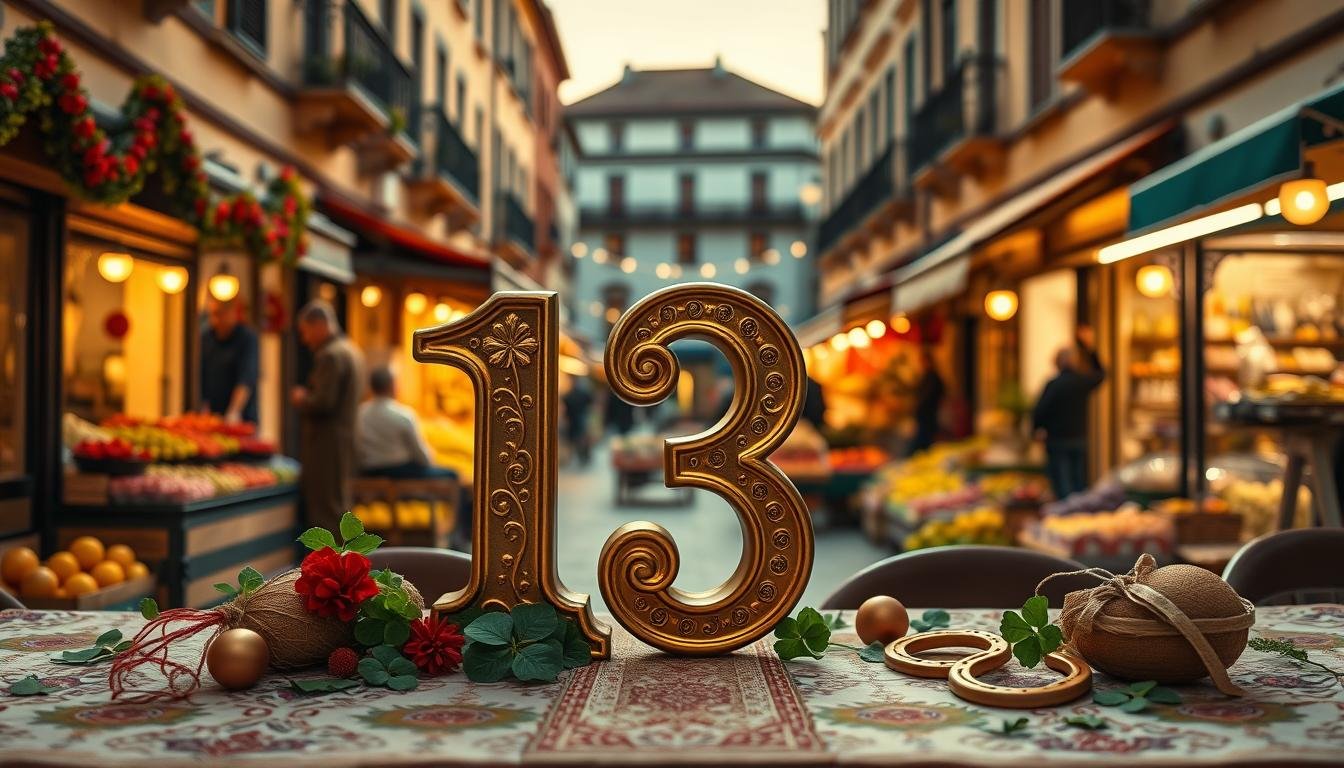
So, let’s dive right into the big question: is 13 a lucky number in Italy? Spoiler alert: yes! But the reasons behind this belief are more fascinating than you might think.
Most of us grew up hearing that 13 brings bad luck, thanks to horror movies and skipped 13th floors in hotels. Yet, this fear isn’t universal. Different cultures view this number through various lenses, and Italy flips the script entirely.
In Italian culture, 13 symbolizes good fortune, winning big, and even ancient goddess worship. It’s not just that 13 isn’t unlucky; it’s actively seen as lucky. The phrase fare tredici (meaning “to make thirteen”) comes from the Italian football pools known as Totocalcio. Scoring 13 points meant hitting the jackpot!
This article will explore why people care about lucky and unlucky numbers, how Italy’s perspective on 13 developed, and what other superstitions shape Italian culture. While 13 gets a bad rap elsewhere, Italians actually worry about a different number—17. So, get ready to rethink everything you thought you knew about 13!
Why People Care About Whether 13 Is Lucky or Not
The fascination with the number 13 runs deep, and understanding this can be quite revealing. Most of us have some weird feeling about it, even if we can’t quite explain why. This feeling shows up in movies, buildings, and even how we plan big events.
In the U.S. and other Anglo-Saxon cultures, Friday the 13th has become a cultural phenomenon. Horror movies thrive on this date, feeding into a genuine phobia known as triskaidekaphobia. Some hotels even skip the 13th floor, showing just how serious this superstition can be.
But not everywhere shares this fear. In Spain and Latin America, it’s Tuesday the 13th (or martes 13) that raises eyebrows. In Greece, people watch out for Tuesday the 13th too. These variations highlight how superstitions aren’t universal; they are cultural habits passed down through generations.
Now, let’s turn our attention to Italy. Here, the number 13 doesn’t just get a pass; it’s celebrated! Italians built their own tradition around this number, viewing it as a symbol of prosperity and good fortune.
What makes Italians see 13 differently? It comes down to language, history, and a national obsession with football pools. The phrase fare tredici (meaning “to make thirteen”) signifies hitting the jackpot in these pools, changing the narrative entirely.
Italian culture often flips symbols of fear into symbols of good fortune. The same culture that cherishes protective charms like the cornicello has embraced 13 as a friend, not a foe.
Understanding why people care about the luck of 13 reveals much about how cultures create meaning out of numbers. Italy’s perspective is one of the most fascinating examples of this phenomenon.
Is 13 a Lucky Number in Italy? The Short Answer and Why
Now, let’s uncover the exciting significance of 13 within Italian culture. The short answer? Yes, it’s a genuinely lucky number! Not just tolerated, but celebrated.
“Fare tredici” and the football pool jackpot
The phrase fare tredici translates to “to make thirteen.” This expression comes from Italy’s national football pools game, known as Totocalcio. To win the jackpot, players had to predict the outcomes of 13 matches correctly.
For many Italians, hitting that perfect score wasn’t just a win; it represented life-changing money. It could buy a house or start a business, bringing prosperity and hope.
13 as a symbol of success and good fortune in everyday talk
ho fatto tredici (I made thirteen) means “I hit the jackpot” or “I got really lucky.” This phrase has woven itself into everyday Italian language, showing how deeply ingrained this belief has become.
Italian cinema has also embraced this lucky number. Comedies like Ha fatto 13! from the 1950s and Al bar dello sport (1983) turned the concept of lucky 13 into a beloved national joke.
When a phrase becomes part of movies, jokes, and daily conversations, it transforms from mere words into a way of thinking about luck and success. The number 13 symbolizes good fortune in a uniquely Italian way. It reflects real hope for winning big, rather than any mysticism.
Today, you can still hear this sign of good fortune echoed throughout Italy. It’s living language, not just a relic of the past. The modern fame of 13 connects to older roots, which we’ll explore next.
An Old Story: How 13 Got Its Good Reputation in Italy
Long before football pools took center stage, the number 13 already held a positive reputation throughout Italy. Its roots stretch deep into ancient pagan beliefs and nature-based spirituality.
This number corresponds to the lunar calendar’s 13 cycles each year. Ancient cultures across the Mediterranean linked it to the moon, women’s cycles, and the Great Goddess. This powerful symbol of life and creation was not just a number; it represented fertility and renewal.
The Goddess, fertility, and the lunar calendar link
The Great Goddess embodied fertility, abundance, and the cycle of life. In early Italian traditions, 13 was sacred, not scary. It meant renewal and creation, a time for growth and prosperity.
In contrast, the number 12 represents order and completeness. Think of the 12 months of the year, the 12 zodiac signs, or the 12 apostles. Twelve signifies stability and what is already defined. However, thirteen breaks that pattern, introducing the unexpected. In the Italian view, this unexpected change usually brings good fortune.
How ancient beliefs shaped modern superstition
In Neapolitan tradition, particularly in the famous Smorfia, 13 symbolizes great luck and protection. This number is linked to Saint Anthony, a beloved figure invoked to help find what has been lost. Interestingly, Saint Anthony’s feast day is celebrated on June 13th, connecting this date to older, pre-Christian associations with the number.
These ancient beliefs didn’t simply vanish with the arrival of Christianity. Instead, they became woven into new traditions. This cultural blending helped ensure that 13 retained its positive meaning through centuries of change.
Understanding this rich history clarifies why modern Italians embrace 13 without fear. Its good reputation was already established, waiting for the football pools to provide a fresh reason to celebrate.
| Symbol | Meaning | Connection |
|---|---|---|
| 13 | Good Fortune | Lunar cycles, Great Goddess |
| 12 | Order | Months, Zodiac signs, Apostles |
| Saint Anthony | Protection | Feast Day: June 13 |
Unlucky Numbers? Why It’s Actually 17, Not 13, That Italians Watch Out For
To truly grasp Italian superstitions, one must recognize that the number 17, not 13, stirs the most concern. This twist might surprise many, but the reasons behind it are wonderfully strange.
The connection to Roman numerals plays a significant role. The numeral XVII can be rearranged to spell VIXI, which translates to “I have lived” in Latin. This phrase carries a spooky connotation, as it implies that life has ended. No wonder it has become a bad omen!
In ancient Rome, VIXI was often carved on tombstones. Seeing it associated with a number that pops up in daily life feels like tempting fate, almost as if death is lurking nearby. This connection is more than just a coincidence; it shapes how Italians view the 17th.
Visual superstitions add another layer. Some Italians see the numeral 1 as a hanged man and the 7 as a gallows. Together, they create a grim picture that is hard to ignore. While it may not be logical, superstitions rarely are!
This fear manifests in real life. Just like American hotels often skip the 13th floor, many Italian hotels avoid the 17th floor. Some airlines even skip row 17. It’s the same behavior, just directed at a different number.
In Italy, Friday the 17th is considered the unluckiest day on the calendar. This superstition even inspired a comedy film titled Era di venerdì 17 (It Was Friday the 17th) in 1956, directed by Mario Soldati. While Americans dread Friday the 13th, Italians are more concerned about Friday the 17th.
The irony is striking. While one culture nervously watches Friday the 13th, another side-eyes Friday the 17th. Both cultures showcase the human impulse to find patterns and avoid misfortune.
This contrast makes Italy’s affection for 13 even more intriguing. They haven’t just ignored one superstition; they’ve actively reversed it while creating a completely different one for 17. Understanding the 17 superstition provides a fuller picture of how Italians perceive luck, numbers, and fate. It’s not random—it’s layered with history, language, and a dash of dark humor.
| Numeral | Meaning | Connection |
|---|---|---|
| 17 | Bad Luck | Roman numerals, VIXI |
| Friday the 17th | Unlucky Day | Comedic references, cultural significance |
| 17th Floor | Avoided | Hotels, airlines |

From Symbols to Style: 13 in Italian Jewelry and Lucky Charms
Italians have a unique way of expressing their beliefs about luck through jewelry. This cultural connection runs deep, especially with the number 13, which symbolizes good fortune and protection.
The Italian gold 13 charm and what it stands for
The Italian gold charm representing 13 is often crafted in 18-karat yellow gold. Simple yet elegant, it can be worn on a chain or added to a charm bracelet. This charm serves as a quiet way to carry good luck wherever you go.
At Eredi Jovon in Venice, the number 13 takes on a personal touch. A lady once asked for 13 coral beads for an important job interview. While stringing them, the thread broke. Gabriella, the artisan, smiled and restrung 13 fresh beads, saying, “let’s start again.” A week later, she received a message: she got the job! This story illustrates how 13 becomes more than just a number; it transforms into a little talisman that people trust.
Cornicello and other popular lucky symbols paired with 13
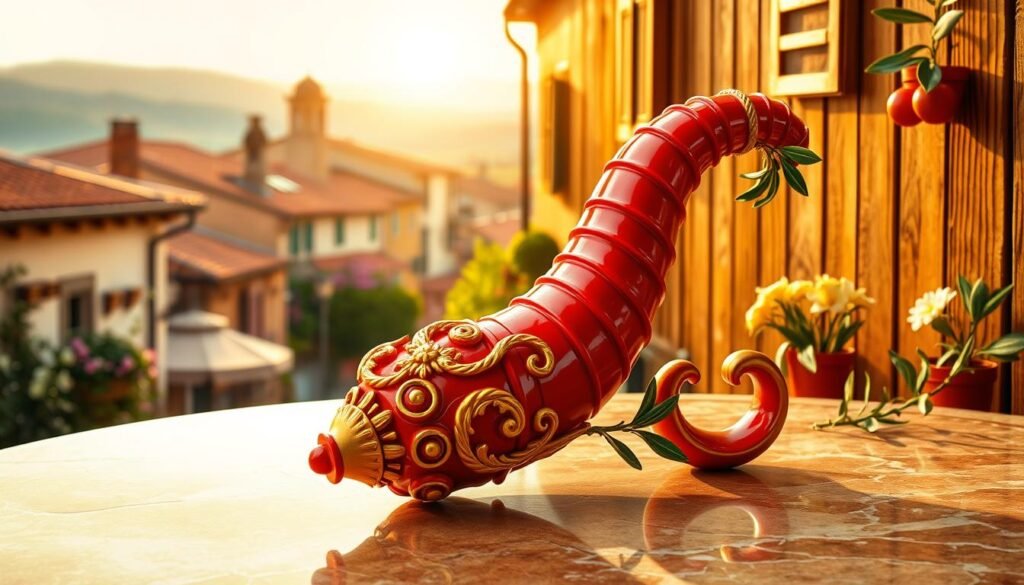
The iconic cornicello, or Italian horn, stands as one of the most recognized symbols of good luck. Worn to ward off the evil eye, it often partners with the number 13 in jewelry designs. Other traditional symbols include the mano cornuto, representing protection, and the Nazar eye, which deflects envy.
Jewelry designers frequently combine 13 with these symbols, creating pieces that resonate with centuries-old traditions. Italian gold jewelry featuring these elements isn’t merely fashion; it reflects a way of life where symbols invite prosperity and push away negative energy.
The phrase “lucky Italy” embodies this philosophy. It’s not just about the number; it’s about an entire approach to life where charms and symbols work together. Whether it’s a gold 13 charm or a coral horn, wearing these pieces keeps you connected to Italian culture and its uniquely optimistic view of luck.
More Quirky Italian Superstitions That Make the Culture Special
Italy’s view on luck goes far beyond mere numbers; it’s a rich tapestry of superstitions. These fascinating beliefs cover everything from brooms to black cats, creating a unique cultural landscape.
Don’t cross a broom or set your hat on the bed
First up, there’s the broom superstition. If you’re single and someone sweeping lets the broom touch your feet, you might never get married! This is the kind of wisdom passed down by Italian grandmothers.
Then, there’s the hat on the bed. This one has a dark twist. Priests would set their hats on beds while preparing for last rites. So, hats on beds became associated with death, and Italians still avoid this practice.
Black cats, salt spills, and touching iron for good luck
Next, let’s talk about black cats. In Italy, a black cat crossing your path is considered bad luck. But here’s the fun part: if you hear a cat sneeze, that’s actually good luck! Superstitions have their own quirky logic.
Spilling salt or olive oil is another no-no. Both were once quite expensive, so the idea of bad luck likely started as a way to encourage careful handling. Now, it’s just part of tradition.
To ward off bad fortune, Italians practice “tocca ferro,” which means touching iron. It’s similar to knocking on wood and still happens when people sense something ominous.
Sitting 13 at the table and other food-related beliefs
Speaking of food, here’s an interesting belief: never raise a toast with a glass full of water! That’s considered bad luck. And even though 13 is viewed positively, sitting down to a table with 12 others—making 13 total—is ill-fated. This ties back to the Last Supper, where Jesus dined with his 12 disciples before Judas betrayed him.
Lastly, if you follow a hearse without a coffin, it’s seen as a sign that death is looming for you. But if the hearse carries a body, you’re safe. It’s a morbid yet intriguing belief.
These Italian superstitions aren’t just old wives’ tales. They shape how many Italians navigate daily life, influencing everything from what they wear—like jewelry and charms—to how they set a table.
Living the Lucky 13 in Italy: Why It’s More Than Just a Number
Embracing the number 13 reveals a vibrant cultural tapestry that enriches Italian life. While many fear this number, Italians see it as a beacon of hope and abundance. Its ties to ancient symbols of fertility and the legendary fare tredici showcase a positive tradition that adds meaning to life.
In Italy, 13 isn’t just a number; it’s celebrated through jewelry and personal stories. Each gold charm carries history, inviting wearers to embrace their luck. This layered meaning makes the Italian view of 13 resilient, reinforcing connections across centuries.
As Grandma Carmela at Eredi Jovon wisely says, “Respond to those who fear Friday the 17th with thirteen smiles.” This sentiment captures the essence of Italian culture—meet superstition with warmth. Ultimately, numbers hold the power we give them, and in Italy, 13 shines as a symbol of fortune and good things to come.
For more on embracing luck and numbers, check out this link.