
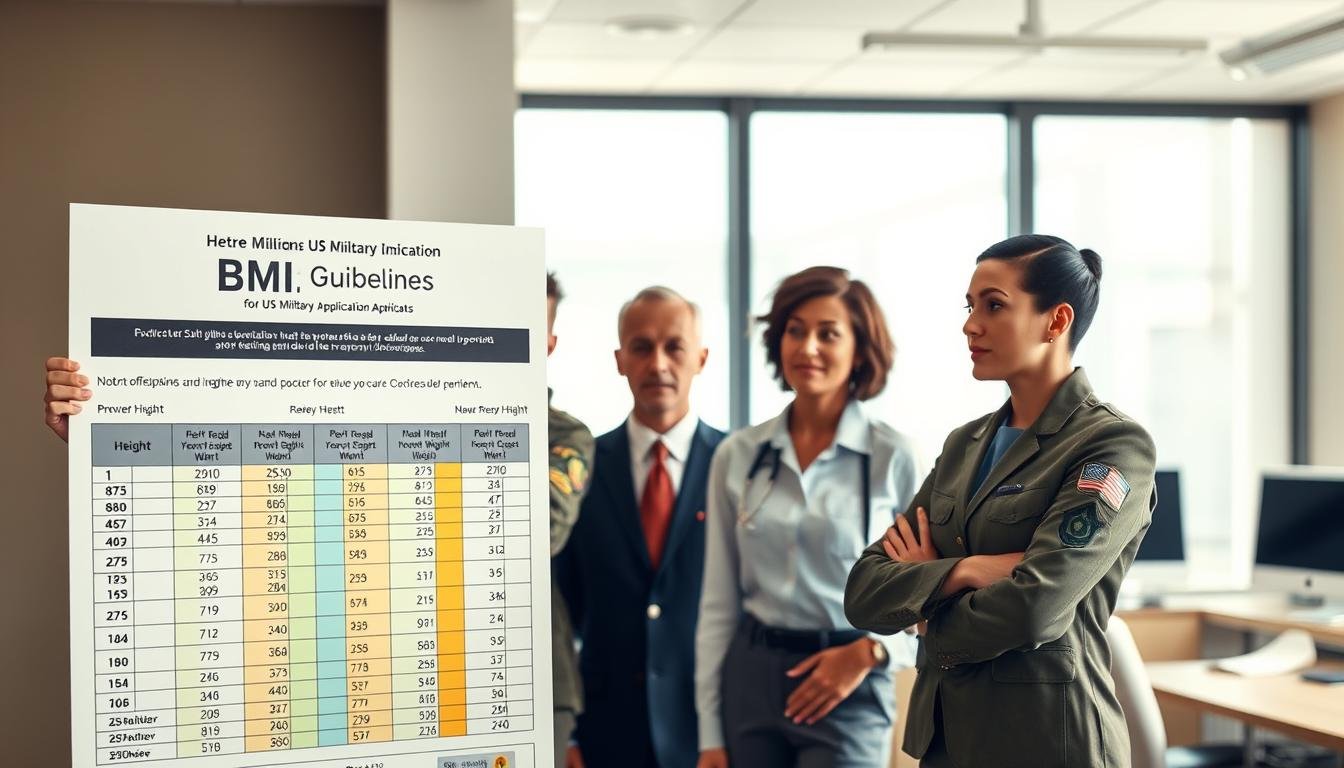
So, you’re thinking about enlisting, and that military BMI chart has you feeling a bit anxious, right? You’re not alone! Many potential recruits wonder how their weight and height measure up against the standards. The good news is, this guide is here to help.
Check your BMI with our calculator 👉
We’ll break down what the chart means, how each branch of service uses it, and what you can do to prepare for your physical assessment. You’ll learn how your height and weight are measured at MEPS and what happens if you don’t hit the numbers on your first try.
Think of this as your straightforward guide to understanding body composition rules. By the end, you’ll know exactly what to expect, so you can walk into that recruiting office feeling confident. Remember, the military BMI chart isn’t just a random hurdle; it’s part of a long history of ensuring that service members are fit for the demands of their roles.
Let’s dive into the details and get you ready to meet those standards and kickstart your military career!
Key Takeaways
- Understanding the military BMI chart is crucial for recruits.
- Height and weight measurements are essential for fitness assessments.
- Different branches have slightly different standards.
- Preparation is key to feeling confident during assessments.
- The BMI chart has historical significance in assessing fitness.
What the Military BMI Chart Is and Why It Matters
If you’re gearing up to join the ranks, you might be curious about how the body mass index plays into your journey. Understanding this tool is essential for anyone considering enlistment. It helps categorize individuals based on their height and weight, giving a quick overview of their body composition.
BMI stands for body mass index, and it’s essentially a simple calculation that can indicate whether you’re carrying too much or too little body fat for your frame. The military takes this seriously because extra weight can slow you down, increase your risk of injury during training, and make it harder to meet the physical demands of active duty.
Your body composition is crucial. It refers to how much of your total weight comes from fat versus muscle and bone. This factor significantly impacts your ability to perform tasks like ruck marching for miles or sprinting when it counts.
Think of the body mass index as a screening tool, not a final verdict. It flags individuals who may need a closer look at their actual body fat percentage. When your body composition is off, you may struggle with endurance and strength tasks, or even basic things like fitting into protective gear properly.
The standards in place are based on history. Stronger, fitter soldiers have always performed better, a truth that stretches back to the Civil War and continues through modern combat operations. Military readiness isn’t just about doing push-ups; it’s about having a body that can handle the unpredictable physical stress of deployment and training cycles.
Even if you feel fine now, carrying excess body fat can catch up with you during the grind of basic training. You’ll be burning thousands of calories a day, and you need every advantage you can get.
| Category | BMI Range | Body Fat Percentage |
|---|---|---|
| Underweight | Less than 19 | Below 10% |
| Healthy Weight | 19 – 24.9 | 10% – 20% |
| Overweight | 25 – 29.9 | 20% – 30% |
| Obese | 30 and above | Above 30% |
Understanding the Military BMI Chart
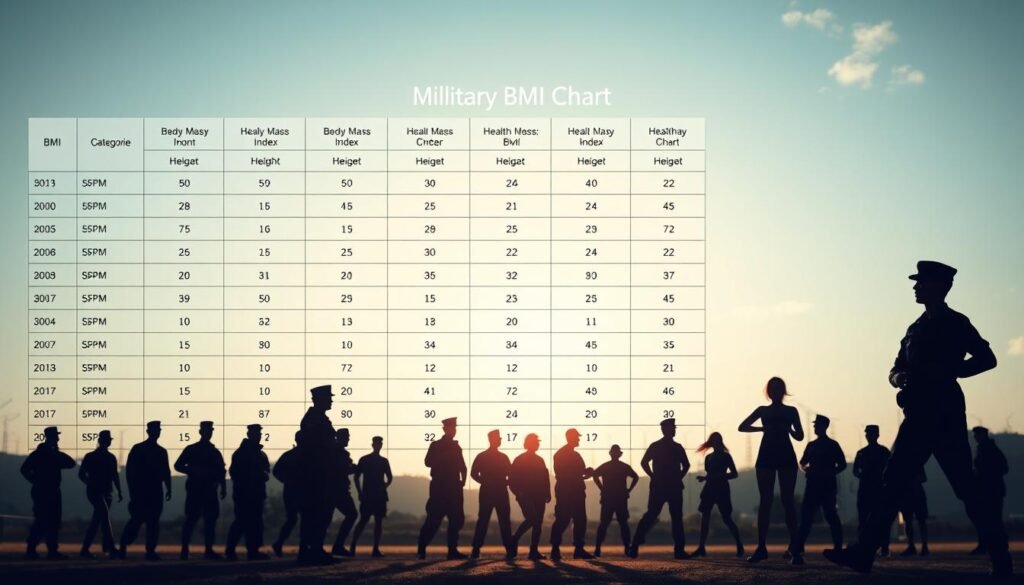
As you prepare for enlistment, understanding how your height and weight impact your body composition is essential. The military uses a straightforward approach to determine if you fall within the required standards for your age and gender. This is done by plotting your height against your weight on a chart.
The military’s weight standards are divided by height in inches and further categorized by age groups: 17-20, 21-27, 28-39, and 40+. For instance, a male recruit aged 17-20 who is 68 inches tall has a maximum allowable weight of 170 pounds. In contrast, a female recruit of the same height and age has a maximum of 164 pounds.
How Height and Weight Determine Your BMI
When you visit the Military Entrance Processing Station (MEPS), your height is measured without shoes. You’ll stand straight, with your chin parallel to the floor, and the measurement is rounded to the nearest inch. Weight is recorded to the nearest pound, so it’s important to be aware that your home scale might show a different number.
The BMI chart serves as a quick reference to see if your height and weight align with the established standards. Here are some key points to remember:
- The chart accounts for natural differences in body composition, meaning men generally have higher weight limits due to more lean mass.
- If you’re 5 feet 8 inches and a 19-year-old male, your maximum weight is 170 pounds. However, if you’re 30, that number increases to 179 pounds.
- Women have their own set of standards, which are lower than men’s, reflecting typical differences in body composition.
- Being under the minimum weight for your height can indicate insufficient muscle mass to handle training demands.
- The allowable ranges are based on extensive data regarding body types that tend to succeed in military training.
Limits and Allowable Ranges for Applicants
Each branch of service has slightly different tables, but they all follow the same basic principle. Your height and weight together provide a snapshot of whether you may need further body fat testing. This is crucial for ensuring that all recruits are fit and ready for the challenges ahead.
Understanding these standards can help you prepare better for your enlistment process. Remember, being aware of how your height and weight affect your body composition can set you on the right path toward meeting the requirements and succeeding in your military career.
Difference Between Accession and Retention Standards in the Military
Check your BMI with our calculator 👉
Understanding the difference between accession and retention standards is crucial for anyone considering a military career. These standards dictate what you need to achieve to enlist and what you must maintain while serving. It’s important to know that these requirements can vary significantly.
Accession standards are the benchmarks you must meet to join the service. They are often more lenient, recognizing that many recruits will lose weight during basic training. For instance, the Army and Navy have slightly easier entry requirements compared to what is expected for retention. This approach allows new recruits to adapt and get fit while they undergo training.
On the other hand, retention standards are stricter. They apply to service members who are already in the military and need to maintain their fitness levels. For example, the Navy allows a 1% higher body fat percentage for those trying to enlist than for those already serving. This means that while you might get a little leeway when joining, you’ll need to be more disciplined once you’re in.
Entry Requirements Versus Maintaining Service Fitness
Different branches have unique rules. The Air Force and Marine Corps maintain the same standards for both accession and retention. This means you must be at your best from day one. In contrast, the Army’s weight-for-height standards change as you age, allowing older recruits a bit more flexibility.
Age also plays a significant role in how standards are set. A 40-year-old body processes fat differently than that of an 18-year-old. The military acknowledges this reality in their standards. Generally, women have higher allowable body fat percentages than men, reflecting biological differences.
How Age and Gender Affect Weight and Body Fat Limits
If you’re a man in your late 30s trying to enlist, you’ll notice the maximum weight for your height is higher than for younger recruits. This design acknowledges the natural changes in body composition as we age. Understanding these distinctions can help you set realistic fitness goals.
It’s also essential to note that the military invests significantly in training recruits. They want to give you a fair shot at entry while still holding the line on long-term fitness. If you are close to the accession limit, keep in mind that you will need to improve once you are in.
For more detailed information on how age and gender affect body fat standards, you can refer to this study.
How Your Height and Weight Are Measured Correctly at MEPS
When preparing for your MEPS visit, knowing how your height and weight will be measured can ease your nerves. This process is straightforward, but understanding it can help you feel more at ease.
Proper Height Measurement Techniques
During your visit, you’ll be asked to stand against a wall-mounted stadiometer. Make sure to take off your shoes and keep your feet flat on the ground. It’s important to stand up straight, but don’t be too rigid. Aim for a natural upright posture with your chin parallel to the floor, similar to standing at attention but relaxed.
The person measuring you will round your height to the nearest inch. For example, if you’re 68 and a half inches tall, you’ll be recorded as 69 inches. However, if you’re 68 and a quarter, you’ll be noted as 68 inches.
Weighing In: What You Need to Know
Next, you’ll step onto a calibrated scale, likely in your socks or bare feet. Your weight will be recorded to the nearest pound. It’s best to avoid any tricks, like fasting for two days before your appointment, as this can leave you dehydrated and uncomfortable during the rest of your MEPS visit.
While wearing lightweight clothing is advisable, remember that the difference a t-shirt makes is minimal. Focus on being healthy rather than trying to game the scale.
The entire measurement process typically takes about two minutes. This quick assessment sets the tone for your physical evaluation, so take it seriously and follow all instructions. If you’re close to the weight standard, you might still move on to the next step, but be prepared for additional body fat testing.
Knowing exactly how they measure can help you practice at home. This way, you won’t be surprised by the official numbers on test day.
Tape Tests and Body Circumference Measurements Explained
Navigating the world of body composition assessments can feel overwhelming, especially when it comes to the tape test. This method is often a second chance for recruits who don’t meet the weight cutoff on the standard chart. Understanding how it works can ease your nerves and help you prepare.
What Is the Tape Test and How It Works
The tape test utilizes a special self-tensioning tape measure to assess body circumference at specific sites. For males, the traditional method involves measuring the neck and navel. For females, the test includes the neck, the narrowest part of the waist, and the hips. This accounts for natural differences in fat distribution.
Recently, the Army has simplified its approach. They now primarily use a one-site abdomen circumference method. This change is based on research indicating that it is just as effective as the older multi-site method.
Differences Between 2-Site, 3-Site, and Single-Site Measurements
Each branch of service has its own guidelines regarding the tape test:
- The traditional 2-site method for men measures the neck and navel.
- Women are measured at three sites: neck, waist, and hips.
- The Army’s new one-site method focuses solely on the abdomen.
- The Marine Corps uses a waist-to-height ratio as its primary screening tool.
- All methods aim to provide an accurate body fat assessment while being cost-effective.
It’s important to note that the tape itself applies consistent pressure. This means the person measuring cannot pull it too tight or leave it too loose. Many recruits worry that the tape test may be unfair, especially if they have a muscular build. However, studies show that it correctly classifies over 90% of service members when compared to advanced scans like DEXA.
If you’re close to the weight limit, practicing the tape test at home can be beneficial. Use a flexible measuring tape to track your progress and get familiar with the process. While the tape test isn’t perfect, it’s practical and can be conducted by almost anyone with minimal training, which is why it remains a standard in assessments.
Beyond BMI: Additional Body Fat Assessment Methods
When it comes to assessing your body composition, there are more methods than just the basic weight and height measurements. Understanding these additional techniques can help you gain a better perspective on your fitness level.
One popular method is Bioelectrical Impedance Analysis (BIA). This technique uses a harmless electrical current that travels through your body. Since fat, muscle, and bone all have different resistance levels, the speed of the current helps determine your body fat percentage. The InBody 770 device is commonly used and is approved for the Army and Marine Corps.
However, keep in mind that hydration levels can affect the results. If you’re dehydrated, it might show a higher body fat percentage than you actually have.
Another method is Dual-energy X-ray Absorptiometry (DEXA). This is often considered the gold standard for body composition assessment. It uses low-dose X-rays to measure fat, muscle, and bone density. While it provides highly accurate results, the machines are expensive and not available at every base.
Lastly, there’s Air-Displacement Plethysmography (BOD POD). This method measures how much air your body displaces in a sealed chamber, allowing for a calculation of body composition. It’s available at Army Wellness Centers and Air Force Health and Wellness Centers.
These supplemental tests are becoming more common because the military recognizes that no single measurement method is perfect for every body type. If you find yourself struggling with the basic tape test, consider asking for a BIA or DEXA scan. These options could provide a clearer picture of your actual fitness level.
Here’s a quick overview of these assessment methods:
| Method | Description | Availability |
|---|---|---|
| Bioelectrical Impedance Analysis (BIA) | Uses electrical current to estimate body fat percentage. | Commonly available in fitness centers. |
| Dual-energy X-ray Absorptiometry (DEXA) | Gold standard; measures fat, muscle, and bone density. | Available at select larger installations. |
| Air-Displacement Plethysmography (BOD POD) | Calculates body composition by measuring air displacement. | Available at Army and Air Force wellness centers. |
How Different Military Branches Approach BMI and Body Fat Testing
Every branch of service has its own unique approach to assessing body composition. Understanding these differences can help you prepare for enlistment and ensure you meet the necessary standards.
Army’s New Abdominal Circumference and Supplemental Tests
The U.S. Army has simplified its body composition assessment by adopting a one-site abdominal circumference tape method. If a recruit does not pass this initial test, they have the option to request a Bioelectrical Impedance Analysis (BIA) scan for a second opinion. This is a fair system that provides recruits with a chance to demonstrate their fitness.
Marine Corps’ Waist-to-Height Ratio and Tape Test Procedures
For those considering the Marine Corps, the waist-to-height ratio is crucial. Recruits must maintain a ratio below 0.52. If they exceed this limit, they will undergo further body fat testing using either a multi-site tape test or a BIA scan. Core strength is essential for Marines, so focusing on abdominal fitness can be beneficial.
Navy and Coast Guard Body Composition Methods
The Navy employs a stepped process for body composition assessments. Initially, a single-site abdominal circumference measurement is taken. If that does not meet standards, recruits proceed to a more comprehensive multi-site tape test. The Coast Guard offers flexibility by using either 2- or 3-site circumference measurements or a single-site abdominal measurement. In some cases, physical fitness test scores can be used to demonstrate fitness if recruits do not meet body fat standards.
Air Force Waist-to-Height Ratio Screening
In January 2023, the Air Force shifted its approach to body composition by eliminating weight measurements. Instead, they now focus solely on the waist-to-height ratio, requiring a standard of 0.55. This change allows for a more inclusive assessment, particularly for those who may naturally carry more muscle.
Each service has its own culture and priorities. The Army may emphasize overall endurance, while the Marine Corps focuses on a lean appearance and combat readiness. If you’re considering which branch to join, these body composition standards could influence your decision.
Fortunately, all branches now offer some form of supplemental testing. A single unsuccessful tape test does not have to end your enlistment hopes. Understanding your specific branch’s approach lets you train smarter. If you know the Air Force only cares about your waist-to-height ratio, you can focus your efforts there instead of stressing about the scale.
Body Mass Index: What It Tells You and What It Doesn’t
Check your BMI with our calculator 👉
The body mass index is often a point of confusion, especially for those with a strong fitness background. While it serves as a quick screening tool, it doesn’t tell the whole story about your health. Understanding its strengths and weaknesses can help you navigate your fitness journey more effectively.
The Strengths and Weaknesses of BMI in Military Screening
Body mass index is a reliable method for assessing body composition at a population level. However, it has limitations:
- General Applicability: BMI works well for most people, which is why it remains a common screening tool.
- Not Individualized: It doesn’t account for differences in body composition, meaning two individuals with the same BMI can have vastly different body fat percentages.
- Muscle vs. Fat: BMI can’t differentiate between a 200-pound bodybuilder and a 200-pound couch potato, which can be frustrating for those who are muscular.
- Height Discrepancies: Short, stocky individuals may find themselves classified as overweight, despite being fit.
Why Muscle Mass Can Affect Your BMI Results
When your body mass index hits 30 or above, it’s unlikely that you’re simply muscular. At this point, excess body fat is usually involved. The military recognizes BMI’s limitations, which is why they implement additional tests like the tape test.
If you’re concerned that your muscle mass might hinder your assessment, focus on keeping your waist measurement down. This number is often more critical during the tape test.
Think of BMI as the first checkpoint in your fitness journey, not the final word. It serves to identify clear cases of overfatness before moving individuals on to more detailed assessments. Understanding what BMI can and can’t tell you empowers you to advocate for yourself if you find yourself in that gray area where the numbers don’t reflect your true fitness level.
Military Body Fat Percentage Standards by Gender and Age
Understanding the body fat percentage standards for service members is crucial for your military journey. These standards vary based on gender and age, and knowing them can help you prepare effectively for enlistment.
Maximum Allowable Body Fat for Men and Women
The maximum allowable body fat for men typically ranges from 18% to 26%, depending on their age and the branch of service. For women, this range is slightly higher, falling between 26% and 34%. This difference is important to note:
- Men generally need to stay between 18 and 26 percent body fat depending on their age and which branch they’re in, with younger recruits held to the tighter end of that range.
- Women’s standards run from about 26 to 34 percent body fat. This difference is due to the fact that women naturally carry more essential fat for hormonal and reproductive health.
- The Army provides a bit more flexibility for older recruits because metabolism shifts and body composition naturally change as you enter your 30s and 40s.
- A 20-year-old male Marine needs to be leaner than a 35-year-old Army soldier, reflecting the different physical demands and career stages involved.
- The Navy caps men at 23 percent and women at 34 percent, aligning with health organizations’ standards for active individuals.
- If you’re a woman reading this and stressing about the numbers, remember that female athletes often carry 14 to 20 percent body fat, so the military standards leave plenty of room for health and performance.
How Age Changes the Standards You Need to Meet
Age groups typically break down into under 20, 21 to 27, 28 to 39, and 40 plus. Each step up allows a little more body fat because the military recognizes that bodies change over time. These aren’t random numbers; they are based on decades of data linking body fat levels to injury rates, physical performance, and long-term health outcomes in service members.
If you’re close to the line, don’t panic! Even a few percentage points of body fat can be lost in a couple of months with consistent training and decent nutrition.
How Physical Fitness Tests Tie into BMI and Body Composition
As you embark on your journey to enlist, it’s vital to grasp how physical fitness tests relate to your overall body composition. Many recruits may not realize that their fitness test scores are closely connected to their body fat levels. This connection can significantly influence performance and readiness.
Why Fitness Matters Beyond Just Weight Numbers
Your physical fitness test scores and your body composition are way more connected than most people realize. When your body fat decreases, your run times tend to improve, and you can crank out more push-ups. This correlation shows that focusing on fitness can lead to better results.
Research from Fort Jackson revealed that recruits with higher body fat percentages ran slower and performed fewer sit-ups and push-ups. Moreover, these individuals experienced more injuries during basic training. Understanding this link is essential for anyone looking to succeed in their military career.
Relationship Between Body Fat, Fitness, and Injury Risk
Interestingly, the fastest runners sometimes had higher injury rates. This suggests a balance between being lean enough and avoiding overtraining. For women, the leanest recruits actually faced higher injury rates, indicating that some body fat can be protective during intense training.
Fitness matters beyond just the scale. A heavier person who can run fast and lift heavy is likely in better shape than a lighter person who can’t perform these tasks. The military evaluates the whole picture: your weight, body fat, and actual physical performance. All three factors predict how well you’ll handle the demands of service.
If you’re carrying extra weight but excel in your physical training test, you’re in a better position than someone who is thin but struggles to pass the run. Studies have shown that fit but overweight individuals often have lower mortality rates than lean but unfit individuals. This is why the military doesn’t automatically disqualify those who are heavier if they can perform well.
Ultimately, training for your fitness test and managing your body composition should go hand in hand. The same habits that improve your run time will usually help you drop body fat too. Embracing this holistic approach can set you up for success as you prepare for your military journey.
Tips to Prepare for Your Military Body Composition and Weight Assessment
Check your BMI with our calculator 👉
Preparing for your body composition assessment can feel daunting, but with the right approach, you can set yourself up for success. Here are some practical tips to help you navigate your training and nutrition leading up to the big day.
Effective Training and Nutrition Habits
Start preparing at least a couple of months before your MEPS visit or official assessment. Crash dieting the week before will leave you tired and likely still over the limit.
Mix up your training with both cardio and strength work. Running helps burn calories and improve your fitness test scores, while lifting keeps your metabolism humming and preserves muscle.
Don’t fall into the trap of cutting calories so low that you lose muscle instead of fat. This will hurt your performance and might not even move the scale as much as you hope.
Drink plenty of water in the days leading up to your test. However, avoid chugging a gallon right before you step on the scale, as that can backfire in obvious ways.
Avoiding Common Pitfalls Before Your Test
Get familiar with how the tape test works by measuring yourself at home. This way, you’ll know if your waist is trending in the right direction and you won’t be surprised on test day.
Avoid salty foods the night before, as they can make you retain water and look puffier than you actually are. This won’t help with either the scale or the tape.
Sleep matters more than people think. Being well-rested helps regulate the hormones that control hunger and fat storage, so don’t sacrifice sleep for extra gym time.
If you’re really struggling to make the numbers, consider working with a trainer or nutritionist who has experience with military applicants. They can spot things you might miss on your own.
Finally, remember that this is about long-term health and readiness, not just passing a test. Build habits you can sustain rather than doing anything extreme.
What Happens If You Don’t Meet Military BMI or Body Fat Standards
If you don’t meet the required standards for body composition, know that you have support and resources available to help you succeed. Falling short on your first attempt can feel discouraging, but it’s important to remember that this is not the end of your journey.
Most often, if you don’t make the cut, you’ll be referred to a weight management program. These programs provide structured support to help you get back on track. They are not a punishment; instead, they are designed to assist you in meeting the standards through:
- Nutrition education: Learn how to fuel your body effectively.
- Exercise plans: Get tailored workouts to improve your fitness.
- Regular check-ins: Stay accountable with trained staff who guide you.
The military aims to reduce the stigma around these programs. Records of participation are purged to prevent any negative impact on your career. So, don’t let pride keep you from accepting help when you need it.
Typically, you will have a set period of time—often a few months—to show progress and meet the standards before any serious administrative actions take place. If you believe the tape test doesn’t accurately reflect your body composition, supplemental testing options like BIA, DEXA, or BOD POD may be available.
The Army allows soldiers who fail the tape test to request a BIA scan. Similarly, the Marine Corps is moving toward using BIA as a standard backup option. If you are a recruit trying to enlist and don’t meet the accession standards, your recruiter can work with you on a plan to lose weight and come back for reassessment.
Remember, the key is to stay proactive. Don’t just wait and hope things improve. Use the resources available to you and treat the program as a tool rather than a setback. Many successful service members have gone through weight management programs at some point, and it’s a common part of military life—nothing to be embarrassed about.
How the Military Uses Waist-to-Height Ratio and Other Newer Measurements
Check your BMI with our calculator 👉
Understanding the waist-to-height ratio can give you a clearer picture of your health as you prepare for enlistment. This measurement is becoming a key standard for assessing body composition and overall fitness. It is calculated by dividing your waist circumference by your height. This method is gaining popularity because it offers a more precise assessment of health risks than traditional methods like BMI alone.
Why This Method Is Gaining Popularity
The waist-to-height ratio (WHtR) is considered a better predictor of health issues such as high blood pressure, diabetes, and metabolic syndrome. Research indicates that where you carry your fat is more important than just how much you weigh. For instance, excess belly fat is linked to higher health risks compared to fat stored in other areas.
As a result, the military has started to adopt this measurement. The Air Force has set a standard of 0.55, while the Marine Corps aims for a ratio below 0.52. Generally, a goal WHtR of 0.5 or lower is recommended, meaning your waist circumference should be less than half of your height.
What Numbers You Should Aim For
Here are some key points to remember about the waist-to-height ratio:
- The waist-to-height ratio is simple: measure your waist and divide it by your height. A number under 0.5 indicates good health.
- The Air Force allows a slightly higher cutoff at 0.55, while the Marine Corps requires a stricter 0.52 or below.
- This method is gaining traction because it effectively predicts health issues like diabetes and heart disease.
- Where you store fat matters; belly fat is riskier than fat in your hips or thighs.
- If you’re 68 inches tall, aim for a waist measurement under 34 inches to achieve that 0.5 ratio.
- The military prefers this method as it simplifies the assessment process—one measurement and a quick calculation yield a clear result.
- For women, this can be a fairer assessment than the traditional tape test, as it doesn’t penalize wider hips.
- Focus your training on core exercises and fat loss if your branch uses this ratio for assessments.
- This trend towards simpler, more predictive measurements is likely to continue, so keep an eye on your waist-to-height ratio.
| Branch | Standard WHtR | Health Implications |
|---|---|---|
| Air Force | 0.55 | Increased health risk if above standard |
| Marine Corps | 0.52 | Higher emphasis on leanness |
| General Goal | 0.5 or lower | Optimal health and fitness |
Common Misconceptions About Military BMI and Body Composition Tests
Clarifying the myths about body composition tests can help recruits feel more prepared and confident. Many people hold misconceptions that can lead to unnecessary anxiety when preparing for enlistment. Let’s address some of these myths head-on.
Muscle vs. Fat: Clearing Up the Confusion
The biggest myth out there is that the tape test is completely useless for muscular people. However, studies show it correctly classifies over 90 percent of service members when compared to DEXA scans. Yes, if you’re a serious lifter with a thick neck and broad shoulders, you might get flagged. But that’s what supplemental tests like BIA and DEXA are for, and they’ll clear you if you’re truly lean.
How Body Shape and Fat Distribution Affect Measurements
Women sometimes worry that having bigger glutes from strength training will cause the tape test to overestimate their body fat. There’s some truth to that concern, which is why newer methods are being introduced. Another misconception is that you can trick the tape test by sucking in your stomach. The person measuring you is trained to catch that and will just wait until you breathe normally.
People often think the military BMI chart is the same across all branches. In reality, the Army, Navy, Air Force, Marine Corps, and Coast Guard all have their own variations. There’s also a persistent rumor that you can dehydrate yourself to pass the scale. This is dangerous, doesn’t work for the tape test, and can cause you to fail other parts of your physical.
Some folks believe that if you’re over the weight limit, you’re automatically disqualified. That’s not true; you just move on to body fat testing, which gives you another chance. Body shape really does matter: someone who carries fat in their hips and thighs might pass the tape test more easily than someone with the same amount of fat stored around their middle.
Finally, the military isn’t trying to fail people with these tests. They’re focused on ensuring everyone is healthy enough to do their job safely. The system has multiple checkpoints built in to be fair.
Tracking Your Progress and Staying Within Standards Over Time
Check your BMI with our calculator 👉
Regularly monitoring your fitness levels can help you stay within the required standards. Keeping track of your body composition is not just about passing a test; it’s about ensuring your overall health and readiness. Here’s how you can create a manageable system for tracking your progress.
Regular Self-Checks and What Tools to Use
Don’t wait for your official assessment to find out where you stand. Grab a flexible measuring tape and check your waist circumference once a month. This simple action can help you catch any upward trends early.
A basic bathroom scale is fine for tracking weight, but pay more attention to how your clothes fit and how you feel during workouts. Obsessing over daily fluctuations can lead to unnecessary stress.
If you have access to an Army Wellness Center or an Air Force Health and Wellness Center, consider scheduling a BOD POD session every few months. This tool provides an accurate read on your body composition and can be very helpful.
Remember, the scale can sometimes mislead you, especially if you’re building muscle while losing fat. Combining weight checks with tape measurements gives you a much clearer picture of what’s happening with your body.
When to Seek Professional or Medical Guidance
Set a reminder to do a self-check at the same time of day, preferably in the morning before eating. This consistency ensures your measurements are comparable over time.
If you notice your numbers creeping up despite your best efforts, don’t just hope it will fix itself. Talk to a nutritionist or your unit’s fitness coordinator before it becomes a bigger issue.
The military screens everyone at least once a year, sometimes twice. Staying on top of things between official tests means you’ll never be caught off guard.
Interestingly, active duty service members have lower obesity rates than civilians, which shows that the system works when people stay engaged with their fitness year-round. Knowing when to ask for help is a sign of good judgment, not weakness. Medical guidance can rule out underlying issues like thyroid problems that might be working against you.
Final Steps to Getting Ready to Meet Military BMI Standards
Check your BMI with our calculator 👉
You’ve navigated through the complexities of body composition assessments, and now it’s time to take action. Start by identifying the specific standards for your branch, age, and gender. Measure yourself honestly to understand where you currently stand.
Give yourself ample time to make necessary adjustments, whether that involves shedding a few pounds, tightening your waist measurement, or boosting your fitness test scores. Remember, the initial screening is just the beginning; if you don’t pass, options like the tape test and supplemental assessments are available.
Focus on creating sustainable habits: engage in enjoyable exercises, eat whole foods, stay hydrated, and prioritize sleep. These training practices will prepare you for the physical challenges ahead, not just as obstacles but as benchmarks for your readiness.
Thousands of recruits meet these standards annually and thrive in their military careers. With determination and the right preparation, you can be among them. Stay consistent, take it one step at a time, and remember that every effort counts toward your success.