
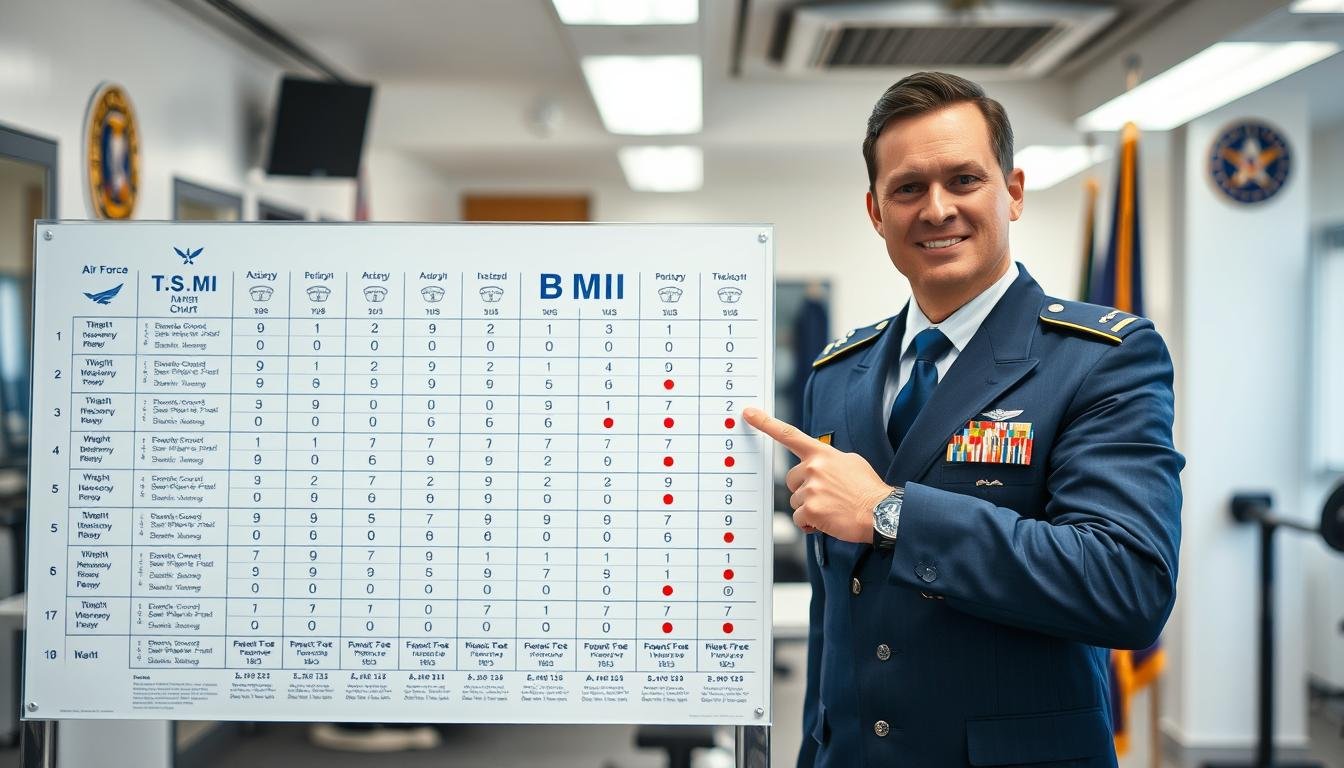
So, you’ve heard about the Air Force BMI chart, and you’re curious about how it all works. Well, let’s get right to it. The U.S. Air Force has shifted its focus from the traditional BMI to a more accurate assessment of body composition. They’re interested in what your weight is made of, not just the number on the scale.
Try our BMI Calculator 👉
While you might still see the BMI chart referenced, especially at MEPS or for Academy applicants, the real deal for active duty members is the Body Composition Assessment (BCA). This involves a simple tape measure around your waist compared to your height. It’s all about being fit and healthy, not just fitting into a weight category.
Think about it: a 200-pound mechanic who’s strong and muscular is in a different league than a 200-pound couch potato. The Air Force understands this, which is why they’ve set the bar with a Waist-to-Height Ratio of 0.55 or below. This guide will walk you through everything you need to know about these standards and how they affect your service.
Key Takeaways
- The Air Force focuses on body composition rather than just weight.
- The Body Composition Assessment (BCA) is the main measure for active duty.
- Waist-to-Height Ratio (WHtR) is crucial for passing the fitness standards.
- Muscle mass and overall health matter more than just weight alone.
- This guide covers everything you need to know about Air Force body standards.
Understanding the Air Force BMI Chart: What It Really Means
Curious about what the Air Force BMI chart really means? It’s more than just numbers on a page. This chart serves as a starting point, a quick screening tool that prompts further evaluation. It plots height against weight to give you a body mass index number. But here’s the catch: BMI doesn’t differentiate between a muscular build and a more slender frame.
Body mass index simply divides your total weight by your height squared. It overlooks the fact that muscle is denser than fat. So, a fit Airman who spends time in the gym might be labeled “overweight” according to BMI, even if they’re in great shape. That’s why the Air Force doesn’t rely solely on BMI.
What truly matters is body composition—the balance between fat mass and lean mass. Think of your body like a packed suitcase. BMI just weighs the whole thing, while body composition checks what’s inside. Two individuals weighing 190 pounds can have vastly different health profiles based on their body makeup.
The Air Force’s body composition standards reflect this understanding. They use a tape test to assess fat distribution, particularly around the waist. This is important because abdominal fat is linked to health risks and can impact job performance.
For women, the BMI chart can be misleading. A female Airman with a strong physique may have a high BMI but still pass the tape test comfortably. The standards take into account variations by age and gender, which we’ll explore later.
Bottom line: don’t stress too much about the Air Force BMI chart on its own. It’s just a reference point, not a final judgment. The tape test and your Waist-to-Height Ratio are what really count for your career and readiness.
How the Air Force Measures Body Composition: The Tape Test Explained
Let’s break down how the Air Force assesses body composition using the tape test. This straightforward procedure focuses on a single measurement: the circumference of an Airman’s bare waist. The measurement is taken at the narrowest point above the navel and below the lowest rib. It’s simple, effective, and eliminates any guesswork.
The measurement is then divided by the Airman’s height in inches to calculate the Waist-to-Height Ratio (WHtR). If the result is 0.55 or higher, it indicates a need for enrollment in the Body Composition Program. This approach is refreshingly simple compared to the more complex methods used by other branches.
The Tape Test Procedure: What to Expect
When you arrive for the tape test, a trained proctor will wrap a standard tape measure around your waist. There’s no pinching or calipers involved—just one clear measurement. This process is designed to be consistent and fair for all personnel, whether they are active duty, Reserve, or Guard.
Why focus on the waist? Because where your body stores fat tells a bigger story than overall weight. Visceral fat around the midsection is linked to various health risks, including heart disease and metabolic dysfunction. These factors can significantly impact an Airman’s performance in the field.
Why BMI Isn’t the Whole Story for Airmen
Body Mass Index (BMI) can be misleading. A muscular Airman might fail a BMI check but easily pass the tape test. Muscle is denser than fat, so the tape test provides a more accurate picture of health risks. It zeroes in on the waist area, which is a key indicator of potential health issues.
This distinction is especially important for women. Female body composition differs from male patterns, and the tape test accounts for these variations. A woman who trains regularly and has a strong physique won’t be unfairly penalized just because her BMI is high.
“The whole system is built on solid health science, not arbitrary rules.”
The Air Force’s approach is about understanding body composition in relation to health risks, rather than fitting into a specific size. This smarter method helps ensure that Airmen are ready for duty and capable of performing at their best.
Air Force BMI Chart Standards by Age and Gender
The Air Force has a unique approach to body composition standards. Instead of applying a single number to all Airmen, the standards vary based on age and gender. This means that what’s considered healthy for one person might not be the same for another. The general pass line is a Waist-to-Height Ratio (WHtR) of 0.55 or below, but this can change depending on age brackets.
Understanding these standards is crucial for anyone looking to join or serve in the Air Force. The adjustments made for age and gender reflect the reality that bodies change over time. Let’s take a closer look at the specific standards for men and women.
Standards for Men: What’s Considered Healthy
For men, the standards focus on what’s deemed a healthy waist-to-height ratio. A six-foot Airman can have a 36-inch waist and still meet the threshold, while a shorter Airman with the same waist measurement might not. This ratio accounts for frame size automatically, making it a fair assessment.
Here’s a quick overview of the body fat standards for male Airmen:
| Age Group | Max Body Fat Percentage |
|---|---|
| 17-20 | 20% |
| 21-29 | 22% |
| 30-39 | 24% |
| 40+ | 26% |
Standards for Women: How Requirements Differ
Women have different body fat distribution patterns, and the Air Force recognizes this in its standards. The body fat standards for women are set to ensure a clinically healthy baseline. These standards are not about making it easier or harder; they’re about being fair and based on research.
Here’s a breakdown of the body fat standards for female Airmen:
| Age Group | Max Body Fat Percentage |
|---|---|
| 17-20 | 30% |
| 21-29 | 32% |
| 30-39 | 34% |
| 40+ | 36% |
These standards ensure that women are not unfairly judged against the same metrics as men. Age also plays a significant role. A 22-year-old Airman isn’t held to the same expectations as a 42-year-old senior NCO. This age-adjusted approach makes the assessment scientifically valid throughout an Airman’s career.
If you’re an applicant for the USAF Academy, the height and weight chart is essential. The height range is from 4’10” to 6’8″, with weight limits scaling accordingly. For example, at 5’10”, the maximum weight is 175 pounds. If you exceed this, body fat percentage is measured instead: 18% max for males and 26% max for females.
The Air Force body composition chart, also known as the BCA chart, clearly outlines these thresholds. It allows Airmen to see exactly where they need to be based on their age and gender. This system is designed to be fair and transparent, ensuring that everyone has a clear understanding of what is expected.
What Happens If You Don’t Meet the Air Force Body Composition Standards
If you fail to meet the body composition standards, don’t panic. That’s a common misconception. The Air Force invests a lot of resources into training its personnel. They don’t want to lose a capable Airman over a single waist measurement.
So, what actually happens? You’ll be enrolled in the Body Composition Program (BCP). This isn’t a punishment; think of it as a structured support system. The goal is to help you get back to standards, not push you out the door.
Here’s what you can expect:
- Enrollment in the BCP means you’ll have a clear path with milestones and scheduled check-ins.
- Separation from service is a last resort. It only happens after multiple failures to meet standards, despite support from the BCP.
- While in the program, you’ll work with registered dietitians and fitness specialists. They’ll help you create a plan that fits your body and schedule.
- This isn’t about extra physical training; it’s about making sustainable changes in nutrition, training, and recovery.
- The Air Force believes that a healthy force is an effective force. If an Airman faces a temporary setback, they provide support, not penalties.
- Your career isn’t over after one failed tape test. Many Airmen have gone through the BCP, emerged stronger, and continued to succeed.
Remember, the focus is on your health and readiness. The Air Force wants to help you meet the standards, not just enforce rules. Taking the program seriously and utilizing the resources available can make a significant difference in your journey.
Air Force Body Composition Program: Support After Failing the Tape Test
Don’t sweat it if you don’t meet the body composition standards; there’s a supportive program ready to assist you. The Body Composition Program (BCP) is designed to help Airmen who need a little extra guidance. It’s not a scary black hole for your career; instead, it’s a solid support system.
Many Airmen come out of the BCP feeling better than when they went in. You’ll get one-on-one time with a registered dietitian who will look at your actual eating habits. They’ll help you make changes that stick and fit your lifestyle.
You’ll also sit down with fitness specialists from Force Health Promotion. They can help you build a training program that works for you. We’re not talking about endless cardio sessions. The approach is personalized because the Air Force understands that what works for a 25-year-old crew chief might not work for a 40-year-old personnel specialist.
Base-level wellness resources are part of the package too. Depending on where you’re stationed, you might have access to nutrition classes, stress management workshops, or cooking demonstrations. The idea is to give you tools, not just tell you to lose weight.
The BCP runs on a structured timeline with scheduled reassessments. You’ll know exactly when your next tape test is and what benchmarks you need to hit along the way. There’s no ambiguity about what’s expected or when.
Command-level accountability means your leadership is in the loop. This isn’t a bad thing; it means someone’s paying attention to whether the program is working for you. The institutional goal is getting you back to mission-ready status, period.
The whole program is built on the belief that sustainable behavior change in nutrition, strength training, and recovery produces better long-term outcomes than any administrative action ever could. Honestly, that bet pays off for most Airmen who engage with the process.
Exemptions and Special Cases in Air Force Body Composition Standards
When it comes to body composition standards, the Air Force recognizes that life can throw curveballs. That’s why there are formal exemptions in place for real-life situations. One of the most significant exemptions is for women after childbirth. A female Airman is granted a full 12 months to meet body composition standards again after having a baby.
This year isn’t just generous; it’s backed by sports medicine research. Current consensus indicates that it typically takes 9 to 12 months for a woman’s body to return to pre-pregnancy composition, even with consistent training. The Air Force understands the importance of recovery and bonding during this time, allowing new mothers to focus on their health without the pressure of assessments.
Postpartum Exemptions: Giving Time to Recover
The postpartum exemption is crucial for female personnel. It acknowledges the physical changes that come with childbirth and the time needed to adjust. The Air Force aims to support women during this significant life stage, ensuring they can return to their duties fully prepared.
Medical Waivers: When Conditions Affect Your Measurements
Medical waivers are another essential aspect of the body composition standards. If you have a chronic condition, are on medication that affects your weight, or are recovering from surgery, a credentialed Air Force healthcare provider can recommend a waiver. This process isn’t something you can request on your own; it requires clinical evidence to support your case.
Common conditions that may qualify for a waiver include thyroid disorders, hormonal issues, and certain medications with documented weight-gain side effects. The decision is based on actual medical grounds, ensuring that personnel are treated fairly.
For applicants looking to join the service, the process is slightly different. Recruiters use the Air Force Recruiting Service body fat measurement worksheet during the MEPS process. If an applicant exceeds the weight standard for their height, they’ll calculate body fat percentage instead, using that as the entry requirement.
These exemptions illustrate the flexibility built into the system. The Air Force aims to maintain a ready and resilient force, recognizing that individual circumstances matter. The principles driving these standards focus on long-term health and readiness, rather than being rigid and inflexible.
Tips to Improve Your Chances of Meeting the Air Force BMI Chart Requirements
Want to boost your chances of meeting the Air Force body composition standards? Here are some practical tips to help you succeed. The focus should be on three main areas: strength training, nutrition, and recovery. Each plays a vital role in achieving your fitness goals.
Strength Training to Build Muscle
For strength training, focus on compound movements. Think back squats, deadlifts, push-ups, and barbell rows. These exercises recruit multiple large muscle groups in a single rep. This means a higher caloric demand during your workout and a solid muscle-building stimulus.
Building 8 to 10 pounds of lean mass over a training cycle can raise your resting metabolism permanently. That’s the gift that keeps on giving. So, ditch the endless cardio sessions and prioritize smart strength training.
Nutrition That Protects Lean Mass
Nutrition is where many people leave results on the table. The single biggest lever you can pull is protein intake. Aim for 0.7 to 1.0 grams of protein per pound of body weight daily. This intake is crucial for repairing the muscle you worked in training.
Protein also helps drive satiety, which reduces snacking and overall calorie drift. By making smart food choices, you can better support your body composition goals.
Recovery: The Often Overlooked Factor
Recovery is the third piece that’s often overlooked. Chronic stress can elevate cortisol levels, which signals your body to store fat around the midsection. Getting 7 to 9 hours of sleep consistently isn’t a luxury; it’s essential for a lower waist-to-height ratio.
Building in non-training recovery days is crucial too. Your body doesn’t get stronger during the workout; it gets stronger during the rest period after. If you’re grinding yourself into dust seven days a week, you’re working against your own goals.
These principles work whether you’re active duty, preparing for selection, or just trying to get healthier. Sustainable body composition is a three-legged stool: programmed strength training, supportive nutrition, and disciplined recovery. Knock out any one of those legs, and the whole thing wobbles.
Comparing Air Force and Army Body Fat Standards: Different Tests, Different Rules
Ever wondered why the Air Force and Army have different approaches to body fat assessments? The tape test is a perfect example. The Air Force keeps it simple: one measurement around your waist compared to your height. That’s your Waist-to-Height Ratio (WHtR), and that’s the whole ballgame.
The Army, on the other hand, uses a multi-site approach. For male soldiers, they measure the neck and waist. For female soldiers, it’s neck, waist, and hips. Those numbers get plugged into a formula that spits out an estimated body fat percentage. More measurements mean more math and a different philosophy.
The difference isn’t just procedural; it’s philosophical. The Air Force WHtR is a health-risk screen. It leans on medical evidence that excess waist circumference predicts cardiovascular and metabolic risk regardless of your total body fat. The Air Force is asking, “Does this Airman’s body composition signal a future health risk?”
The Army’s formula tries to answer a different question: “What percentage of this soldier’s body is fat right now?” It estimates total body fat as a number that can be compared against a fixed standard. Two different questions, two different methods.
Here’s where it gets interesting for individual service members. A soldier with a naturally thick neck often does better under the Army system because neck circumference actually subtracts from the body fat estimate. The Air Force ratio doesn’t care about your neck at all; it only looks at height and waist. So, an Airman who’d pass the Army test can fail the Air Force one, and the reverse is just as true.
Understanding these differences matters if you’re switching branches or just trying to figure out which standard applies to you. Both approaches are legitimate and science-backed. They just answer the same underlying question from different angles: is this service member healthy enough to do their job?
Why Air Force Body Composition Standards Matter for Your Duty and Career
Understanding the significance of body composition standards is crucial for every Airman. These standards aren’t just about fitting into a uniform or hitting a specific number on a scale. They directly connect to your ability to perform your duties effectively.
Consider what this means in real terms. An aircraft mechanic needs to maneuver easily in tight spaces, while a cyber operator must maintain focus during long hours. Health is the foundation that supports all these tasks.
Meeting these standards can also safeguard your career. Staying within body composition requirements keeps you deployable and eligible for promotions. Plus, it’s one less worry when you’re focused on your professional growth.
While the system isn’t perfect, it accounts for various factors like age and gender. It even provides a year for new mothers to regain their fitness. If you do fall short, the Body Composition Program is there to help you get back on track.
Ultimately, true readiness relies on a commitment to health through training, nutrition, and recovery. The body composition standards are just one part of ensuring every Airman is ready to fulfill their mission.