
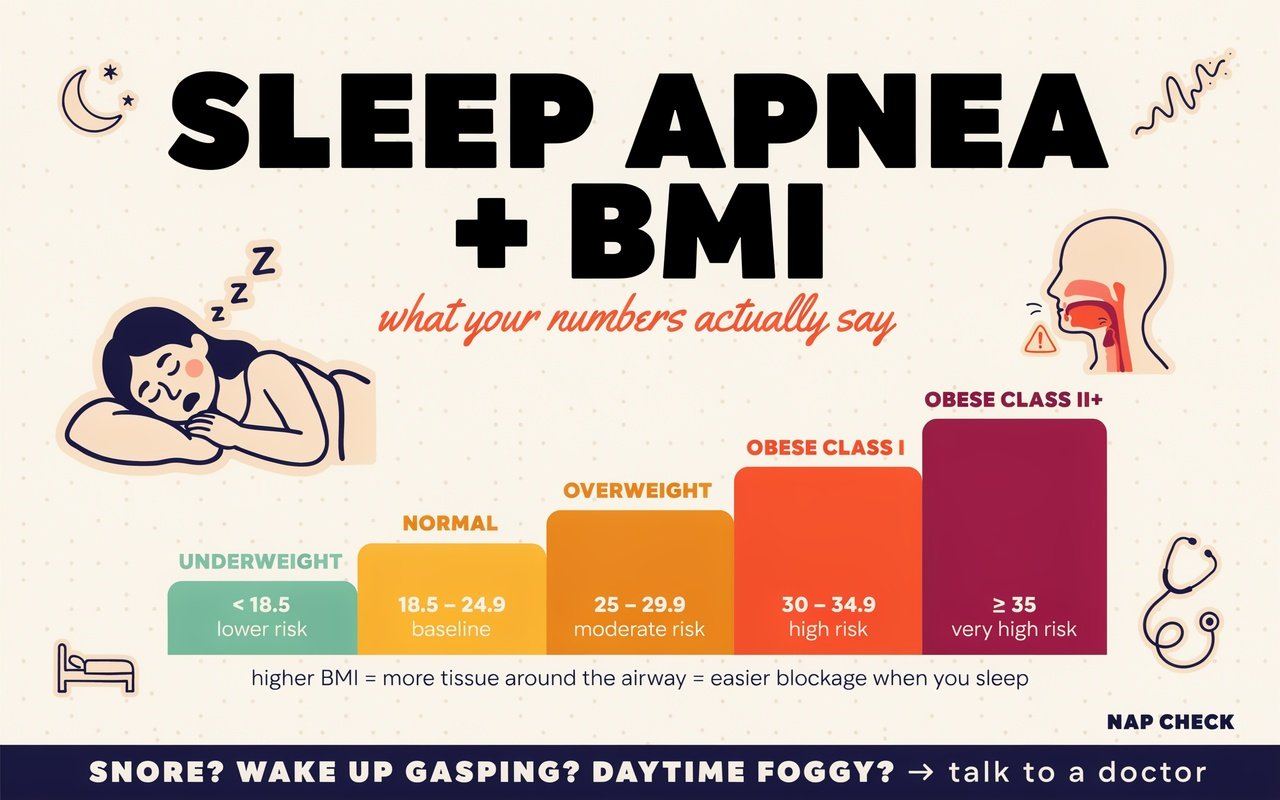
Have you ever wondered if your weight might be affecting your rest? Thought about checking your sleep apnea BMI chart?
Maybe your partner has complained about your snoring, or you wake up feeling more tired than when you went to bed. You’re not alone in this. Millions of adults in the U.S. are grappling with breathing issues at night, often without even realizing it.
Check your BMI with our calculator 👉
A sleep apnea BMI chart can be a helpful tool to understand the connection between body weight and breathing problems. It gives you a clearer picture of your risk level. The truth is, obesity is the only risk factor for obstructive sleep issues that you can actually change. This is empowering!
Consider this: a modest 10% increase in weight can increase your risk of breathing problems during sleep by six times. This connection shows just how closely linked weight and breathing are during the night. In this article, we’ll guide you through what the numbers on a BMI chart mean for your health, backed by real studies and clinical data.
Understanding your numbers is the first step toward better health. So, let’s see what your own numbers might be saying about your risk and what steps you can take next!
Key Takeaways
- Many people unknowingly deal with breathing issues at night.
- A BMI chart can help connect body weight with breathing problems.
- Obesity is a reversible risk factor for obstructive sleep issues.
- A small weight gain can significantly increase risk levels.
- This guide offers research-backed insights for better health.
Understanding Sleep Apnea: The Basics
Do you ever find yourself waking up feeling more exhausted than when you went to bed? This could be a sign of a condition called obstructive sleep apnea. It happens when your airway gets blocked or narrows while you sleep. This blockage can cause your breathing to pause or become very shallow, sometimes dozens of times an hour.
During an apnea event, the muscles in your throat relax too much. This relaxation causes the airway to collapse, which can lead to your brain jolting you awake just enough to start breathing again. You might not even realize this is happening, but it can wreck your sleep quality.
Doctors use something called the apnea-hypopnea index (AHI) to measure how often your breathing stops or slows down in an hour. If you have more than five events per hour, it means you likely have sleep apnea.
So, what are the classic signs that something might be off? Many people notice:
- Loud snoring that disturbs their partner.
- Waking up gasping or choking.
- Morning headaches or a dry mouth.
- Feeling like you never really got any rest, no matter how long you slept.
Daytime sleepiness is often the number one complaint that brings people to the doctor. You might feel like you could doze off during meetings, while driving, or even just sitting on the couch watching TV.
Interestingly, women might show different symptoms than men. Instead of obvious sleepiness, they may experience insomnia or fatigue, which can lead to their condition being missed or diagnosed later.
Older studies show that about 4% of men and 2% of women have sleep apnea. However, these numbers are likely underestimated since many cases go undiagnosed.
It’s crucial to understand that sleep apnea is not just about snoring or feeling tired. It’s a serious medical condition that can impact your heart, metabolism, and overall health if left untreated.
The Link Between BMI and Sleep Apnea
Is it possible that your weight could be playing a role in how well you breathe while you sleep? The connection between body weight and breathing issues is quite significant. When excess weight is present, it can create added pressure on the upper airways. This pressure often leads to narrowing of the airway, making it harder to breathe comfortably at night.
Think about it this way: fatty deposits around your neck and throat can crowd the airway. This crowding makes it narrower, increasing the chances of obstruction during sleep. When you lie down, abdominal fat can push against your chest wall, reducing how much your lungs can expand. This compression makes it even more likely for the airway to collapse.
How Body Weight Affects Your Breathing During Sleep
Interestingly, neck circumference plays a surprisingly important role in assessing risk. A neck size greater than 16 inches for women or 17 inches for men is often seen as a red flag. In fact, a study by Katz et al. (1990) found that neck circumference may be more closely linked to obstructive sleep issues than body mass index (BMI) alone. This is because it provides a clearer picture of where fat is located that could block the airway.
Moreover, excess weight can decrease neuromuscular control. This means that the nerves and muscles responsible for keeping the airway open during sleep become less responsive. So, while BMI is a useful starting point, it doesn’t tell the whole story. Someone with a normal BMI but a thicker neck or extra abdominal fat could still be at risk for breathing issues.
Check your BMI with our calculator 👉
Why Neck Circumference and Other Factors Matter
The relationship between body weight and breathing issues is complex. It’s a two-way street: addressing one can often help the other. Visualize your airway as a flexible straw that gets squeezed when there’s more pressure around it. The more pressure from surrounding fat, the harder it is for air to flow freely.
It’s essential to approach this topic with understanding, as body weight can be sensitive for many. The goal here is not to judge but to empower you with knowledge. Understanding these factors can help you make informed decisions about your health.
| Measurement | Women | Men |
|---|---|---|
| Neck Circumference (inches) | Greater than 16 | Greater than 17 |
| Risk Level | Increased risk of OSA | Increased risk of OSA |
Sleep Apnea BMI Chart: What It Tells You About Your Risk
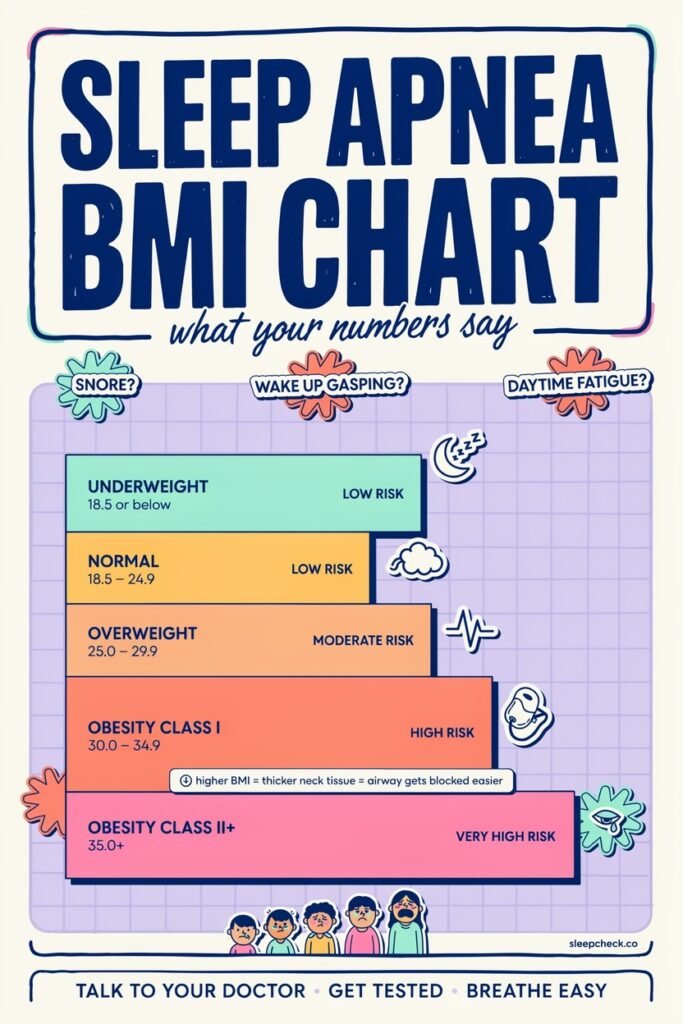
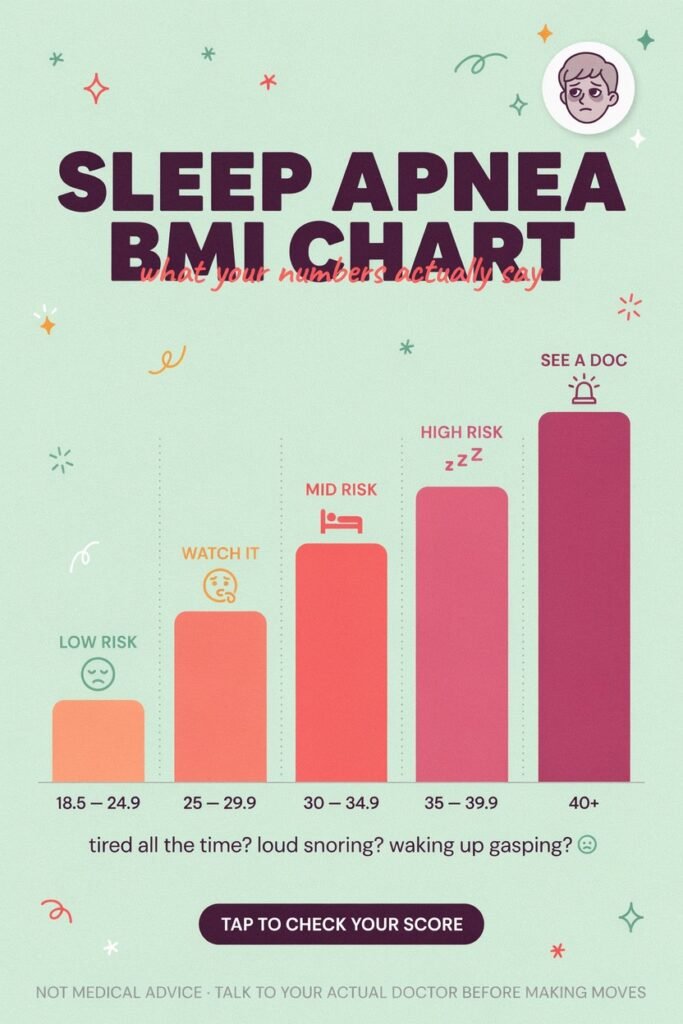
Have you ever thought about how your weight might influence your breathing at night? Understanding the connection between your body mass index (BMI) and obstructive sleep issues can be eye-opening. The sleep apnea BMI chart serves as a valuable tool to assess your risk level and severity of breathing interruptions while you rest.
This chart maps different BMI categories against the likelihood of experiencing obstructive sleep apnea (OSA). It’s essential to know what these numbers mean, as they can guide you toward making healthier choices. Let’s break it down.
Breaking Down the Numbers
The standard BMI categories are:
- Underweight: Less than 18.5
- Normal weight: 18.5 to 24.9
- Overweight: 25 to 29.9
- Obese: 30 to 39.9
- Severely obese: 40 and above
Each category indicates different risk levels for obstructive sleep issues. For instance, a study found that individuals with a BMI over 40 had an odds ratio of 27.4 for developing OSA. This means their risk is significantly higher compared to those in the normal weight category.
Understanding Different BMI Categories and OSA Severity
Even those who fall into the overweight category are at an increased risk. The odds ratio for individuals with a BMI between 30 and 40 is 6.5. This data highlights that the concern isn’t just for those who are severely obese; being overweight also poses risks.
In a study involving over 1,000 adults, researchers found that:
- 11% of normal-weight men and 3% of normal-weight women had moderate to severe OSA.
- 21% of overweight men and 9% of overweight women were similarly affected.
- A staggering 63% of obese men and 22% of obese women experienced moderate to severe OSA.
This data shows a clear trend: as BMI increases, so does the prevalence and severity of sleep issues. It’s a straightforward dose-response relationship.
If you haven’t calculated your BMI yet, now’s the time! You can do this easily by using your weight in pounds divided by your height in inches squared, then multiplying by 703. Alternatively, you can use an online calculator for convenience.
Remember, the BMI chart provides a general risk level based on population data. It’s not a definitive diagnosis. Individual factors like neck size and personal health history are equally important. Use this chart as a starting point for discussions with your doctor about your health.
| BMI Category | Risk Level |
|---|---|
| Underweight ( | Lower risk of OSA |
| Normal weight (18.5 – 24.9) | Moderate risk of OSA |
| Overweight (25 – 29.9) | Increased risk of OSA |
| Obese (30 – 39.9) | High risk of OSA |
| Severely obese (≥ 40) | Very high risk of OSA |
What The Research Says About BMI and Obstructive Sleep Apnea
Have you ever considered how your weight might be tied to breathing issues at night? Research on this topic has unveiled some fascinating insights. Understanding these findings can help you grasp the real-world risks associated with body mass and sleep disturbances.
One of the most significant studies in this area is by Wall et al. (2012). This extensive research analyzed data from over a million adults aged 50 and older in the UK. It found a clear connection between body mass index (BMI) and the prevalence of obstructive sleep issues. Interestingly, the peak age for these issues was between 60 and 64 years.
Among those with elevated BMI, obstructive sleep issues were nearly four times more common in men than in women. However, the study revealed that only 0.6% of this population had a recorded diagnosis of obstructive sleep issues. This is strikingly lower than the previously estimated figures of 4% for men and 2% for women, indicating a significant under-diagnosis in primary care settings.
Key Findings from Large-Scale Studies
The findings from the Wall et al. study highlight a clear dose-response relationship. This means that as BMI increases, so does the likelihood of experiencing breathing interruptions during sleep. A 10% increase in weight can lead to a six-fold increase in risk for obstructive sleep issues, as shown in separate studies.
Another important study involving over 1,000 adults found:
- 11% of normal-weight men and 3% of normal-weight women experienced moderate to severe obstructive sleep issues.
- 21% of overweight men and 9% of overweight women faced similar challenges.
- A staggering 63% of obese men and 22% of obese women had moderate to severe obstructive sleep issues.
This data illustrates a concerning trend: as body mass increases, so does the severity of sleep-related breathing issues. It’s not just those who are severely overweight who are at risk; even those in the overweight category face significant challenges.
How Data Reflect Real-World Risks
Another recent study conducted in Iraq involved 150 participants and found a significant correlation between BMI and the apnea-hypopnea index (AHI) in both men and women. This reinforces the idea that higher body mass consistently links to worse sleep issues.
Interestingly, the study also examined the Epworth Sleepiness Scale (ESS) and found notable sex differences. The ESS correlated with AHI in men but not in women, adding another layer to our understanding of how obstructive sleep issues manifest differently across genders.
While these studies provide strong associations, they cannot prove causation. However, the consistency of findings across various populations makes the connection between body mass and sleep issues hard to ignore. It’s crucial for primary care doctors to consider these factors when diagnosing patients. Likewise, weight management should be a priority for those diagnosed with sleep issues.
In conclusion, these large-scale studies give us valuable insights into population-level risks. However, individual assessments and sleep studies remain the gold standard for diagnosis. If you’re concerned about your own risk, consider discussing it with your healthcare provider.
| Study | Key Findings |
|---|---|
| Wall et al. (2012) | Clear dose-response relationship between BMI and obstructive sleep issues; significant under-diagnosis in primary care. |
| Iraqi Study (150 participants) | Significant correlation between BMI and AHI; ESS correlated with AHI in men. |
Other Important Factors That Affect Sleep Apnea Severity
Check your BMI with our calculator 👉
Have you ever thought about the various elements that might affect how you breathe at night? While body mass index (BMI) is a significant piece of the puzzle, it’s not the only factor at play. Understanding these additional elements can help you see the full picture when it comes to obstructive sleep issues.
As we age, the risk of developing breathing problems during sleep tends to increase. This risk peaks around ages 60 to 64. However, older adults often present with milder symptoms, which can lead to misdiagnosis or overlooked cases. Many might think their symptoms are just part of aging, but they could be missing out on important treatment.
Gender differences also play a role in how sleep issues manifest. Women with obstructive sleep problems are more likely to report insomnia, fatigue, or morning headaches. This contrasts with men, who typically experience loud snoring and excessive daytime sleepiness. Because diagnostic criteria have been largely developed based on male symptoms, women’s sleep apnea often goes undiagnosed, which is a real concern in sleep medicine.
Socioeconomic status is another underappreciated factor. Individuals from lower socioeconomic backgrounds may face barriers to diagnosis, such as limited access to healthcare or discomfort discussing sleep issues with their doctors. This can lead to a lower prevalence of diagnosed cases in these populations.
Other medical conditions can independently raise the risk of breathing problems during sleep. For instance, hypothyroidism, nasal allergies, and a deviated septum can all contribute to obstructive sleep issues. Additionally, certain facial and throat structures can narrow the upper airway, increasing the likelihood of breathing interruptions.
Don’t forget about neck circumference, either! This measurement can indicate risk even in individuals with a normal BMI. Where your body stores fat is just as important as how much fat you have. A larger neck circumference can signal potential problems.
Lifestyle choices also matter. Alcohol use, smoking, and certain sedative medications can relax the throat muscles, making breathing issues worse. These factors are worth considering alongside your body mass index.
Ultimately, it’s essential to look at your overall health picture rather than fixating on a single number. Sleep apnea is a multifactorial condition that requires a holistic approach to understanding risk factors.
| Factor | Impact on Risk |
|---|---|
| Age | Increased risk, especially in those aged 60-64 |
| Gender | Women may experience different symptoms than men |
| Socioeconomic Status | Limited access to healthcare can hinder diagnosis |
| Medical Conditions | Hypothyroidism, allergies, and anatomical issues can increase risk |
| Neck Circumference | Indicates risk even in those with normal BMI |
| Lifestyle Choices | Alcohol, smoking, and sedatives can worsen conditions |
Daytime Sleepiness and Sleep Apnea: What BMI Can Reveal
Ever notice how your weight might impact your energy levels during the day? This connection between body mass and daytime sleepiness is worth exploring. Many people don’t realize that how you feel when you’re awake can be linked to what happens while you’re sleeping.
One way to assess daytime sleepiness is through the Epworth Sleepiness Scale (ESS). This simple questionnaire helps doctors understand how likely someone is to doze off during everyday activities, like watching TV or sitting in a car. The scoring ranges from 0 to 24, with scores over 10 indicating abnormal levels of sleepiness. If you find yourself nodding off during the day, it’s time to take a closer look.
Using the Epworth Sleepiness Scale to Understand Symptoms
The ESS consists of eight questions, each rated from 0 to 3. A total score over 10 suggests excessive daytime sleepiness that warrants further investigation. Interestingly, a study conducted in Iraq found that the connection between sleepiness scores and apnea severity was strong in men but virtually nonexistent in women. This aligns with other research highlighting gender differences in how sleep issues manifest.
How BMI Connects to Sleepiness and Breathing Interruptions
When it comes to the relationship between body mass and sleepiness, the findings are intriguing. The Iraqi study showed no direct link between BMI and ESS scores when analyzing men and women separately. However, a small correlation appeared when the data was combined. This means that just because someone has a high BMI doesn’t automatically mean they’ll feel sleepy during the day. Conversely, a person with a normal BMI could still experience significant daytime drowsiness due to undiagnosed breathing issues.
The real takeaway is the strong connection between BMI and the apnea-hypopnea index (AHI). Higher body weight consistently correlates with more breathing interruptions during sleep, regardless of how sleepy a person feels. This highlights the importance of monitoring your body mass as part of understanding your overall health.
If you’re curious about your own levels of daytime sleepiness, consider taking the ESS, which is freely available online. It can serve as a great starting point for discussions with your doctor, especially if your score comes back high. Remember, daytime sleepiness isn’t just an annoyance; it can increase the risk of car accidents and workplace errors. So, it’s definitely worth taking seriously!
In conclusion, the connection between body mass, breathing interruptions, and daytime symptoms is crucial. The sleep apnea BMI chart is a valuable tool that helps make sense of how these pieces fit together.
| Score Range | Daytime Sleepiness Level |
|---|---|
| 0-10 | Normal levels of daytime sleepiness |
| 11-16 | Moderate levels of daytime sleepiness |
| 17-24 | Severe levels of daytime sleepiness |
Why Untreated Sleep Apnea Can Make Weight Problems Worse
Ever thought about how poor sleep might be contributing to your weight struggles? When sleep issues go untreated, they can create a frustrating cycle that makes managing weight even harder. This condition can drive weight gain, which in turn worsens the sleep issues, leading to a vicious cycle.
So, how does this all work? It starts with hormones. Sleep deprivation tends to lower leptin production, which is a hormone that signals to your brain that you’re full. On the flip side, ghrelin, the hunger hormone, tends to be higher in those dealing with obstructive breathing problems at night. This means you may find yourself craving high-calorie foods and feeling less satisfied after meals.
How Sleep Disruption Affects Appetite and Metabolism
Let’s break it down further. When sleep is fragmented, leptin levels drop. This drop can trick your brain into thinking you haven’t eaten enough, leading to overeating almost without realizing it. Additionally, adiponectin, a hormone that helps with blood sugar control and fights inflammation, also decreases in both obesity and sleep-related issues. This double whammy can really impact your metabolic health.
Moreover, untreated sleep issues can lead to glucose intolerance and insulin resistance, which are significant steps toward developing type 2 diabetes. Lipid problems, like high triglycerides and low levels of good cholesterol, often accompany these conditions.
The Vicious Cycle Between Weight Gain and OSA
Being exhausted from untreated sleep issues makes it tough to find the energy for physical activity. Exercise is one of the best tools for managing weight, but when you’re tired, it often falls by the wayside. It’s important to remember that this cycle isn’t about willpower or laziness. It’s about real physiological changes that happen when your body is deprived of quality rest night after night.
Research shows that even a 10% weight gain can increase the risk of sleep issues sixfold. This highlights how quickly the cycle can spiral out of control. However, understanding this cycle is the first step to breaking it. Treating sleep issues can actually make weight loss efforts more effective, rather than the other way around.
| Hormone | Effect When Sleep is Poor |
|---|---|
| Leptin | Decreased levels lead to less satiety |
| Ghrelin | Increased levels lead to heightened hunger |
| Adiponectin | Reduced levels impair glucose control |
Treatment Moves: Managing Sleep Apnea With Your BMI in Mind
What if your weight loss journey could significantly impact your nighttime breathing patterns? Research shows that losing weight is not just helpful for managing breathing issues; it’s actually the only truly reversible risk factor. Even modest reductions can make a real difference in how well you breathe at night.
For those looking for concrete goals, losing just 5 to 10 percent of your body weight can lead to a remarkable 20 percent improvement in the severity of breathing interruptions. In some cases, this weight loss can even prevent the condition from developing in the first place.
Weight loss helps mechanically by reducing fatty deposits around the neck and throat that can crowd the airway. It also decreases abdominal fat that compresses the chest and limits lung volume when lying down. This makes breathing easier during sleep.
The Impact of Weight Loss on Sleep Apnea
Now, let’s talk about the most common treatment: CPAP therapy. This device delivers a steady stream of air through a mask, keeping the airway open during sleep. Most users feel immediate relief from symptoms like morning headaches and daytime fatigue. While it may take some time to get used to, modern CPAP machines are quieter and more comfortable than ever.
For those who find CPAP isn’t for them, there are other options. Oral appliances can reposition the jaw to keep the airway open, making them a good alternative for individuals with mild to moderate issues. Surgical options also exist for specific anatomical problems, like removing excess tissue in the throat or correcting a deviated septum. However, surgery is usually considered only when other treatments haven’t worked.
CPAP and Other Useful Therapies
In addition to these treatments, simple lifestyle changes can support both weight management and breathing health. Avoiding alcohol before bed is key, as it relaxes throat muscles. Quitting smoking and sleeping on your side instead of your back can also help. Finding ways to be more active during the day, even when you’re feeling low on energy, is beneficial too.
It’s essential to work with your doctor on a personalized plan that addresses both weight and breathing issues together. Treating one without the other often leads to frustration and limited results. So, let’s take control of our health together!
| Weight Loss Percentage | Impact on Sleep Apnea Severity |
|---|---|
| 5-10% | Approximately 20% improvement |
| 10%+ | Potentially prevents development |
Taking Control: Next Steps After Understanding Your Sleep Apnea BMI Chart
Could your weight be affecting your ability to breathe easily at night? Understanding your numbers is the first step toward taking action. The sleep apnea BMI chart serves as a valuable screening tool, showing how weight and breathing issues are connected.
If you find yourself in a risk category, don’t hesitate to talk to your primary care doctor about your sleep. Many doctors don’t routinely screen for these issues, so it’s important to bring it up.
Consider calculating your BMI, measuring your neck circumference, and taking the Epworth Sleepiness Scale online. Bring these numbers to your appointment to guide the conversation.
Remember, a sleep study is often the only way to get a definitive diagnosis. If your symptoms and risk factors align, it’s worth pursuing.
Treating obstructive sleep apnea isn’t just about better sleep; it’s about protecting your long-term health. Untreated conditions can lead to serious risks like heart disease and stroke.
There are multiple treatment paths available, and finding the right one may take some time. Even small weight loss can help shift the cycle positively. Resources like the Obesity Medicine Association and registered dietitians can provide professional guidance.
Knowledge is power. Now that you understand your numbers, you’re in a better position to take control of your health and well-being.