
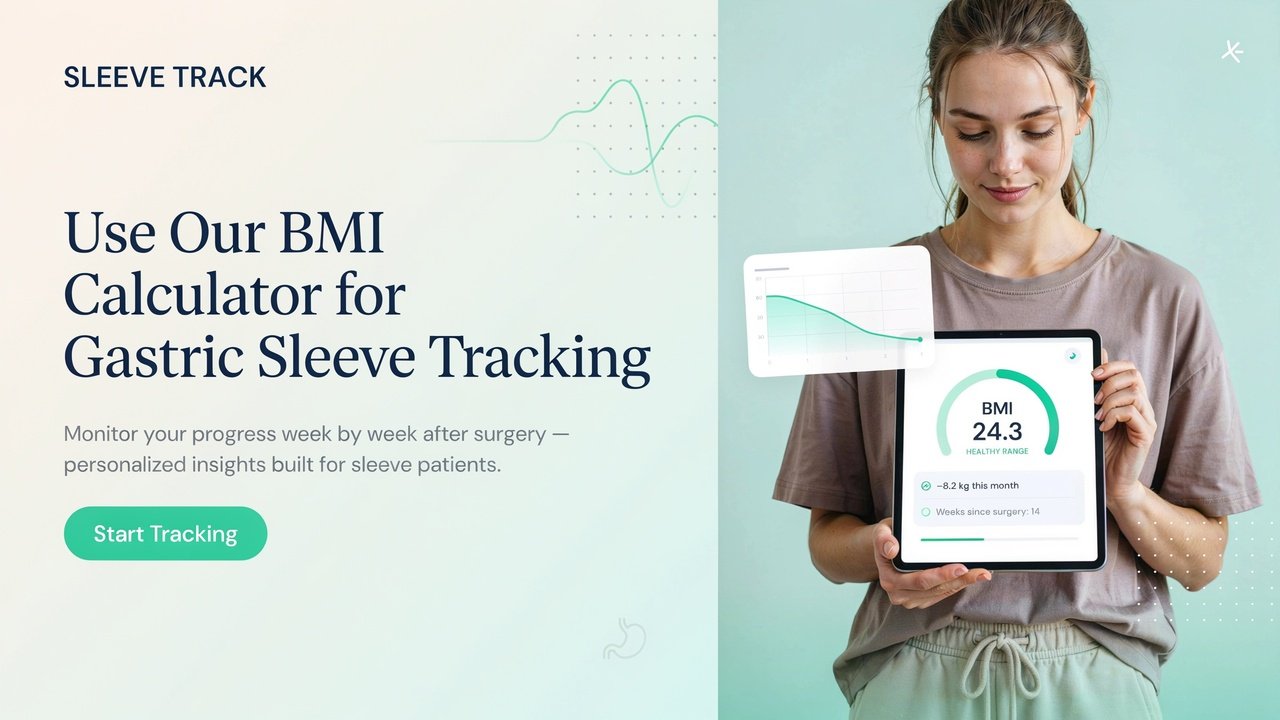
Hey there! If you’re on a weight loss journey, you’ve probably heard about BMI Calculator for Gastric Sleeve a lot. But do you really know why the BMI calculator for gastric sleeve matters? Understanding your body’s numbers can be a game-changer, especially when considering surgery.
This is where a BMI calculator comes into play. It’s a simple tool that uses your height and weight to give you an important number that can guide your health decisions.
Check your BMI with our calculator 👉
On this page, we’re here to help you navigate the ins and outs of using a BMI calculator for tracking your progress. We’ll break down what BMI is, how to calculate it, and why it’s essential for your weight loss surgery journey. Plus, we’ll talk about what those numbers mean for your eligibility and options.
So, whether you’re just starting out or already on your path, this guide will give you the clarity you need. Think of it as your friendly roadmap to understanding your body and making informed choices.
Key Takeaways
- Understanding BMI is crucial for your weight loss journey.
- A BMI calculator helps you track your progress before and after surgery.
- Knowing your BMI can affect your eligibility for surgery.
- There are alternative weight loss options if your BMI doesn’t meet the standard thresholds.
- This guide aims to provide clear insights to help you make informed decisions.
Understanding BMI Calculator for Gastric Sleeve and Why It’s Key
Understanding your Body Mass Index can be a crucial step in your weight loss journey. This number is calculated from your weight and height. It serves as a reliable indicator of whether you’re at a healthy weight for your height by estimating body fat. This method is inexpensive and easy to use, making it a popular choice for screening weight categories that may pose health risks.
When your Body Mass Index reaches 25 or above, and you aren’t an athlete or someone with a muscular build, you might be at risk for various health conditions. So, what does this mean for you? It means that BMI is more than just a number; it helps determine a healthy body weight based on your height.
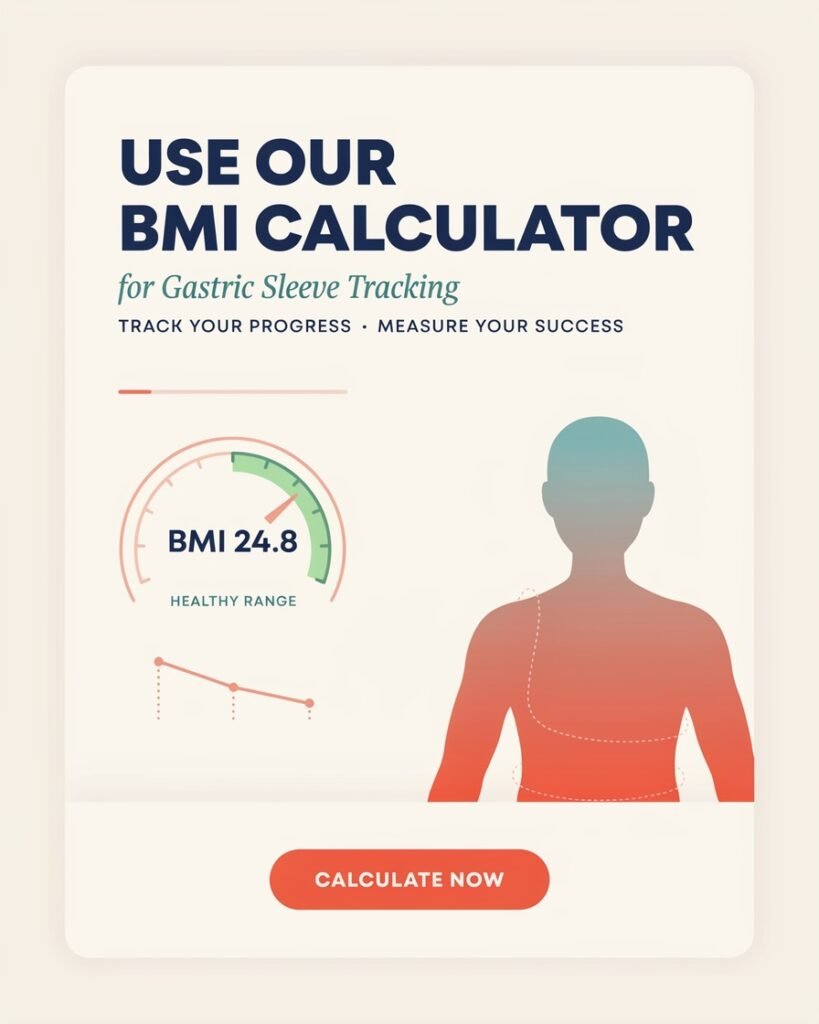
What Is Body Mass Index?
Body mass index sounds technical, but it’s really just a simple math problem. It uses your height and weight to estimate how much body fat you carry. Doctors and insurance companies often rely on this mass index number because it’s quick, free, and gives them a decent snapshot of your health without needing fancy equipment.
How BMI Helps Track Your Health
Your body mass is more than just what the scale says. It’s about how that weight relates to your height and what that ratio means for your overall wellbeing. When your BMI creeps above 25, it usually indicates that excess body fat might lead to health troubles down the road.
Tracking your BMI over time helps you identify patterns. You can see if your weight loss efforts are effective or if you’re stuck in a plateau. For patients considering surgery, this number is vital. You’ll monitor it before surgery to qualify and after to track your progress.
Why BMI Matters for Gastric Sleeve Patients
A healthy weight isn’t about hitting some unrealistic ideal. It’s about finding a range where your body functions well, and your risk for conditions like diabetes and heart disease decreases significantly. Understanding your body mass index early on gives you a baseline to look back on six months or a year later. You’ll be able to see your progress in black and white.
The index itself doesn’t tell the whole story of your health. However, it’s a solid starting point that opens up conversations about what kind of weight loss approach makes sense for you.
How the BMI Calculator for Gastric Sleeve Can Keep You on Track
Tracking your progress can be a breeze with the right tools at your fingertips. Using a BMI calculator is honestly one of the easiest things you’ll do on this whole weight loss journey. Just plug in your height and weight, and you get your number in seconds.
You don’t need any special equipment or a doctor’s appointment. You can check your BMI right now from your couch and start understanding where you stand. Once you have that starting number, the real magic happens when you use the BMI calculator regularly to track how your body changes after surgery.
Easy Steps to Measure Your BMI
Calculating your BMI is straightforward. Simply enter your height and weight into the calculator. This quick process reveals whether you’re underweight, normal weight, overweight, or obese. It takes less than a minute and provides a solid foundation for your health journey.
Tracking Progress Through Your Weight Loss Journey
Your weight loss journey isn’t a straight line. Some weeks, the scale won’t budge, but watching your BMI trend downward over months shows you the bigger picture. Keeping a simple log of your BMI readings helps you spot patterns. Maybe your weight loss speeds up when you focus on protein or slows down when you skip meals.
Using BMI to Stay Motivated and Adjust Your Goals
Surgery is a powerful tool, but it’s not autopilot. Tracking your BMI keeps you honest and helps you catch small setbacks before they turn into big ones. When you see your BMI drop from the obese range into just overweight or even normal, that’s a huge win for your health and a moment worth celebrating.
If your progress stalls, your BMI data gives you something concrete to discuss with your surgeon or dietitian. This way, you can tweak your plan instead of guessing. Staying motivated after surgery gets tough when the initial rapid weight loss phase ends. But those steady BMI improvements remind you that your body is still changing for the better.
What Your BMI Reveals About Surgery Eligibility and Weight Loss Options
Navigating the eligibility requirements for weight loss surgery can feel overwhelming. However, understanding these rules can help you identify your options and take charge of your health.
Insurance companies typically look at your weight to determine if you qualify for bariatric surgery. Here’s a quick breakdown of the BMI thresholds that matter:
BMI Thresholds for Bariatric Surgery Candidates
A BMI of 40 or higher generally qualifies you for weight loss surgery without needing any additional health conditions. If your BMI falls between 35 and 40, you can still be a candidate, but you’ll need to have at least one obesity-related health issue, such as:
- Diabetes
- High blood pressure
- Sleep apnea
- Cardiovascular disease
These health conditions are important because they show that your weight is causing significant health issues, making surgery a necessary option rather than a cosmetic choice.
Health Conditions That Affect Surgery Approval
If your BMI is below 35, most insurance providers may deny coverage for bariatric surgery. However, this doesn’t mean you’re out of options. If your BMI is between 30.0 and 34.9, you might consider medical weight loss programs or endoscopic sleeve gastroplasty as viable alternatives.
For those with a BMI between 25.0 and 29.9, lifestyle modifications and working with a dietitian can help you manage your weight effectively.
Other Weight Loss Paths Based on Your BMI
Understanding these thresholds helps you have informed discussions with your doctor. You’ll know what insurance companies expect, which can guide your weight loss journey.
Remember, being a candidate for bariatric surgery isn’t just about one number. It’s about how that number interacts with your overall health picture.
| BMI Range | Eligibility for Surgery | Other Options |
|---|---|---|
| 40 and above | Eligible for surgery | N/A |
| 35 – 39.9 | Eligible with health conditions | Medical weight loss programs |
| 30 – 34.9 | Not typically eligible | Endoscopic sleeve gastroplasty |
| 25 – 29.9 | Not eligible | Lifestyle modifications |
| 18.5 – 24.9 | Healthy weight | N/A |
For more information on becoming a candidate for weight loss surgery, check out this resource.
Taking Control of Your Health After Surgery
Check your BMI with our calculator 👉
Embarking on the journey after surgery is a significant milestone. The real work begins as you learn to build a sustainable lifestyle that keeps the weight off for good. Your relationship with food will change, and it takes time to find new routines that feel normal.
Hitting a weight loss stall a few months post-surgery is common. Remember, your body is adjusting, and those plateaus usually break if you stick to your plan. Focus on finding physical activities you enjoy, rather than forcing workouts you dislike.
Your support system plays a crucial role. Whether it’s family, friends, or a bariatric support group, having people who understand makes tough days easier. If your weight loss isn’t where you hoped it would be after a year, don’t hesitate to discuss revision options with your surgical team.
The goal isn’t perfection; it’s about progress. Every healthy choice contributes to a longer, more active life. Stay connected with your surgical team for follow-ups to catch any issues early and keep you accountable on your journey.
FAQ
What is the purpose of using a BMI tool?
How can BMI influence my weight loss journey?
Why is BMI significant for those considering bariatric surgery?
What are the BMI requirements for bariatric surgery?
How does my BMI affect my post-surgery lifestyle?
The BMI calculator is an invaluable tool for individuals undergoing gastric sleeve surgery, as it provides a framework for ongoing health evaluation. By regularly monitoring BMI, patients can make informed decisions about their dietary habits and exercise routines, thereby maximizing the benefits of the procedure. Consistent tracking also enables healthcare providers to adjust post-operative care plans, ensuring that patients remain on the path to sustained weight loss and improved health outcomes.