
Have you ever noticed how some numbers just feel luckier than others? In China, that feeling is practically a national pastime. The question of which digits bring good fortune opens up a fascinating world of superstitions, wordplay, and traditions that shape daily life.
In Chinese culture, numbers aren’t just for counting; they carry meanings tied to how they sound when spoken aloud. For instance, people will pay serious money for a phone number with the right digits or plan weddings around lucky dates. This guide will explore which numbers are seen as good vibes, which ones to steer clear of, and why it all matters even today.
By the end, you’ll understand how something as simple as a number can spark joy or dread depending on the context. We’ll cover everything from the magic of 8 to the danger of 4, plus number combos, zodiac ties, and how this spills into business and travel.
Why Lucky Numbers Are a Big Deal in Chinese Culture
Numbers are not just digits in Chinese culture; they embody meanings that resonate deeply with people’s lives. This connection stems from the unique way the language works. In Mandarin and Cantonese, pronunciation plays a vital role. A single sound can convey entirely different meanings, leading to a rich tapestry of beliefs surrounding numbers.
The power of sound: Why pronunciation matters
In this tonal language, a number can sound like a completely unrelated word. For instance, the number 8 sounds like the word for wealth. This phonetic similarity fuels the belief that certain numbers bring good fortune. Conversely, the number 4 sounds similar to the word for death, making it one to avoid.
Numbers and everyday life: More than just digits
In daily life, numbers go beyond math class. They appear in phone numbers, addresses, wedding dates, and even the amount of money gifted during celebrations. Chinese people often select dates for significant events based on whether the numbers resonate with words for happiness or prosperity.
This isn’t just an old-fashioned superstition. It remains alive and well in modern Chinese culture, influencing real decisions. Even younger generations, who might not see themselves as superstitious, enjoy sending 520 texts on May 20th, as “520” sounds like “I love you” in Mandarin.
Once you grasp how deeply numbers are woven into the culture, you’ll start noticing them everywhere. They act like a secret code, shaping choices and interactions in everyday life.
What Number Is Lucky in China? The Magic of 8
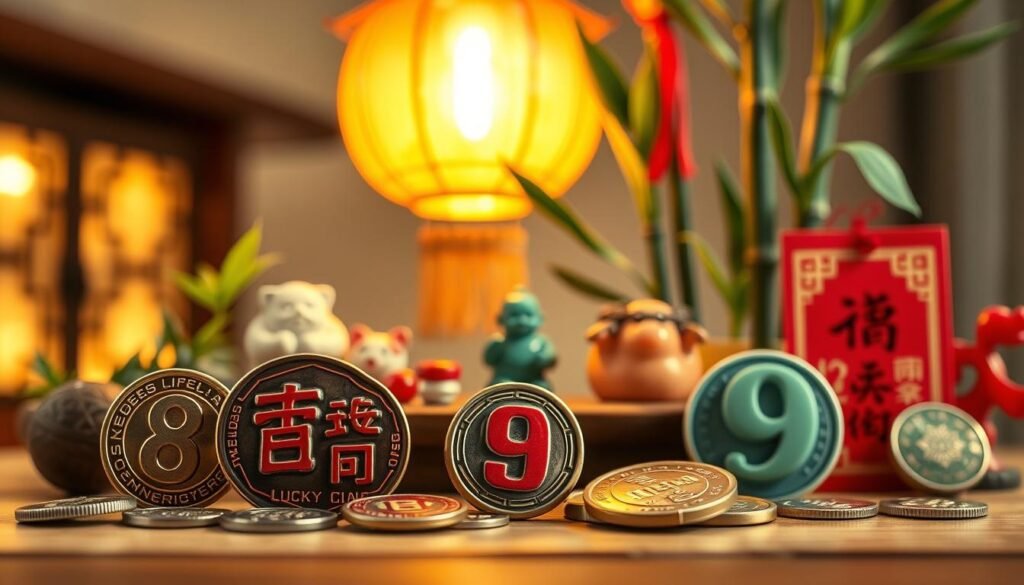
The number 8 holds a special place in Chinese culture, symbolizing prosperity and luck. This belief stems from its pronunciation. In Mandarin, “eight” (八) is pronounced as ba, which sounds similar to fa (发), meaning “wealth” or “prosperity.” Every time someone utters this number, it’s like casting a little wish for riches.
How “8” sounds like wealth and fortune
This connection between the number and good fortune isn’t subtle. People go all out for the number 8, as seen during the opening ceremony of the 2008 Beijing Olympics. It kicked off at exactly 8:08 PM on 8/8/08, a clear nod to the desire for maximum good luck.
Ways people use the number 8 in life and celebrations
Chinese people often pay top dollar for phone numbers packed with 8s. For instance, the phone number (+86) 8888 8888 sold for a whopping $1.5 million in 2017. This illustrates just how much value is placed on lucky numbers.
- Businesses frequently choose to open on dates that include the number 8.
- You’ll spot the number 8 on store signs and branding everywhere.
- At weddings and celebrations, the number 8 appears in decorations, gift amounts, and even the timing of ceremonies.
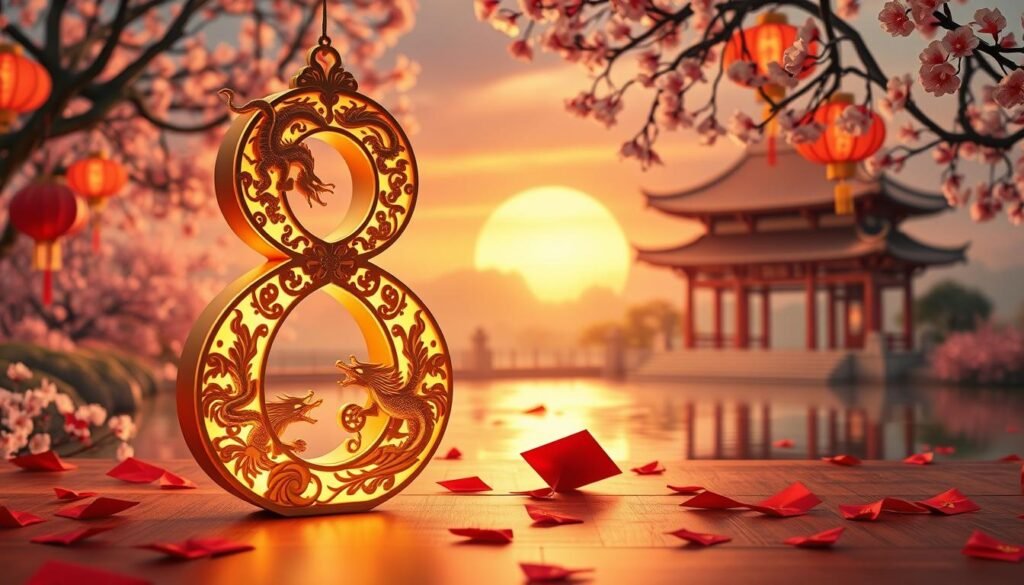
The luckiest number status of 8 isn’t just about money. It’s about an overall sense of life flowing smoothly. The visual of 88 even resembles the double happiness character used in weddings, adding another layer of joy to its significance.
If you only remember one lucky number from Chinese culture, make it 8. It’s the heavyweight champion of good vibes!
Other Lucky Numbers That Bring Good Vibes
In the realm of Chinese culture, various numbers bring their own unique flavors of good fortune. While the number 8 often steals the spotlight, other digits also hold special meanings that can enhance one’s life.
The smooth flow of 6 and why it’s favored
The number 6 (六), pronounced liu, is considered lucky because it sounds like the word for “flow.” This connection makes it a favorite among Chinese people for business and travel. When someone turns 66, it’s a big celebration, often accompanied by the number 666 to wish for smooth sailing in life.
9: The number for longevity and completeness
Next up is 9 (九), pronounced jiu. This number sounds like the word for “long-lasting,” making it a popular choice for weddings and romantic gestures, such as gifting 99 roses. Historically, 9 was the emperor’s number, appearing in palace designs and official ranks due to its status as the highest single-digit number.
2 means harmony — all good things come in pairs
Then we have 2 (两), pronounced er or liang. This number is considered lucky because it reflects the belief that all good things come in pairs. It’s common to see decorations featuring double characters, and gifts often come in twos to symbolize harmony.
Numbers 3, 5, and 7: Their unique meanings
Number 3 (三), pronounced san, has a split personality. It can signify birth and life but also has ties to separation, making it a bit unpredictable. Number 5 (五), pronounced wu, connects to the five elements, representing balance and historic significance, like the five arches at Tiananmen Gate.
Lastly, number 7 (七), pronounced qi, symbolizes togetherness and harmony. It blends yin, yang, and the five elements, although it also has some spooky ties to the ghost month.
Chinese numerology isn’t just about one lucky number; it’s a whole ecosystem of meanings that shift depending on the situation. Understanding these numbers can deepen your appreciation for the rich tapestry of Chinese culture.

Numbers to Watch Out For: The Unluckiest Digits in China
Let’s flip the script and explore the dark side of numbers in Chinese culture. Some digits carry such negative connotations that people avoid them like the plague. Leading the pack is the infamous number 4.
Why 4 is the ultimate unlucky number
The number 4 sounds remarkably similar to the word for death (死, sǐ). This close phonetic relationship makes it the Voldemort of digits. In fact, many buildings skip the fourth floor entirely, jumping straight from 3 to 5.
In Beijing, the sale of car license plates featuring the number 4 was halted due to its bad luck reputation. Gifting anything associated with this digit is also considered inauspicious. It’s a number that evokes fear and avoidance among the Chinese people.
This aversion isn’t unique to China. Countries like Japan and Korea share similar beliefs, as the pronunciation of 4 also carries death-related meanings.
The tricky case of 13 and its mixed reputation
Next up is the number 13, which has a tricky reputation. In Chinese culture, it inherits bad luck by association. Since 1 plus 3 equals 4, it shares the same negative vibes. Interestingly, this is one area where western culture and Chinese culture align in their belief that 13 is unlucky, although the reasons differ.
When 3 turns from lucky to unlucky
Then there’s the number 3, which can flip from lucky to unlucky depending on the context. It sounds like the word for “to part ways” (分开, fēnkāi). This makes it a no-go for gifts to couples, as presenting something in threes might feel like wishing them to split.
Knowing which numbers to avoid is just as important as knowing the lucky ones. This knowledge can be crucial when doing business or attending events in China.

Popular Lucky Number Combinations and What They Mean
In Chinese culture, the magic really happens when numbers come together in combinations. These combos can create even more powerful meanings, adding layers of significance to everyday life. Let’s explore some of the most popular lucky number combinations and what they symbolize.
168: Fortune all the way
The combination 168 (一六八, yi liu ba) sounds like 一路发 (yi lu fa), which translates to “fortune all the way.” This makes it a favorite for business openings and red envelope amounts. People love using this combo to wish for continuous prosperity.
520 and 1314: Love expressed in numbers
Next up, we have 520 (五二零), which sounds like “I love you” (吾爱你, wu ai ni). Young couples often use this as a secret code, making May 20th an unofficial Valentine’s Day. Then there’s 1314 (一三一四), meaning “one life, one lifetime” (一生一世, yi sheng yi shi). This number is perfect for proposals and anniversaries, symbolizing everlasting love.
666 and 888: Triple wishes for smoothness and success
When it comes to 666 (六六六), it signifies “flow flow flow,” emphasizing smooth sailing in life. This is a complete turnaround from its devilish reputation in the West. Meanwhile, 888 (发发发) cranks up the luck of 8 to the max, symbolizing triple prosperity. You’ll spot this combo on flight numbers and hotel rooms where people want maximum good vibes.
Funny and rude combos to avoid
Of course, not all combinations are positive. For instance, 250 (二五零) is a playful insult that means “half-wit.” Then there’s 748 (七四八), which sounds like “go die” in Mandarin. Knowing these number combinations is like learning slang; it helps you catch the inside jokes and avoid accidentally saying something offensive.
Chinese numerology gets really creative with these combos, and they’re constantly evolving. Young people often invent new meanings, keeping the culture vibrant and alive. So, the next time you hear a number, think about the stories it might tell!
How Lucky and Unlucky Numbers Shape Life in China
Numbers play a crucial role in the daily lives of many people in China, influencing their choices and decisions. From phone numbers to license plates, the significance of digits can be seen everywhere. The belief in lucky and unlucky numbers shapes various aspects of life, including weddings, moving, and even business ventures.
Picking phone numbers and license plates
In the wild world of phone numbers, people often pay a premium for digits packed with 8s. They believe that every time the phone rings, it brings good fortune. A notable example is the phone number (+86) 8888 8888, which sold for a staggering $1.5 million in 2017. Similarly, car license plates with lucky numbers are highly sought after. In 2016, the license plate ’28’ fetched over $2 million at a Hong Kong auction, as it sounds like “easy money” in Cantonese.
Choosing dates for weddings, moving, and big events
Chinese people carefully select dates for weddings and other significant events. They aim for days featuring 8s and 9s while avoiding anything with a 4. This attention to detail extends to moving into a new house or opening a business. Many consult feng shui experts to find the perfect timing, ensuring that luck is on their side.
Floor numbers, addresses, and superstitions in buildings
In buildings, it’s common to skip floors with the number 4 or 13. This practice can confuse tourists, but locals understand the reasoning behind it. Homebuyers also pay attention to the numerical makeup of their addresses, seeking those that align with good fortune.
Gifting and decorations: Why pairs and 8’s always show up
During Chinese New Year, money in red envelopes is always given in amounts with lucky numbers, never with 4s. Decorations often come in pairs, reflecting the belief that good things come in twos. You’ll see double happiness characters at every wedding, reinforcing the cultural significance of these numbers.
Once you start noticing these patterns, you’ll see how lucky and unlucky numbers shape daily life everywhere. From subway stops to shopping mall floor plans, their influence is undeniable.
The Role of the Chinese Zodiac in Number Luck
In Chinese numerology, your zodiac sign can shape your perception of luck and fortune. This adds another layer to the fascinating world of numbers. Each of the twelve zodiac animals has its own set of digits that are believed to bring extra luck based on ancient beliefs.
When making big decisions, like choosing a wedding date, many people combine astrology with numerology. They often look for dates that resonate with both partners’ zodiac signs. This approach ensures that both individuals feel aligned with the timing of their special day.
Feng shui practitioners also consider both general lucky numbers and zodiac-specific ones when advising clients. This holistic approach helps people maximize their chances of good fortune.
Interestingly, even if a number is generally seen as unlucky, it might be perfectly fine for your zodiac sign. This makes the situation less about a one-size-fits-all rule and more about personal alignment.
This zodiac number matching becomes especially popular around Chinese New Year. People are eager to embrace fresh starts and good luck as they enter a new year. It’s a time when individuals reflect on their lives and seek ways to enhance their fortunes.
Ultimately, the zodiac adds a personal touch to number superstitions. It makes the experience feel more tailored to you as an individual, enriching the cultural significance of lucky and unlucky numbers.
Lucky Numbers Beyond China: A Shared Cultural Language
Numbers hold a fascinating significance that extends far beyond the borders of China. In fact, many Asian countries share similar beliefs about numbers, especially those influenced by Chinese culture. This shared understanding creates a cultural language that resonates across nations.
For instance, the number 4 is not just considered unlucky in Chinese culture; it also carries negative connotations in Japan and Korea. In these languages, the pronunciation of 4 sounds like the word for death, making it a number to avoid.
How other Asian countries view these numbers
In Singapore, a melting pot of cultures, the fear of the number 4 led to interesting changes in branding. The Alfa Romeo model 144 had to be renamed because potential buyers were hesitant to associate their new car with death. This highlights how deeply ingrained these beliefs are.
Moreover, global brands have taken note of these superstitions. Many avoid using the number 4 in their product names while embracing the number 8 to appeal to Asian consumers. Companies like Canon steer clear of the number 4 altogether, showcasing how cultural sensitivity can impact marketing strategies.
Influence on brands and international business
Airlines have also adapted to these beliefs. For example, Air Canada operates Flight KL888 from Toronto to Shanghai, and Etihad Airways runs Flight EY888 from Abu Dhabi to Beijing. These flight numbers packed with 8s are chosen to attract positive attention and resonate with travelers.
Interestingly, while Western culture has its own number superstitions, like the fear of 13, the influence of numbers in Asian cultures is much more embedded in daily life and business practices. Understanding these preferences can be a cheat code for anyone looking to do business in Asia or market to Chinese people abroad.
Ultimately, lucky numbers have become a shared cultural language that bridges countries. They influence everything from product design to flight schedules, making them a vital aspect of cross-cultural communication.
Behind the Scenes: History and Stories of Chinese Number Beliefs
Every number tells a story, especially in Chinese culture. The beliefs surrounding these digits have deep historical roots. They didn’t just appear out of nowhere; they evolved over centuries, shaped by emperors, mythology, and social customs.
Ancient origins vs modern takeaways
The number 9 holds a significant place in history. It was often associated with the Emperor of China. This number influenced everything from palace designs to governance. The Forbidden City, for instance, boasts an impressive 9,999 rooms, reflecting the emperor’s obsession with this digit.
Additionally, the number 5 was linked to imperial power. The five elements philosophy shaped various aspects of life, including the five arches of the Tiananmen Gate. This connection illustrates how numbers were woven into the fabric of governance and culture.
Interestingly, in some dialects like Teochew, the number 4 is considered lucky. It sounds like the word for happiness in their language. This shows how interpretations of numbers can vary across regions and cultures.
Famous historical examples and traditions
The Qin dynasty played a crucial role in standardizing Chinese characters. This change shifted how numbers were written, altering some traditional associations. Over the centuries, ancient beliefs mixed with Buddhism and feng shui, creating the layered superstitions we see today.
Traditions like giving red envelopes with lucky amounts during Chinese New Year have roots that go back thousands of years. These customs highlight the importance of numbers in celebrations and everyday life.
While these origins are ancient, modern interpretations are more flexible. Young people often invent new number combinations for texting and social media. This evolution shows that beliefs about numbers are not static; they adapt and change with culture.
Ultimately, the history of number beliefs in Chinese culture illustrates their dynamic nature. As society evolves, so too do the meanings attached to these digits.
| Number | Historical Significance | Modern Interpretation |
|---|---|---|
| 9 | Associated with the Emperor, seen in the Forbidden City | Still considered auspicious, linked to longevity |
| 5 | Tied to imperial power and the five elements | Represents balance and harmony in life |
| 4 | In some dialects, it means happiness | Often avoided in urban settings due to death connotations |
| 8 | Symbolizes wealth and prosperity | Highly sought after in business and personal life |
Why Understanding Chinese Lucky Numbers Still Matters Today
The world of numbers in Chinese culture offers insights that go beyond mere digits. These beliefs shape daily life, influencing choices and decisions in profound ways. Understanding lucky and unlucky numbers provides a deeper connection to Chinese culture, enriching your experience whether you’re traveling or doing business.
If you’re invited to a Chinese wedding or celebrating Chinese New Year, knowing which numbers to use for gifts can save you from awkward moments. Even in modern, tech-savvy China, these beliefs persist, reflecting the connection between language and identity.
Businesses that embrace these number nuances can foster strong relationships with Chinese consumers. As cultural exchanges increase, being aware of these details demonstrates respect and understanding. The internet and social media amplify number wordplay, with new combinations going viral among the youth.
Ultimately, numbers in Chinese culture act like a living language, constantly evolving yet rooted in the idea that words and sounds carry power.