
Ever wondered about the significance of numbers in Chinese culture? You might have heard that some numbers carry special meanings. The number 3, pronounced san, has a unique story. It can symbolize both birth and life’s stages, representing new beginnings. But it also has a twist—this same sound is close to the word for parting ways, which can give it an unlucky connotation.
This article will explore both sides of the number 3. We’ll discuss when it brings good fortune and when it might be wise to consider alternatives. Think of this as your friendly guide through the fascinating world of lucky numbers.
From ancient philosophies to modern-day choices, like phone numbers, we’ll cover it all. By the end, you’ll have a well-rounded understanding of how to navigate the meaning of 3 in various contexts. So, grab your coffee, and let’s dive into this intriguing topic!
Key Takeaways
- Some numbers are considered luckier than others in Chinese culture.
- The number 3 can be both lucky and unlucky, depending on the context.
- Groups of 3 are often seen as even luckier than a single 3.
- Understanding the dual meanings of 3 can help in making informed choices.
- This guide provides insights into ancient beliefs and modern interpretations.
Why People Ask: Is 3 a Lucky Number in Chinese?
Have you ever considered the fascinating role numbers play within cultures? In Chinese culture, numbers carry meanings that go beyond simple counting. They often have homophones, which are words that sound alike but have different meanings. For instance, the number 8 (ba) sounds like “fa,” meaning wealth, while 4 (si) sounds like death. This phonetic connection influences how people perceive numbers in daily life.
Many individuals become curious about whether 3 holds luck because the symbolism of numbers is genuinely captivating. You can see it everywhere—from skipped floor numbers in elevators to wedding dates that people choose carefully. Here are some reasons why this curiosity exists:
- Number symbolism can be found in various aspects of life, making it a common topic of discussion.
- The luck associated with a number often hinges on its pronunciation and what it sounds like in Mandarin or Cantonese.
- People may wonder why someone would pay a premium for a phone number filled with 8s or avoid anything with a 4.
- With 3, things become intriguing since it sounds like multiple words, each with different meanings.
- Some say 3 is fortunate for births and celebrations, while others may avoid it when giving gifts to couples.
- This curiosity often begins with a simple question, leading to a deeper exploration of tradition and superstition.
- Understanding pronunciation is key, as it helps clarify how “san” resonates with native speakers.

Ultimately, the significance of numbers like 3 is deeply woven into the fabric of Chinese culture. As you delve deeper, you’ll find that this exploration opens up a world rich with meaning and insight.
The Meaning of Number 3 in Chinese Culture
Numbers often carry profound meanings, especially within different cultures. The number 3, pronounced san (三), is a prime example of this. It embodies both positive and negative connotations, making it a fascinating subject to explore.
On one hand, “san” sounds similar to the word for “birth” (生, sheng), which links it to life and new beginnings. This connection to birth makes 3 a symbol of growth and the natural stages we all experience. For instance, when celebrating milestones like birthdays, many people embrace the number 3 as a positive omen.
However, there’s another side to “san.” It also resembles the word for “to part ways” or “to separate” (散, san). This similarity creates an unlucky association, leading some to avoid using 3 in contexts like weddings or gifts for couples. The dual nature of this number highlights its complex significance in Chinese culture.
Philosophically, the number holds a prominent place in Taoism. The
“The Way begets one, one begets two, two begets three, and three begets everything.”
This idea from the Tao Te Ching emphasizes that 3 is the origin of all things in the universe. It suggests a creative and generative power that transcends mere superstition.
Historically, the importance of 3 is evident in ancient China. Emperors had three palaces and six courtyards, symbolizing order and authority. Ceremonial practices also involved kneeling thrice and bowing nine times, showcasing the number’s significance in governance and tradition.
| Aspect | Positive Association | Negative Association |
|---|---|---|
| Pronunciation | Sounds like “birth” (生, sheng) | Sounds like “to part ways” (散, san) |
| Philosophical Significance | Generates everything (Tao Te Ching) | Represents separation |
| Historical Context | Three palaces of emperors | Avoided in weddings |
So, when pondering the meaning of 3, one must consider its dual nature. It carries both everyday folk beliefs and deep philosophical weight, making it a number rich with significance.
Other Key Lucky Numbers in Chinese Culture
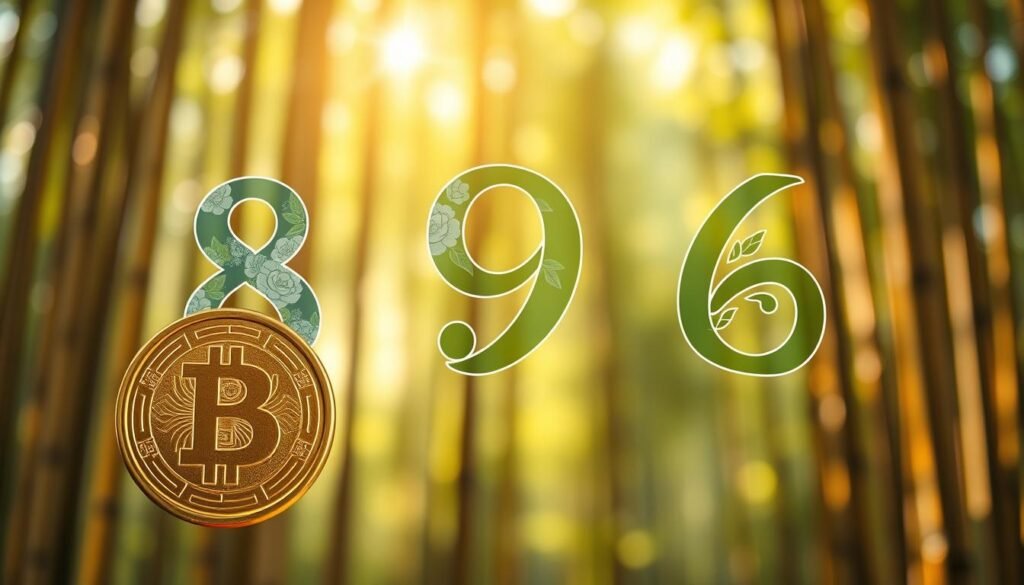
Numbers tell stories that shape cultures and traditions. To really get where 3 stands, it helps to know the heavy hitters in the Chinese lucky number lineup. The number 8 (八, ba) is the undisputed champion because it sounds exactly like the word for getting rich. People will go to wild lengths for an 8-filled phone number or license plate. In fact, the 2008 Beijing Olympics were literally scheduled around the number 8 for maximum fortune.
Then there’s 6 (六, liu), which is all about things flowing smoothly. It suggests that plans will go along without any bumps, much like a river. Young folks even say “666” online to mean something is awesome, showing how ingrained this number has become in modern slang.
Number 9 (九, jiu) carries a romantic and imperial touch. It sounds like “everlasting” and represents longevity. The Forbidden City boasts 9,999 rooms, a nod to its significance in history. Lastly, number 2 (二, er) embodies the belief that good things come in pairs, as seen in the idiom 好事成雙 (hǎoshì chéngshuāng). This is why wedding decorations often feature double characters and gifts come in twos.
Even numbers generally get more love than odd ones. They symbolize balance and harmony, which are essential concepts in Chinese thought. Seeing how these numbers work gives you a baseline. Against that backdrop, 3’s mixed reputation starts to make a lot more sense.
When Number 3 Is Considered Lucky
The journey through numbers reveals fascinating insights into cultural beliefs and practices. Among these, the number 3 holds a special place in many celebrations and traditions. Its sound connects to the word for “birth” (生, sheng), making it a symbol of new beginnings and happiness.
This connection to birth allows the number 3 to shine during significant life events. Here are some key aspects of when 3 is considered lucky:
- Many people celebrate milestones, such as baby showers, where the number 3 is prominently featured.
- In traditional beliefs, 3 symbolizes the three essential stages of human life: birth, marriage, and death.
- Taoist philosophy elevates the number by claiming it generates all things, linking it to creativity and potential.
- Classic literature, like the Romance of the Three Kingdoms, highlights the cultural importance of this number.
- Ceremonial practices often include kneeling three times and bowing nine times, showing respect and reverence.
- Using 3 in contexts that emphasize growth and new beginnings often brings good fortune.
When people embrace the number 3 during celebrations, it embodies joy and hope. Its presence in gifts and ceremonies often symbolizes well-wishes for happiness and prosperity. This number truly resonates with the essence of life and all its stages, making it a cherished symbol among Chinese people.
When Number 3 Might Be Unlucky
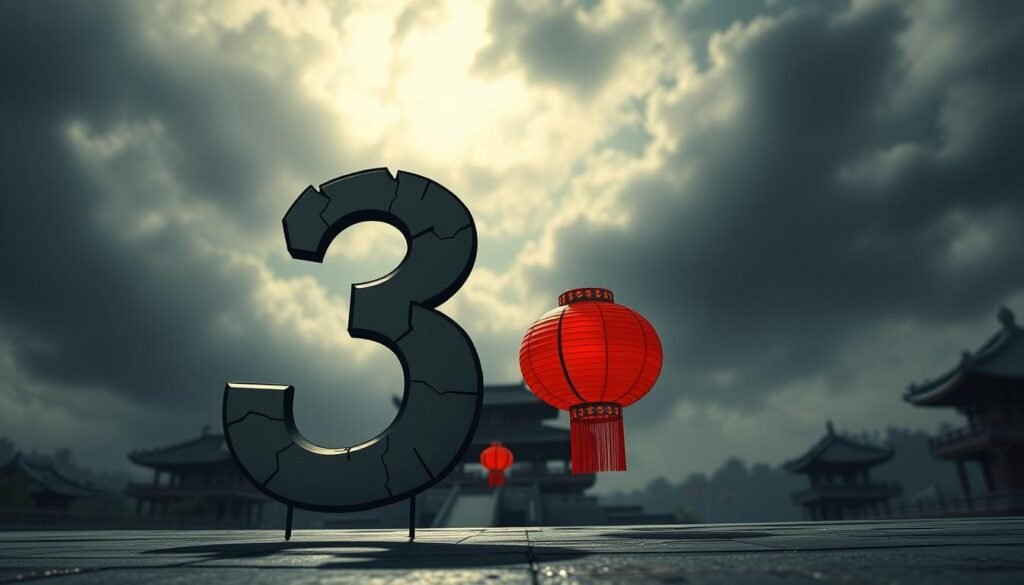
Have you noticed how numbers can carry different meanings across cultures? The number 3 has its share of superstitions and potential pitfalls. In particular, its pronunciation, san, sounds similar to the word for “to part ways” (散, san). This similarity can create an uneasy association, especially in romantic contexts.
Here’s the flip side, and it’s something you’ll want to keep in mind if you’re ever picking out a gift for a wedding or a couple celebrating an anniversary:
- The word “san” drifts uncomfortably close to the word for scattering or parting ways. Nobody wants to accidentally wish a couple to split up through their gift.
- That’s why you’ll rarely see cash gifts in amounts like 300 or 333 RMB at weddings. The symbolism would be all wrong, even if the intention was generous.
- It’s not that 3 is cursed or anything dramatic like that; it’s more that in certain situations, the sound nudges people’s minds toward separation rather than togetherness.
- Some folks also avoid using 3 in contexts tied to relationships or partnerships, just to be on the safe side.
- Compared to number 4, which is pretty much universally dodged because it sounds like death, 3’s unlucky reputation is softer and more about reading the room.
- Knowing when 3 might send the wrong message is half the battle. Once you know, it’s easy to work around it.
| Context | Unlucky Association | Why It Matters |
|---|---|---|
| Weddings | Sounds like “to part ways” (散, san) | Avoiding negative connotations in gifts |
| Gift Giving | Amounts like 300 or 333 RMB | Preventing misunderstandings in intentions |
| Relationships | Potentially symbolizes separation | Reading the room to avoid awkwardness |
Understanding the cultural nuances surrounding the number 3 can help you navigate social situations more smoothly. It’s all about context and knowing when to embrace or steer clear of this number.
Common Number Combinations Featuring 3 and Their Meanings
Exploring number combinations can reveal intriguing insights about love and luck. In Chinese culture, certain combinations featuring the number 3 carry special meanings, especially among younger generations. Here are some notable examples:
1314 and 3344: Forever and Ever
Two popular combinations are 1314 (一三一四, yi san yi si) and 3344 (三三四四, san san si si). The first sounds like the phrase for “one life, one lifetime” (一生一世, yi sheng yi shi), symbolizing eternal love. Couples often use this to express their commitment.
On the other hand, 3344 echoes the phrase for “for all lifetimes” (生生世世, sheng sheng shi shi). This combination also resonates with lovers who wish to convey an unchanging bond.
How 3 Combines with Other Digits for Love and Luck
Number combinations are where things get really creative, and 3 shows up in some of the most romantic numeric codes you’ll ever come across. For instance:
- 520 (五二零, wu er ling) sounds like “I love you” (吾爱你, wu ai ni).
- 168 (一六八, yi liu ba) sounds like 一路发 (yi lu fa), meaning “prosperity all the way.”
These combinations are huge among younger Chinese people who use them in texts, on social media, and even in choosing dates for proposals. The number 3 can team up with other digits to form phrases about prosperity and smooth sailing, depending on the company it keeps.
When 3 Appears in Unlucky Combos
However, 3 can also appear in combinations that people avoid, especially if the overall sound leans toward separation or conflict. For example, if combined with numbers that sound similar to words associated with bad luck, it can shift the meaning. The key is that 3 doesn’t work alone in these combos; its meaning changes based on the surrounding numbers and the phrases they create.
Number 3 in Everyday Chinese Life
Everyday decisions often reflect the cultural significance of numbers. In Chinese culture, the number 3 finds itself in an interesting position. People don’t avoid it like they do with 4, but they also don’t chase after it like they do with 8. This balance makes 3 a unique part of daily life.
When it comes to phone numbers, many individuals hunt for 8s and 6s, which are considered more auspicious. However, the number 3 often lingers in the background. It may not be the star of the show, but it can still play a role in meaningful combinations, like 1314, which symbolizes eternal love.
Picking Phone Numbers, License Plates, and Addresses
In the realm of license plates, numbers can fetch astonishing prices. For instance, a plate featuring the number 28 sold for over $2 million at a Hong Kong auction in 2016. While 3 doesn’t drive up auction prices, it doesn’t detract from a plate’s value either. In addresses, the presence of 3 doesn’t raise eyebrows like a 4 would, so you won’t find buildings skipping the third floor.
Wedding Dates, Gifts, and Celebrations
When it comes to weddings, people tend to be cautious. Gifts in amounts containing 3 are generally avoided due to its association with separation. Instead, amounts with 8 or 6 are preferred, as they symbolize prosperity and smooth sailing. For wedding dates, couples often opt for combinations that enhance good fortune.
Ultimately, the context is crucial. A 3 in a phone number is neutral, while a 3 in a red envelope at a wedding might raise some eyebrows. Understanding these everyday situations helps illustrate that 3 isn’t simply good or bad; it requires a bit of social awareness.
How Chinese Zodiac and Elements Affect Number 3’s Luck
The interplay between numbers and zodiac signs reveals deeper meanings. In Chinese culture, each zodiac sign has its own set of lucky and unlucky numbers. This adds a personal touch to how individuals view numbers like 3.
For instance, people born in the Year of the Rat find 3 and 5 to be favorable, while 2 and 4 are considered unlucky. Similarly, the Tiger’s lucky numbers include 3 and 9, while 5 and 7 are less favorable. The Monkey shares this pattern, enjoying the fortune of 3 and 9 but avoiding 6 and 7.
Lucky and Unlucky Numbers Per Zodiac Sign
These connections can guide people in making choices about important dates or significant purchases. Here’s a quick look at the lucky and unlucky numbers for these signs:
| Zodiac Sign | Lucky Numbers | Unlucky Numbers |
|---|---|---|
| Rat | 3, 5 | 2, 4 |
| Tiger | 3, 9 | 5, 7 |
| Monkey | 3, 9 | 6, 7 |
Influence of Five Elements on Number Luck
The five elements—earth, water, fire, wood, and metal—play a significant role in determining which numbers resonate best with individuals. Your birth element can influence how numbers, including 3, affect your fortune.
For example, someone with a wood element may find 3 to be particularly auspicious, while it might be less significant for someone associated with earth. This personal connection adds a layer of complexity to the understanding of numbers in Chinese culture.
As you explore these relationships, it becomes clear that number luck isn’t one-size-fits-all. This personalized approach makes the study of numbers and zodiac signs a fun and engaging experience for many.
Even if you don’t take it too seriously, knowing that 3 is officially lucky for certain zodiac signs gives you a more complete picture of its place in the culture.
Tips for Using Number 3 If You Care About Chinese Lucky Numbers
Cultural beliefs often shape how numbers are viewed, influencing decisions and traditions. When it comes to the number 3, understanding its significance can help you navigate social situations with ease. Here are some practical tips for using this number in your daily life.
When It’s Safe and Even Lucky to Use Number 3
Using the number 3 can be quite beneficial in various contexts. Here are some situations where it shines:
- Feel free to use 3 when celebrating a birth, starting a new business, or marking personal milestones. Its connection to life and new beginnings makes it a great choice.
- It’s totally fine to include 3 in phone numbers and addresses. No one will think twice about seeing it in your contact information or on your front door.
- For romantic gestures, 3 can work beautifully when combined with other numbers, like 1314. This combination symbolizes forever rather than separation.
- When you’re unsure, observe what the people around you do. Context is everything with this number, and local customs can guide your choices.
When to Think Twice and Consider Alternatives
While the number 3 has its positive aspects, there are situations where you might want to reconsider its use:
- When giving monetary gifts for weddings or anniversaries, it’s wise to avoid amounts containing 3. Instead, opt for 6 or 8, which symbolize prosperity and good fortune.
- For couples, sticking to even numbers or numbers like 8 and 9 is recommended. These numbers are associated with longevity and happiness.
- The goal isn’t to walk on eggshells; it’s about making choices that feel right for the occasion. A little awareness goes a long way.
- Most people will appreciate the thought you put into your choices, even if you don’t get everything perfect.
In summary, using the number 3 can be both safe and lucky in many contexts. Just keep these tips in mind to ensure you navigate cultural nuances with confidence.
| Context | Recommended Use | Alternatives |
|---|---|---|
| Celebrations | Use freely for births and new beginnings | N/A |
| Phone Numbers | Safe to include | N/A |
| Monetary Gifts | Avoid amounts with 3 | Opt for 6 or 8 |
| Romantic Gestures | Use in combinations like 1314 | Stick to even numbers |
Seeing Number 3 Through a Friendly Lens: Luck with a Grain of Salt
Numbers are woven into the fabric of daily life, reflecting our beliefs and experiences. At the end of the day, number 3 exemplifies how luck isn’t always a straightforward concept, especially within the rich tapestry of culture.
This number can symbolize birth and new beginnings, or it may evoke thoughts of parting ways. Which meaning resonates depends on the context. Many modern individuals embrace these traditions without letting them dictate their lives, treating them as cultural nods rather than strict rules.
If you’re exploring this from outside the culture, understanding the basics shows respect and thoughtfulness. You don’t need to memorize every superstition; just having a general sense of when 3 feels right can help you navigate social situations with ease.
So, appreciate 3 for what it represents: a number with a dual nature, a long history, and a fascinating story to share.