
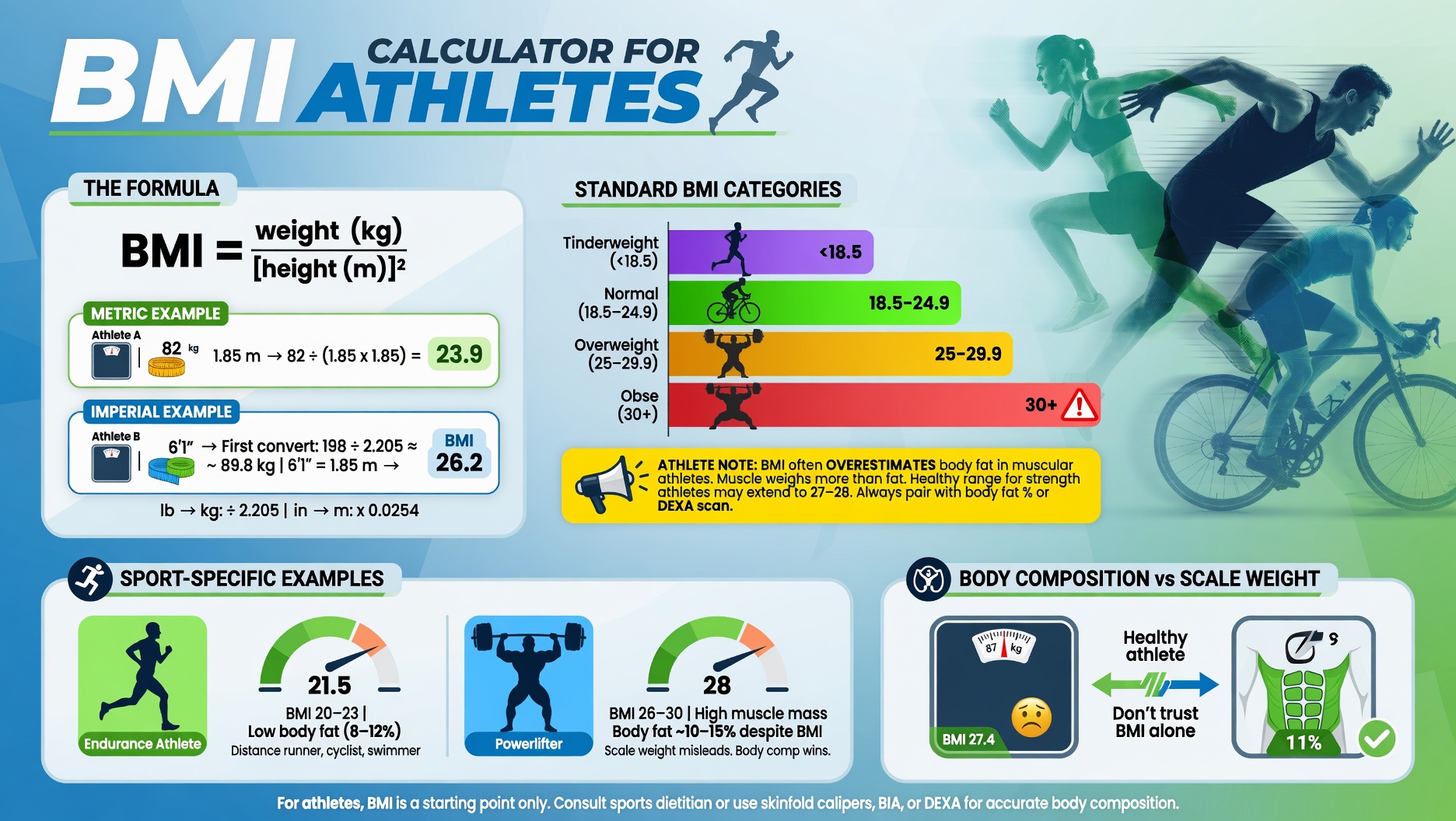
BMI calculator for athletes is different from the regular one most people use. While the standard BMI chart works okay for normal adults, it doesn’t account for all the muscle athletes carry. That’s why a lot of fit athletes get told they’re overweight when they’re actually in great shape.
For instance, a competitive sprinter may weigh more than a sedentary individual of the same height due to increased muscle mass, illustrating how traditional BMI measures fall short in accurately assessing athletes’ health.
This calculator fixes that problem. It lets you see where you actually stand as an athlete and gives you a much more realistic picture of your body composition. By factoring in variables such as muscle mass, the calculator provides insights especially relevant to athletes who need to monitor their weight closely for performance reasons.
How This Calculator Works
The tool uses your height, weight, age, and gender to calculate your BMI. What makes it different is that it also shows you the healthy BMI range specifically for athletes.
That range is usually a bit higher than the standard chart because muscle weighs more than fat. For example, a 6-foot-tall male athlete could have a BMI of 26 and still be in peak physical condition, while a non-athletic individual of the same height might fall into the overweight category with the same BMI.

Why Standard BMI Falls Short for Athletes
Muscle is dense. A football player or bodybuilder can have the same weight as someone much less active, but their body fat percentage is completely different. That’s why a lot of professional athletes get classified as overweight on normal BMI calculators even though they’re clearly in great shape.
Take, for example, a bodybuilder who may weigh 220 pounds yet have a body fat percentage below 10%. In contrast, a non-active person at the same weight may have a body fat percentage of 30%, demonstrating how misleading traditional BMI assessments can be.
What Number Should Athletes Aim For
Most athletes do well with a BMI between 23 and 27. Below 22, and you might not have enough fuel for intense training. Above 28, and you could be carrying extra fat that slows you down.
It’s crucial for athletes to regularly monitor their body composition, as maintaining the right balance of muscle and fat can significantly impact performance. For instance, elite runners often maintain a BMI at the lower end of this range to optimize speed and endurance, while strength athletes may aim for the higher end to support muscle mass and power output.
Try the calculator below and see where you land. Want to take it further? Once you know your BMI, track your body fat percentage too. That gives you the clearest picture of all.
Try the calculator below and see where you land. Want to take it further? Once you know your BMI, track your body fat percentage too.
That gives you the clearest picture of all. Keeping track of fluctuations in body composition is essential for any athlete. Seasonal changes, training cycles, and dietary adjustments can all influence BMI and body fat percentages, so consistent monitoring helps athletes make informed decisions about their training and nutrition strategies.
Understanding how to interpret the numbers is important. For example, a basketball player who understands their ideal body fat percentage may choose to follow specific training regimens to maintain or reach that level.
Additionally, athletes should consider how their sport impacts their ideal BMI; a distance runner may have different requirements than a powerlifter.
As athletes strive to improve their performance, they may also want to explore advanced metrics beyond BMI. This could include assessments such as the Functional Movement Screen (FMS) to evaluate mobility and stability, or VO2 max tests to measure aerobic capacity. Each of these assessments provides a more complete picture of an athlete’s readiness and potential.
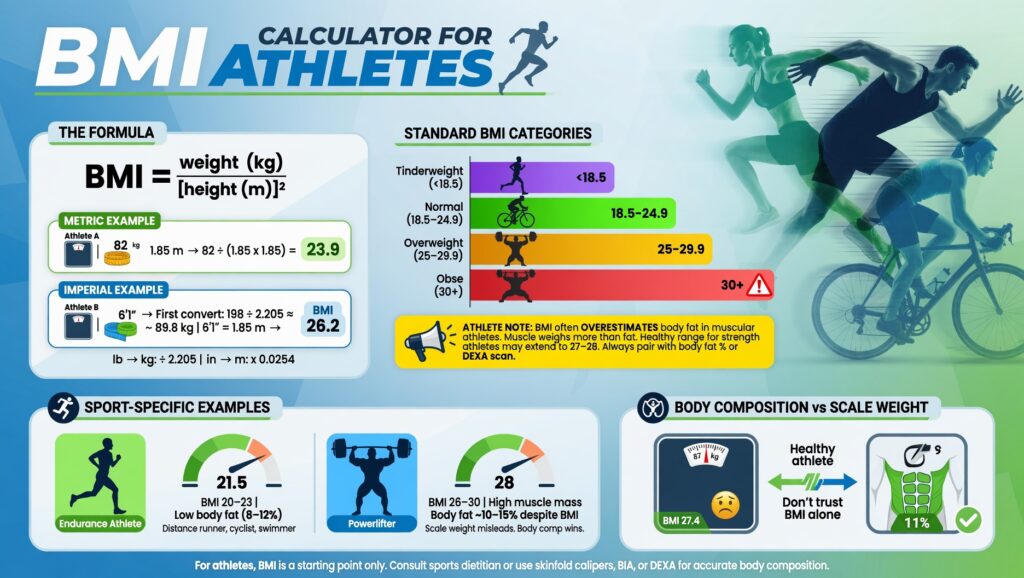
BMI Calculator for Athletes – here’s a clean, educational infographic covering the essentials! This infographic can serve as a quick reference guide for athletes, helping them understand the relationship between BMI, body composition, and optimal performance.
It is also a great resource for coaches and trainers who work with athletes across various sports, helping them enhance their understanding of how BMI applies to different athletic profiles.
Quick BMI Formula (same for everyone)
BMI = weight in kg ÷ (height in meters)²
(or use pounds/inches version: [weight lbs ÷ (height in)²] × 703)
Standard categories (WHO):
- Underweight: < 18.5
- Normal: 18.5–24.9
- Overweight: 25.0–29.9
- Obese: ≥ 30.0
Athlete-Specific Notes
BMI doesn’t distinguish muscle from fat, so it often overestimates body fat in muscular athletes (especially strength/power athletes like weightlifters, rugby players, or bodybuilders). A BMI of 25–28 can still be healthy and lean for them.
Endurance athletes (runners, cyclists, swimmers) usually sit at the lower end of the normal range (20–23) with very low body fat. This is why it’s essential for athletes to understand their unique body composition and not rely too heavily on BMI as the sole indicator of health.
Better assessments for athletes often include:
Finally, while BMI can serve as a useful starting point, athletes should prioritize overall health and performance over a single number. Engaging in a holistic approach to training, nutrition, and recovery can lead to better health outcomes and athletic achievements.
Regular assessments, goal setting, and close collaboration with health professionals can help ensure athletes stay on track with their health and performance objectives.
- Body fat percentage (via DEXA, calipers, or bioimpedance)
- Waist circumference
- Performance metrics and visual leanness
Understanding the nuances of BMI as it relates to athletic performance is critical. Athletes should leverage tools like the BMI Calculator for Athletes to gain insights into their body composition and performance metrics.
With informed decision-making, athletes can optimize their training, nutrition, and overall health, aligning their body composition with their performance goals.
To summarize, while BMI can provide a snapshot, it should be part of a broader framework for understanding health and fitness among athletes.
Incorporating various assessment methods can lead to a more comprehensive approach to athlete health and performance. By focusing on overall wellness and performance optimization, athletes can achieve their best.
The Journey to Fitness and Health
Ultimately, the journey to fitness and health is personal for each athlete. By using the BMI Calculator for Athletes and integrating it with other health metrics, athletes can navigate their fitness journeys more effectively and reach their goals with confidence.
Thus, the BMI Calculator for Athletes serves as a multidimensional tool that empowers athletes to take charge of their physical health and performance, fostering a deeper understanding of how their bodies function and how to optimize their training and health strategies.
Emphasizing the importance of a balanced diet, proper hydration, and mental well-being is also paramount.
Athletes should seek to develop a well-rounded approach that encompasses all aspects of their health, not just to excel in their sport but to thrive in their personal lives as well.