
Hey there! If you’re curious about your weight status or just want to check in on your health, you’ve come to the right place. This men’s BMI calculator is a handy, free tool that gives you a quick snapshot of where you stand. In just a few seconds, you can find out your body mass index, along with additional details like BMI prime and percentile ranking.
Check your BMI with our calculator 👉
Using your weight and height, this tool does all the math for you, so you don’t have to worry about complicated formulas. Just input your numbers, and voila! But remember, while this is a great starting point for understanding your body mass, it shouldn’t replace a doctor’s advice if you have any real health concerns.
In this article, we’ll dive into what BMI really means, why it’s important for men to have their own calculator, and how to interpret your results. Lots of guys use this tool to set realistic health goals, and it’s just one piece of the puzzle when it comes to overall well-being.
Key Takeaways
- This tool offers a quick and easy way to check your body mass index.
- It calculates BMI using your weight and height without complicated formulas.
- Results include BMI prime and percentile rankings for more insight.
- It’s a useful starting point, but not a substitute for professional health advice.
- Understanding your BMI can help you set realistic health goals.
What Is the Men’s BMI Calculator and Why Does It Matter
Understanding BMI can be a game-changer for your health. BMI, or body mass index, is a simple way to measure whether you’re at a healthy weight for your height. It’s like a quick math trick that uses your weight and height to give you a number. This number helps you see if you’re carrying too much or too little weight.
The formula is pretty straightforward: you take your weight in kilograms and divide it by your height in meters squared. So, if you weigh 70 kilograms and are 1.75 meters tall, you’d calculate it like this: 70 / (1.75 * 1.75). Easy, right?
The reason BMI has become so popular is that it’s simple to calculate. You don’t need fancy equipment or a doctor’s visit to figure it out. This tool gives you a general idea of where you stand health-wise, even though it’s not perfect.
Health organizations, like the World Health Organization, use BMI as a screening tool. It works pretty well for most people most of the time. If your BMI falls outside the normal range, it can be a helpful heads-up to pay more attention to your health.
These categories can kickstart conversations with your doctor about heart health, diabetes risk, and overall wellness. But keep in mind, BMI doesn’t tell the whole story. It can’t differentiate between muscle and fat. So, while it’s a useful indicator, it’s just one piece of the puzzle.
Think of understanding your BMI like checking your car’s dashboard lights. It gives you a signal that something might need attention. So, let’s get to know this important number better!
Why a Men’s BMI Calculator Is Different
Check your BMI with our calculator 👉
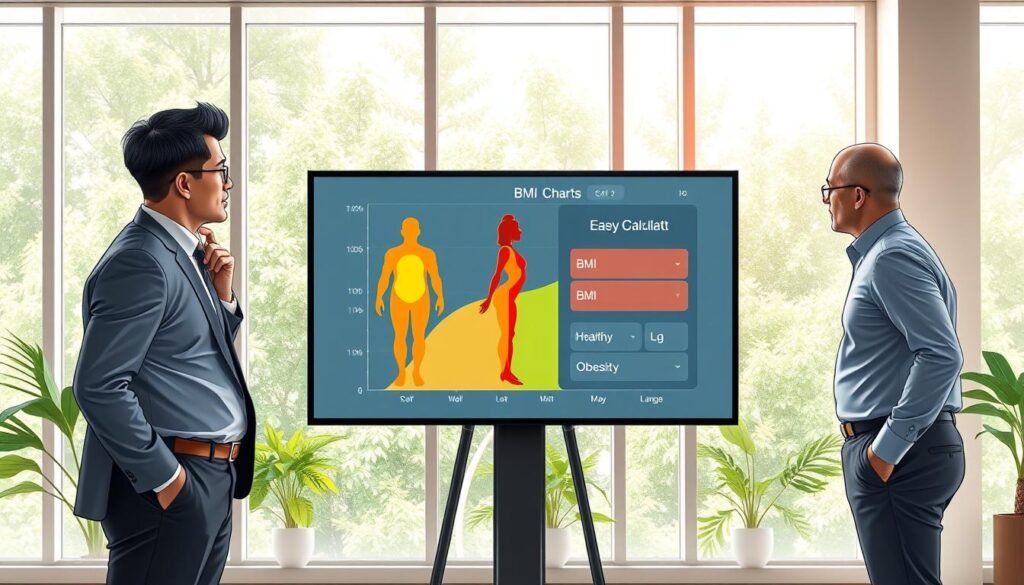
A lot of guys might wonder why a separate BMI calculator for men even matters. The truth is, while the formula for calculating BMI is the same for everyone, the interpretation of that number can vary significantly between men and women.
Men typically carry more muscle mass and less body fat than women. This difference can affect what a healthy weight looks like. For instance, the distribution of fat and muscle varies, which plays a big role in health outcomes.
Here are some key factors to consider:
- Bone Density: Men often have denser bones, which can influence weight and BMI.
- Fat Distribution: Men generally store fat differently, often around the abdomen, which can impact health risks.
- Hormonal Differences: Testosterone levels affect muscle mass and fat storage, leading to different healthy BMI ranges.
Using a calculator designed specifically for men gives you a more accurate picture. It compares your results to other men rather than a mixed group. This is important because the percentile rankings are based on male population data, ensuring a fair comparison.
Age also plays a role. A 25-year-old guy and a 55-year-old guy might have the same BMI but vastly different body compositions. Plus, kids and teens have their own separate charts, making this calculator particularly tailored for adult men.
Remember, using a men’s specific tool isn’t about being picky; it’s about getting the most useful information for your body type. Understanding these differences helps you make smarter decisions about your health instead of chasing a one-size-fits-all number.

Breaking Down BMI Categories for Men
Check your BMI with our calculator 👉
Let’s break down what BMI categories really mean for you. Understanding these categories is crucial for managing your health. The World Health Organization (WHO) has outlined three main ranges for adults: underweight, normal weight, and overweight. Each of these categories can be further divided to give a clearer picture of where you stand.
Underweight, Normal, and Overweight Explained
The sweet spot for most guys is a BMI between 18.5 and 24.9. This range is considered normal or healthy weight. If your BMI falls below 18.5, you might be classified as underweight. This can be just as concerning as being overweight, as it may indicate nutritional deficiencies or other health issues.
On the other hand, if your BMI is 25 or higher, you may fall into the overweight category. This range extends up to 29.9. Many men find themselves hovering around this area, which can lead to various health risks.
Lastly, if your BMI is 30 or above, you enter the obese category. Within this range, there are subcategories like class 1, class 2, and class 3 obesity, each indicating increasing levels of health risk.
Subcategories Within Each BMI Range
Some organizations use up to 11 different subcategories to provide a more detailed picture of where someone falls on the spectrum. These categories are not just random numbers; they are based on extensive population studies linking BMI ranges to health outcomes.
Knowing your category can help you and your doctor determine if lifestyle changes are necessary. However, it’s essential to remember that the lines between categories can feel a bit arbitrary. For example, a guy with a BMI of 24.9 isn’t magically healthier than someone at 25.1.
Use these categories as a general guide rather than a strict rulebook for your health. It’s all about understanding your body and making informed decisions.
| BMI Category | BMI Range | Health Implications |
|---|---|---|
| Underweight | Less than 18.5 | Possible nutritional deficiencies |
| Normal Weight | 18.5 – 24.9 | Generally healthy |
| Overweight | 25 – 29.9 | Increased health risks |
| Obese Class 1 | 30 – 34.9 | Higher risk of health issues |
| Obese Class 2 | 35 – 39.9 | Significantly higher health risks |
| Obese Class 3 | 40 and above | Severe health risks |

Understanding BMI Percentiles and What They Mean
Let’s unravel the mystery of percentiles and see what they mean for your health. Percentiles can sound confusing at first, but they’re actually pretty straightforward. Think of a percentile as a way to see how your body mass index compares to other guys your age across the country.
For example, if you find yourself in the 60th percentile, that means your BMI is higher than 60% of men in your age group and lower than the remaining 40%. This gives you a clearer picture of where you stand in relation to others.
How Percentiles Help You Compare Your BMI
When you use the calculator, it groups percentiles into bands. Instead of giving you a single number, it might show you a range like 25th to 50th or 75th to 85th. This method is helpful because it accounts for the natural clustering of BMI values among individuals.
Here’s an interesting point: small changes in your BMI can lead to significant jumps in your percentile if you’re near the middle of the pack. However, if you’re at the extremes, it takes a lot more change to move the needle. This is because most guys cluster around the average, so even losing or gaining a few pounds can shift your ranking noticeably.
Groups and Why Small Changes Matter More in Certain Ranges
Check your BMI with our calculator 👉
The percentile data in this calculator is based on the US male population, making it relevant for guys reading this in the States. Keep in mind that age plays a crucial role here. A BMI that puts a 20-year-old in the 50th percentile might place a 50-year-old in a completely different spot.
Don’t obsess over the exact percentile. Instead, use it as another tool for understanding where you stand. Percentiles provide context that a raw BMI number alone can’t give you. They help you see the bigger picture of your health and weight status.
| Percentile Group | BMI Range | Interpretation |
|---|---|---|
| 0th-5th | Lowest BMI | Significantly lower than average |
| 5th-10th | Very Low BMI | Lower than most individuals |
| 10th-15th | Low BMI | Below average |
| 15th-25th | Below Average | Still lower than many |
| 25th-50th | Average | About average compared to peers |
| 50th-75th | Above Average | Higher than many individuals |
| 75th-85th | High Average | Higher than most |
| 85th-90th | Very High | Significantly higher than average |
| 90th-95th | Highest | Among the highest BMI values |

How to Use the Men’s BMI Calculator to Find Your Number
Ready to dive into the world of calculating your body mass index? Using the calculator is simple and quick. Just follow these easy steps to get your number and understand what it means for your health.
Step-by-Step: Entering Your Weight and Height
First things first, you need to weigh yourself. A tip? Do it in the morning before breakfast for the most accurate measurement. Grab a scale and get your weight in either pounds or kilograms—whatever feels more natural to you.
Next, it’s time to measure your height. You can use a tape measure or, if you don’t have one handy, stand against a wall and mark your height with a pencil. Once you have both numbers, plug them into the calculator fields. In just a moment, you’ll see your BMI number pop up!
Interpreting Your BMI, BMI Prime, and Percentile Results
Now that you have your BMI, let’s talk about what it means. Your BMI prime is a bonus number that compares your BMI to the upper limit of normal, which is 25. To calculate your BMI prime, simply divide your BMI by 25. A prime of 1.0 or less is generally what you’re aiming for.
- If your BMI prime is 0.98, you’re doing great!
- If it’s 1.2, that’s a signal to pay attention.
Don’t forget to enter your age to unlock your percentile result. This shows how your BMI compares to other guys in your age group across the country. Plus, the World Health Organization (WHO) category label, like normal weight or overweight, will pop up automatically. No need to memorize any charts!
The whole process takes about 30 seconds. You can come back anytime to check your progress. And don’t forget to jot down your results or take a screenshot to track changes over time.
Limitations of BMI and What It Doesn’t Tell You
Check your BMI with our calculator 👉
Let’s take a moment to chat about the limitations of BMI and what it doesn’t fully capture. While BMI can be a helpful starting point, it has some significant blind spots. It’s essential to recognize that BMI is merely an estimate that doesn’t account for body composition. That means it can’t differentiate between muscle and fat.
For instance, consider a bodybuilder who is pure muscle. Despite being in excellent shape, he might be labeled as obese according to BMI standards. This happens because muscle weighs more than fat. Two individuals can have the same BMI but look and feel completely different based on their body composition.
Age is another factor to consider. Older adults often have more body fat than younger adults, even if their BMI is the same. So, when interpreting results, age matters. Additionally, BMI doesn’t indicate where fat is stored. Belly fat is particularly concerning for health, while fat stored elsewhere may not pose the same risks.
Active individuals and athletes frequently receive misleading BMI readings. The formula can’t distinguish between lean mass and fat, leading to inaccuracies. Some guys with a normal BMI might actually have too much body fat and not enough muscle, a situation sometimes referred to as “skinny fat.”
Furthermore, BMI doesn’t factor in bone density, frame size, or ethnic background. All of these elements can affect what a healthy weight looks like for different people. It’s crucial to think of BMI as just one piece of the puzzle, not the final word on your health.
If you’re serious about fitness, consider looking into other measurements, like waist circumference or body fat percentage. These can provide a more comprehensive view of your health and help you set realistic goals.
Health Risks Linked to Being Over or Under Your Ideal BMI
Discussing health risks might not be the most exciting topic, but it’s crucial to understand what’s at stake. Whether you’re above or below your ideal weight, both sides come with their own set of challenges. Let’s explore the risks associated with being over or under your ideal body mass index.
Common Issues With High BMI
Carrying extra weight can really put a strain on your heart. When your BMI climbs above 30, you’re more likely to face high blood pressure. This is something many don’t think about until it’s too late.
Moreover, there’s a strong connection between high BMI and type 2 diabetes. This condition can sneak up on you, affecting your overall health. It’s also worth noting that excess weight impacts your joints over time, leading to painful issues like osteoarthritis.
Sleep apnea and other breathing problems are more common with a high BMI, which can mess with your sleep quality and energy levels. Additionally, being overweight can increase your risk of certain cancers and mental health issues like depression and anxiety.
Concerns With a Low BMI
On the flip side, being underweight has its own risks. Individuals with a low BMI often face malnutrition and vitamin deficiencies. This can lead to anemia and weakened immune function, making it harder for your body to fight off illness.
For children and teenagers, being underweight can hinder growth and development. Women may experience reproductive issues, while everyone faces potential complications during surgery. A low BMI can also increase the risk of osteoporosis, which isn’t just a concern for older folks.
Both ends of the spectrum are linked to higher mortality rates compared to staying in that healthy middle range. However, these risks don’t mean you’re doomed if your BMI isn’t perfect. They’re just good reasons to pay attention and make gradual changes.
It’s important to have open conversations with your doctor about your specific risk factors rather than relying solely on BMI. Your health is worth it!
| BMI Status | Associated Risks |
|---|---|
| High BMI (30+) | High blood pressure, type 2 diabetes, heart disease, sleep apnea, certain cancers, depression |
| Low BMI ( | Malnutrition, vitamin deficiencies, anemia, osteoporosis, immune function issues, reproductive problems |
Simple Tips to Adjust Your BMI and Stay Healthy
If you’re looking to feel better and achieve a healthy weight, I’ve got some tips for you. Remember, the goal isn’t just about chasing a perfect number; it’s about feeling good and maintaining your health for the long haul.
Focus on Overall Health, Not Just the Number
Start by shifting your mindset. Instead of obsessing over a specific BMI, focus on how you feel. This includes your energy levels, mood, and overall well-being. It’s about creating a lifestyle that promotes health rather than just aiming for a number on the scale.
Exercises That Can Help
When it comes to staying active, simple exercises can make a big difference. Walking is one of the most underrated forms of exercise. Almost anyone can do it without needing special equipment or a gym membership.
Consider adding strength training a couple of times a week. This helps build muscle, which can improve your body composition even if the scale doesn’t change much. Activities like cycling, swimming, or playing sports with friends are also great ways to stay active without it feeling like a chore.
Balancing Your Diet Without Overthinking
Diet doesn’t have to be complicated. Focus on eating more whole foods and getting enough protein. Try to limit processed foods, but don’t stress about every little detail. Keeping an eye on portion sizes is helpful without obsessively counting calories, which can get tiring fast.
Don’t forget that getting enough sleep and managing stress are key components of maintaining a healthy weight. These factors often get overlooked but play a huge role in your overall health.
Lastly, use the BMI calculator as a tool to track your progress over time. It shouldn’t be a daily judgment but rather a way to see how small changes can add up. Remember, consistency beats perfection every time!
Getting the Most From Your Men’s BMI Calculator Experience
Check your BMI with our calculator 👉
Let’s explore how to maximize your experience with the BMI tool. Remember, this calculator is a great starting point but not a substitute for professional advice. If you have health concerns, consulting a physician is key.
Bookmark the calculator and check in every few months to see how your numbers trend. Use your results as a conversation starter with your doctor or trainer. Tracking your BMI over time can motivate you, especially when you see positive changes.
Share this tool with friends or family to make health a team effort. It’s free and requires no sign-ups, so there’s no reason not to use it. Even if your number isn’t where you want it now, knowing is the first step toward progress.
Embrace a mindset of progress over perfection. Health is a lifelong journey, not a quick fix. Pair the BMI calculator with other free tools for a more complete picture of your health. Wishing you all the best on your journey!