

Welcome! You’re here because you want to check your weight fast and see if you’re in a healthy range. This page is designed just for that. It offers a BMI calculator specifically for young people, and it’s different from the adult version. We’ll help you understand why that matters.
Check your BMI with our calculator 👉
Here, you’ll learn what BMI measures and why it’s important for growing bodies. No complicated jargon—just clear information. We’ll guide you through using the calculator step by step and explain what those numbers mean for your age and height.
This isn’t about labeling anyone or making you feel bad about your body. It’s about understanding your health in a practical way. By the end, you’ll know how to discuss your results with a parent or doctor if needed. We’ve gathered information from trusted sources to ensure you’re getting real facts.
Key Takeaways
- This page helps you quickly check if your weight is healthy.
- The teen version of the BMI tool is tailored for younger users.
- Understanding your BMI is crucial for growing teens.
- No need for complicated terms—just straightforward guidance.
- You’ll learn how to use the calculator and interpret your results.
- Information comes from reliable sources, ensuring accuracy.
What Is BMI Calculator Teen and Why It Matters for Teens
Check your BMI with our calculator 👉
Let’s dive into what body mass index really means and why it’s a useful tool for understanding your health. BMI is a simple calculation that helps you see how your weight relates to your height. It gives you a rough idea of how much body fat you might have.
For adults, the formula is straightforward. However, for young people, things get a bit more complicated. Since your body is still growing and changing, BMI values need to be compared to other kids of the same age and sex. This is why doctors use growth charts that show where you stand compared to your peers.
Here’s a quick breakdown:
- BMI stands for body mass index. It’s a quick math formula that looks at your weight compared to your height.
- For teens, a single number isn’t enough. Your doctor will plot it on a growth chart to see how you compare to others your age.
- Muscle mass can skew results. A sporty teen may have a higher BMI but not have excess fat.
- Conversely, someone with a smaller frame might have a normal BMI but still carry more body fat than is healthy.
- Puberty can cause rapid weight gain, which might make your BMI spike temporarily.
- Doctors look at trends over time, not just one measurement, to assess healthy growth.
- Understanding the difference between BMI, body fat, and muscle helps ease concerns if your number seems high.
To help visualize this, here’s a table summarizing BMI categories:
| Category | BMI Percentile |
|---|---|
| Underweight | Below 5th percentile |
| Healthy weight | 5th to less than 85th percentile |
| Overweight | 85th to less than 95th percentile |
| Obese | 95th percentile or greater |
As you can see, BMI is not a perfect measure of health. It doesn’t directly measure body fat. Instead, it’s a starting point for discussions about your health with parents or doctors. Remember, your growth and development are unique, and understanding your body is a journey.
“BMI is a useful tool, but it’s just one piece of the puzzle when it comes to health.”

How to Use the BMI Calculator Teen
Check your BMI with our calculator 👉
Let’s walk through the steps to effectively use the BMI calculator for teens. This tool is designed to help you understand your weight in relation to your height. Before you start, gather a few important details.
Information You’ll Need to Get Started
Before you even open the calculator, make sure you have:
- Your most recent height and weight measurements.
- Your date of birth.
- The date when those measurements were taken.
If you don’t have recent numbers, just step on a scale and measure your height against a wall without shoes. This will give you the most accurate data to work with.
Step-by-Step Guide to Using the Calculator
Now that you have your information, let’s dive into how to use the tool:
- The calculator asks for your sex at birth because boys and girls grow at different rates.
- Age matters! The tool is for kids and teens from 2 to 19 years old, so enter your age in years and months correctly.
- You can enter your height in feet and inches or in centimeters, and your weight in pounds or kilograms—whichever is easier for you.
- Once you’ve got all that info ready, plug it into the fields, double-check for typos, and hit calculate.
- The tool does the math instantly and gives you your BMI number, percentile, and category all in one shot.
- It also plots your BMI on a growth chart, showing where you fall compared to other teens your age and sex.
- Don’t stress if the results look a little different from another calculator. Small rounding differences can shift things slightly.
- The whole process takes maybe two minutes, and then you’ll have a clear starting point for understanding your weight and health.

Understanding Your BMI Calculator Teen Results
Check your BMI with our calculator 👉
Understanding your results from the BMI calculator can be a valuable step in your health journey. When you receive your results, you’ll see three main components: your BMI number, your BMI percentile, and the weight category you fall into according to CDC guidelines.
BMI Categories and What They Mean for Health
The categories break down like this:
- Underweight: Below the 5th percentile.
- Healthy Weight: Between the 5th and 85th percentiles.
- Overweight: From the 85th to less than the 95th percentile.
- Obesity: 95th percentile or above.
- Severe Obesity: 120% of the 95th percentile or a BMI of 35 kg/m² or greater.
Percentiles can feel confusing at first. Think of it this way: if you’re in the 60th percentile, that means 60% of teens your age and sex have a lower BMI than you, while 40% have a higher one. The healthy weight range is broad for a reason; bodies come in all shapes and sizes, and being at the 10th percentile or the 80th can both be perfectly fine.
What BMI Percentiles Tell You About Growth
Growth charts show your BMI trend over time. This pattern matters much more than any single measurement from one day. If your BMI falls outside the healthy range, don’t jump to conclusions. Remember, this is a screening tool, not a diagnosis, and many factors can affect the number.
When Your BMI Is Outside the Healthy Range
A teen with a lot of muscle might fall into the overweight category on the chart, even if their body fat is low and their health is great. Conversely, if your BMI consistently tracks above the 95th percentile, it’s wise to discuss potential health risks with a doctor, such as high cholesterol or type 2 diabetes.
Being underweight can also be a concern, especially if it relates to not getting enough nutrition during growth spurts. Your doctor will consider the whole picture, including family history, eating and activity habits, and overall growth pattern before making any judgments.
Ultimately, the results from the BMI calculator are meant to start a conversation, not end one. Use them as a jumping-off point for discussions with a healthcare provider.
“Understanding your BMI results is just the beginning of your health journey.”
Moving Forward: Tips for Teens and Parents After Checking BMI
Check your BMI with our calculator 👉
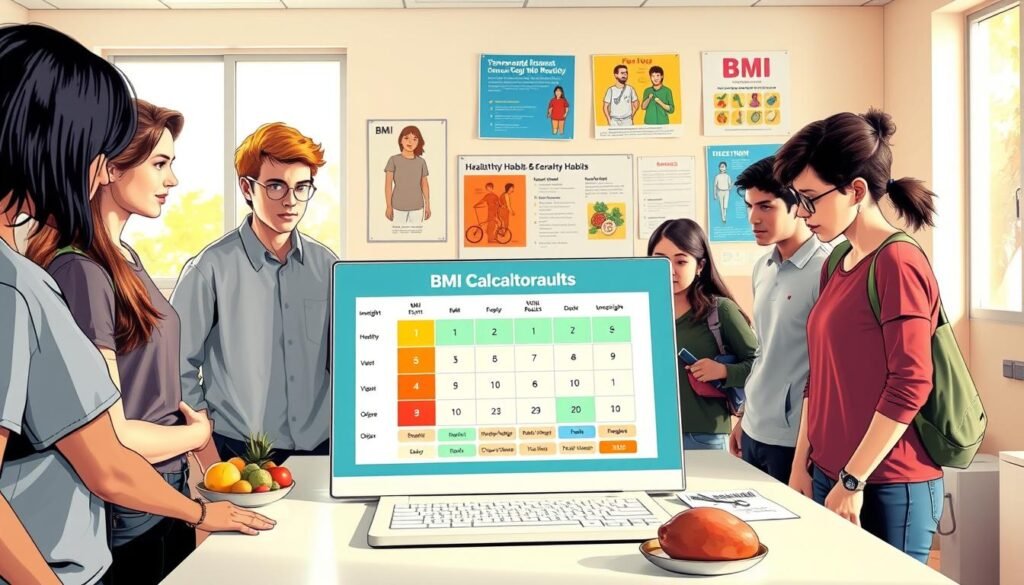
Taking the next steps after checking your weight can be empowering. First, take a breath. Your results are just one part of your health story, not a final verdict. Share your findings with a parent or caregiver, and consider scheduling a chat with your doctor for context.
Focus on building healthy routines instead of fixating on numbers. Incorporate more fruits and veggies into your meals, find physical activities you enjoy, and prioritize sleep. Remember, small changes can lead to big improvements. For example, swapping soda for water or taking a walk after dinner can make a real difference.
Parents can help by modeling these habits and keeping conversations positive. It’s essential to remember that growth varies for everyone, especially during the teen years. If you need extra support, consider programs like the Family Healthy Weight Programs, which focus on lifestyle changes in a supportive environment.
At the end of the day, how you feel—your energy, mood, and overall well-being—matters just as much as any number on a chart.